
Table of Contents
If you’re looking for practical ways of deterring shoplifters in my store Sheffield, it’s understandable to ask whether CCTV is enough, or whether visible security measures could make customers feel unwelcome. In practice, consistent staff routines and a clear, well-organised layout can reduce opportunities for theft, while security technology can support those everyday measures.
A camera can help you review incidents, but it can’t replace attentive customer service or staff who know how to respond safely. Equally, a welcoming shop doesn’t have to leave blind spots or make it easy to conceal goods. The aim is to make sensible changes that suit your premises and normal operating routine.
This guide covers practical steps, from staff awareness and store layout to deciding whether CCTV suits your needs. You’ll also learn how these measures can work together and when a professional assessment may help you make informed decisions about your Sheffield shop.
Key Takeaways
- Review your shop’s layout, operating routine and incident records to identify where prevention efforts may have the most value.
- Use clear sightlines, considered product placement and consistent staff routines to support awareness without making the shop feel unwelcoming.
- For deterring shoplifters in my store Sheffield, treat CCTV as support for staff procedures, not as a standalone solution or a guarantee against theft.
- Agree staff actions, assess equipment and keep a consistent record of incidents and near misses.
- Consider a professional CCTV review if repeated concerns, blind spots or a difficult layout make it hard to achieve useful coverage.
Why shoplifting prevention in a Sheffield store starts with understanding risk
For anyone searching “deterring shoplifters in my store Sheffield”, the first step isn’t automatically buying equipment. Review how your premises operate and where theft might be easier to attempt. Deterrence means reducing opportunities and helping staff notice concerns early. It can lower risk, but no layout, routine or security system can guarantee that shoplifting won’t happen.
Start with a calm review of your shop, its opening hours, product displays and any reliable incident records. A small Sheffield high-street shop may have limited floor space and one person covering several tasks. A larger retail unit may have more entrances, display areas and staff handovers to consider. The right measures depend on the premises, not assumptions about the area. For a general overview of understanding shoplifting risks, see the background on common methods and prevention.
Layered shoplifting prevention: A practical combination of store layout, consistent staff routines and suitable security measures. Each layer supports the others, helping reduce opportunities and improve awareness without promising to prevent every incident.
Which parts of a shop may create avoidable opportunities?
Walk through the shop as a customer and check what staff can see from their usual positions. Note entrances and exits, obstructed sightlines, displays that screen other areas, and places that are difficult to observe. Then consider when the floor may be unattended, such as during deliveries, breaks or busy periods when staff are serving customers.
If incident logs are reliable, look for recurring locations or patterns. Record what happened and where, rather than relying on vague recollections. These observations can help you decide whether to rearrange a display, adjust staff coverage or seek a security review.
How can a shop assess risk without stereotyping customers?
Base staff procedures on observed behaviour and a consistent store policy, never on someone’s appearance or assumptions about who might steal. A polite greeting and an appropriate offer of help can show that the team is present without making customers feel watched or unwelcome.
Make sure staff know how to follow the shop’s procedures and who to alert if they have a concern. They shouldn’t put themselves or others at risk to recover goods. A calm, consistent approach keeps prevention focused on the premises and routine, while helping protect staff and customers.
How store layout and staff routines can deter shoplifters
Clear sightlines and a steady staff presence make it easier to notice what’s happening across the shop floor. Keep entrances and key customer routes visible where the layout allows. Check whether tall displays, promotional stands or stock left in aisles create concealed corners. If records show certain items are frequently missing, consider placing them where staff can supervise them without blocking customer access.
These adjustments should support a comfortable shopping experience, not make customers feel monitored. A polite greeting and a timely offer of help can show that staff are attentive. Guidance on effective methods for preventing shoplifting also discusses employee practices and store arrangements as parts of prevention.
What should staff check during a shift?
A brief, repeatable routine turns a layout review into everyday practice. Adapt it to your shop and staffing levels:
- Opening: Check entrances, displays and key sightlines. Note anything out of place or difficult to observe.
- During trading: Agree who is covering the floor, especially when colleagues are serving customers, handling deliveries or completing other tasks. Recheck displays and stock locations as needed.
- At handover: Pass on relevant concerns discreetly, including areas needing attention and any stock discrepancies recorded under store policy.
- Closing: Review the floor and secure the premises according to your established closing procedure. Record incidents or near misses consistently.
This routine can help in a small shop where one person moves between the till and the floor, as well as in a larger unit where responsibilities change across teams. The aim is to avoid predictable gaps in awareness, not to expect staff to watch every customer continuously.
How should staff respond to a concern?
Set a consistent, customer-friendly response. Staff can offer assistance where appropriate, then notify a manager or colleague using an agreed discreet method, such as a brief phrase or internal communication channel. Make sure everyone knows who to contact and how to record the concern afterwards. Staff should not physically confront, pursue or detain someone they suspect of theft. Their safety, and the safety of customers, comes first.
For deterring shoplifters in my store Sheffield, layout and staff procedures are practical first steps. CCTV may provide additional support if it suits the premises. If you’re reviewing camera coverage alongside shop-floor changes, you can explore commercial CCTV systems for businesses from Scaitec Security Solutions Ltd, which designs, installs and maintains CCTV for commercial properties.
Does CCTV deter shoplifters on its own? What Sheffield retailers should know
No. Visible, well-positioned CCTV may discourage some theft and help a retailer review incidents, but it can’t guarantee prevention. Cameras work best as one part of a wider approach, alongside attentive staff, clear procedures and a safe response to concerns. For anyone asking about “deterring shoplifters in my store Sheffield”, the useful question isn’t simply how many cameras to install. It’s what each camera needs to help you see.
When can CCTV support shoplifting prevention?
Suitable camera coverage can help you examine an incident afterwards and identify whether concerns recur in a particular area or at a particular time. Footage is only useful if the relevant activity is within the camera’s view and can be seen clearly enough for its intended purpose. A camera aimed at a broad area may miss detail. Shelving, reflections, poor lighting or changes to displays can also affect what it captures.
A site-specific review can help map camera positions against entrances, tills, aisles and other areas of concern, while identifying blind spots. A camera plan should reflect the shop’s layout and requirements, rather than relying on camera count alone. Scaitec Security Solutions Ltd designs, installs and maintains CCTV for commercial properties. Read about its commercial CCTV systems when considering how a system might fit your premises.
What are CCTV’s limits and responsibilities?
Cameras don’t greet customers, cover a staff member’s break or decide how to respond to suspected theft. They can’t replace clear staff procedures, and staff shouldn’t take personal risks because footage is available. Agree who can review recordings, how concerns are escalated and how the system will be checked and maintained. A camera that isn’t working or doesn’t capture a useful view may not support the purpose you had in mind.
There are also data protection responsibilities to consider. Before installing or changing a system, check the current guidance from the Information Commissioner’s Office on CCTV and confirm what applies to your business. Review matters such as signage, access to recordings and how long footage is retained in light of that guidance and your specific circumstances. Don’t assume a general rule suits every shop or use of cameras.
A considered system should have a clear purpose, appropriate coverage and an upkeep plan. Pairing those elements with consistent staff routines makes CCTV a more useful part of prevention, while keeping expectations realistic.
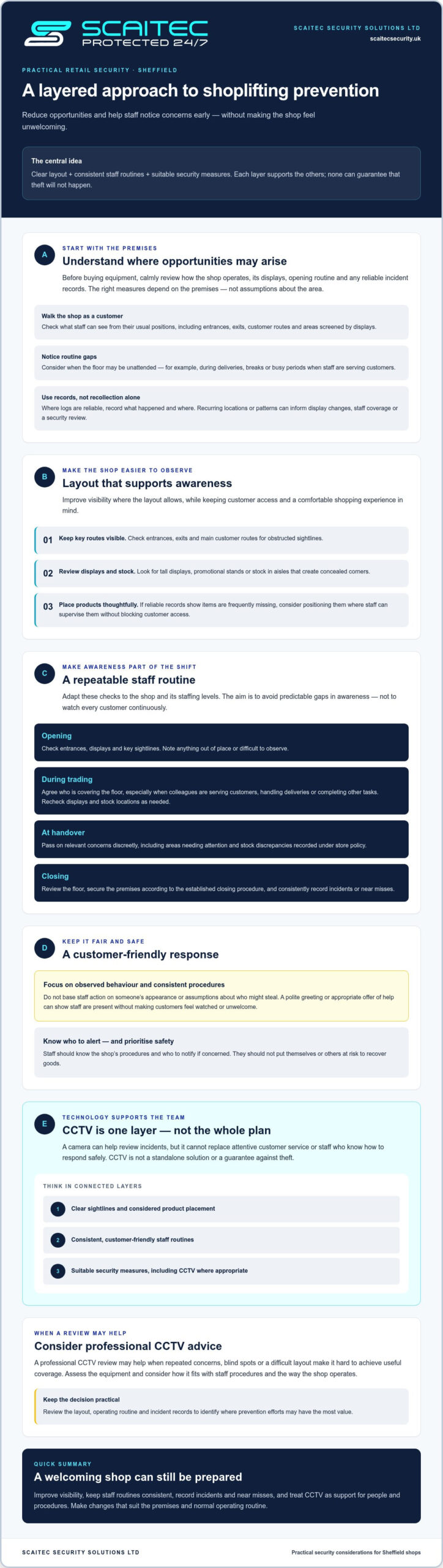
A practical shoplifting prevention plan for a Sheffield retail team
A prevention plan works best when it’s owned, understood and revisited, rather than left as a one-off checklist. Assign a manager to coordinate the review and share agreed procedures across shifts. For a retailer considering deterring shoplifters in my store Sheffield, this cycle can help turn concerns into consistent actions without assuming that any one measure will prevent every incident.
- Record concerns: Note incidents and near misses factually, including the date, location, stock involved and relevant circumstances. Follow your business’s procedures for keeping records securely.
- Inspect the shop: Review the layout, displays, staff coverage and any areas that are difficult to observe. Compare your observations with reliable incident records, if available.
- Agree staff actions: Set out who covers the floor, how colleagues discreetly raise concerns and who should be notified. Share the same guidance with every shift.
- Assess equipment: Consider whether existing security equipment suits the premises and its intended purpose. Identify any coverage or maintenance concerns before deciding whether changes are appropriate.
- Review outcomes: Revisit records and staff feedback at consistent intervals, then adjust the plan if the evidence or shop layout changes.
Brief the team clearly
Use a short briefing to confirm the expected response. Keep it practical and consistent:
- Observe: Pay attention to behaviour and events, following store policy rather than assumptions about customers.
- Escalate: Offer assistance where appropriate and discreetly alert the manager or agreed colleague.
- Record: Write down relevant facts using the store’s process, including near misses where appropriate.
- Stay safe: Don’t physically confront, pursue or detain a suspected offender. Prioritise staff and customer safety.
Check whether the plan remains useful
Compare incident records across consistent periods, but note changes that could affect the comparison, such as different opening hours, staffing or reporting practices. Ask staff whether handovers, busy periods or particular parts of the layout make supervision difficult. If a display is moved, a new area opens or records point to a different concern, review the procedures rather than relying on an outdated plan. The aim is to learn and adapt, not to claim guaranteed reductions.
If your review raises wider questions about CCTV, intruder alarms or access control for your premises, explore Scaitec’s commercial security systems for businesses as a starting point for considering site-specific requirements.
When Sheffield shops should consider professionally designed CCTV
A professional CCTV review may be worth considering if incidents recur, parts of the shop remain difficult to observe, or the layout makes it hard to decide where cameras would be useful. A change to shelving or a new stock area, for example, may affect existing views. Reviewing the system against how the premises are now used can help clarify whether adjustments or a new design are appropriate.
The aim isn’t to add cameras for their own sake. A useful proposal should explain how the system relates to your concerns and what it can and can’t show. CCTV can support prevention and incident review, but it isn’t a guarantee against theft and should sit alongside staff procedures.
What should a retailer ask a CCTV installer?
Ask the installer to explain the proposed coverage in relation to your shop’s actual layout. How would the design address entrances, tills and areas holding stock of concern? Where might shelving, lighting or restricted sightlines limit the view? The number of cameras matters less than whether their placement serves the intended purpose.
- Who will be able to access recordings, and how will authorised staff learn to use the system?
- What maintenance arrangements are available, and how will faults be identified and addressed?
- What areas or details may remain outside the proposed coverage?
Ask for clear explanations rather than relying on technical terms alone. Before deciding whether a proposal suits your business, make sure you understand its intended coverage, day-to-day operation and included support.
What should a Sheffield retailer expect from a site-specific review?
A considered review should take account of the premises, how the shop operates, existing equipment and the concerns you want the system to address. The installer should explain proposed camera positions and any limitations in plain language, so you can assess whether the design fits your needs. If you already have CCTV, raise any areas where footage hasn’t been useful or where the current arrangement no longer matches the shop layout.
Scaitec Security Solutions Ltd is based in Rotherham and serves Sheffield and wider South Yorkshire, including Barnsley, Doncaster, Chesterfield, Worksop, Wakefield and Huddersfield. The company designs, installs and maintains CCTV for commercial properties. If recurring concerns or coverage questions have prompted you to reassess your system, you can discuss your premises and requirements with the team and explore its commercial CCTV service. A site-specific design can support a wider prevention plan alongside consistent staff routines, without promising that cameras will prevent every incident.
Build a prevention approach that fits your shop
Reducing shoplifting risk starts with understanding how your shop runs. Review the layout and records, give staff clear routines, and assess whether CCTV could address a specific coverage need. Cameras may support awareness and incident review, but they’re one part of a practical plan, not a promise that theft will stop.
If you’re considering deterring shoplifters in my store Sheffield, match measures to your premises and revisit them when stock, staffing or layout changes. A site-specific CCTV design can help address blind spots and support usable footage, while maintenance helps keep equipment in working order. Scaitec Security Solutions Ltd is an independent security company established in 2005 and based in Rotherham. It serves Sheffield and wider South Yorkshire, including Barnsley, Doncaster, Chesterfield, Worksop, Wakefield and Huddersfield. Its commercial CCTV service includes design, installation and maintenance.
Start with a clear understanding of your needs, then choose proportionate steps your team can apply consistently. A calm, considered approach can help you feel better prepared to protect your shop.
Deterring shoplifters in my store Sheffield: practical steps for retailers
For Sheffield retailers, the most useful starting point is a review of the shop’s layout, staff routines and incident records. Combine clear sightlines and agreed procedures with security equipment that has a defined purpose. Scaitec Security Solutions Ltd designs, installs and maintains commercial CCTV for shops and other commercial premises in Sheffield, Rotherham and the wider South Yorkshire area.
Frequently Asked Questions
Can CCTV stop shoplifting in my store?
CCTV may deter some opportunistic theft and help you review an incident, but it can’t guarantee shoplifting will stop. Its usefulness depends on whether the relevant area is covered and the footage is clear enough for its intended purpose. Consider signage, who can access recordings and how they’re managed, checking current Information Commissioner’s Office guidance. Cameras work best alongside a sensible layout, attentive staff and clear procedures for raising concerns safely.
What is the best way to deter shoplifters in a small shop?
Start with changes that fit your premises and routine. Keep sightlines clear where possible, maintain a visible staff presence and agree who covers the floor during busy periods or other tasks. If reliable records are available, check whether concerns recur around a particular location or time. If you’re considering deterring shoplifters in my store Sheffield, base procedures on observed behaviour, not assumptions about customers’ appearance.
How can staff respond if they suspect someone is shoplifting?
Staff should follow a clear procedure that puts personal safety first. They might offer customer assistance, discreetly alert a manager and record relevant observations in line with store policy. Brief each shift so everyone knows who to contact and how to escalate a concern. Staff shouldn’t be expected to physically confront, pursue or detain anyone suspected of theft. Consistent guidance can help colleagues respond calmly without putting themselves or customers at risk.
Does visible CCTV deter shoplifters more effectively?
Visible cameras make security measures apparent, but visibility alone doesn’t show that a system will deter theft. Camera positions need to suit the shop’s layout and the purpose of the system. A camera may not capture useful detail if displays obstruct its view or the area of concern falls outside its coverage. Staff procedures remain essential. Before using CCTV, check current UK data protection guidance on signage and managing recordings.
Do small shops in Sheffield need a professional CCTV system?
Not every small shop needs the same equipment. Consider a professional review if incidents recur, the layout creates persistent blind spots or existing cameras don’t capture usable footage. A site-specific discussion can clarify possible coverage and limitations, and help you compare CCTV with practical layout or staff-routine changes. Scaitec Security Solutions Ltd, based in Rotherham and serving Sheffield and wider South Yorkshire, designs, installs and maintains commercial CCTV systems.
What should a shoplifting prevention policy include?
A practical policy should explain what staff should observe, who to notify, how to record incidents and how to prioritise safety during an event. Set expectations that apply across shifts, including a clear instruction not to risk personal safety to recover goods. If your shop uses CCTV, include procedures for authorised access and handling recordings. Review those arrangements against current Information Commissioner’s Office guidance and your business’s specific needs.
To discuss CCTV coverage for your shop, contact Scaitec Security Solutions about your premises and requirements.
Protect Your Business
Protect Your People
Book Your FREE Site Protection Survey

Since pioneering Scaitec Security Solutions in 2005, Paul Scaife, with his roots in the industry dating back to 1994, has distinguished the firm as a leading provider of bespoke fire and security solutions, servicing clients across Sheffield, Rotherham, and surrounding areas.
His leadership, underpinned by accreditation from the Security Systems and Alarms Inspection Board, ensures that Scaitec surpasses client expectations by blending advanced technology with a deep understanding of their unique needs.
Paul's ethos champions innovation and efficiency, driving Scaitec to deliver tailored, cutting-edge solutions that enhance safety and operational ease.
Discover more about Paul’s commitment to excellence on LinkedIn.