
Table of Contents
What if having the right alarms still isn’t enough to meet your fire-safety duties? Fire safety compliance for landlords Doncaster depends on the property type, who controls the relevant areas and whether checks and actions are properly recorded. It’s understandable to feel unsure when a single let, an HMO and a block of flats can involve different requirements.
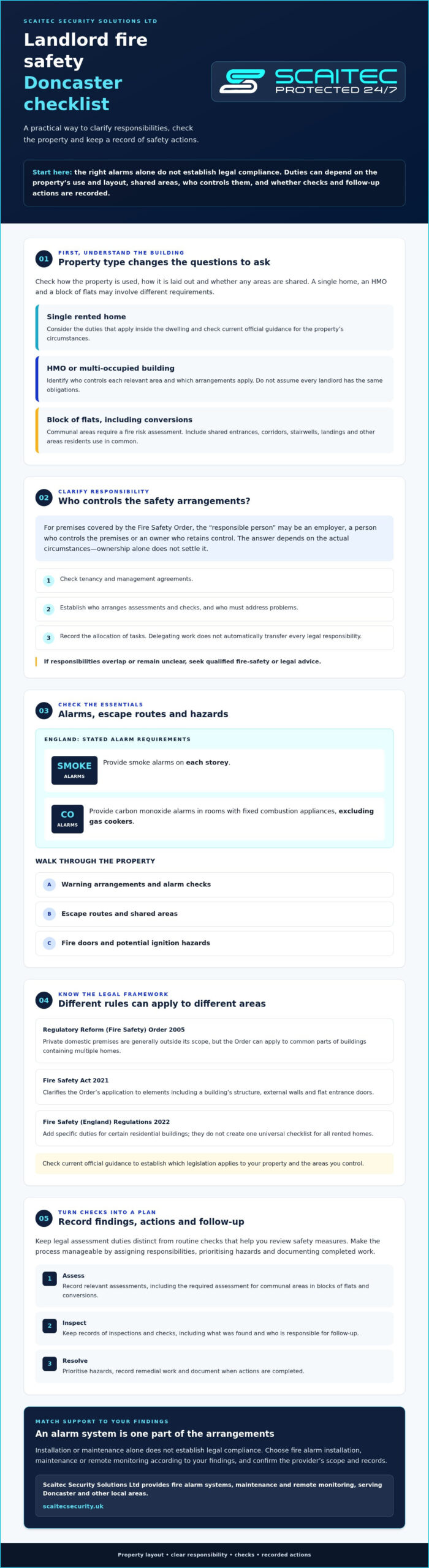
This practical 2026 checklist will help you identify who is responsible, check which duties may apply and organise records of assessments, inspections and remedial work. In England, landlords must provide smoke alarms on each storey and carbon monoxide alarms in rooms with fixed combustion appliances, excluding gas cookers. Fire risk assessments are also required for communal areas in blocks of flats, including conversions.
We’ll cover property types, alarm checks, fire doors and ongoing records, and explain where to look for suitable local support. A fire alarm system can form part of your safety arrangements, but installation or maintenance alone doesn’t establish legal compliance. Scaitec Security Solutions Ltd provides fire alarm systems, maintenance and remote monitoring, serving Doncaster and other local areas. Use the checklist to clarify what support your property may need.
Key Takeaways
- Use your building’s layout, use and shared areas to identify which fire-safety rules may apply.
- Walk through the property to check warning arrangements, escape routes, fire doors and potential ignition hazards.
- Separate legal assessment duties from routine checks that help you keep safety measures under review.
- Choose fire alarm installation, maintenance or monitoring according to your findings, and confirm the provider’s scope and records.
- Make fire safety compliance for landlords Doncaster manageable by assigning responsibilities, prioritising hazards and documenting completed work.
Fire safety compliance for Doncaster landlords: start with your property and responsibilities
Start by checking how the property is used, how it is laid out and whether it has shared areas. Fire safety compliance for landlords Doncaster depends on these details, as well as who controls the relevant safety arrangements. A single rented house occupied by one household is not treated in the same way as a converted building containing several self-contained flats.
For example, a landlord letting a whole house may need to consider their duties inside that dwelling. If the property has been divided into flats, the shared entrance, hallway and stairs raise additional questions. Under the Regulatory Reform (Fire Safety) Order 2005, private domestic premises are generally outside its scope, but common parts of buildings containing multiple homes can be covered. The Fire Safety Act 2021 clarifies the Order’s application to elements including a building’s structure, external walls and flat entrance doors. You can read a legislative overview of the Fire Safety Act 2021, then check current official guidance for how it applies to your building.
Which person is responsible for fire safety in a rented property?
The “responsible person” is the person or organisation with legal responsibility for fire-safety duties in premises covered by the Fire Safety Order. Depending on the circumstances, this may be an employer, a person who controls the premises or an owner who retains control. Ownership alone doesn’t settle the question. A managing agent may handle particular tasks, but duties depend on the actual arrangements and level of control.
Check tenancy and management agreements, establish who arranges assessments and checks, and record who must address problems. Delegating work doesn’t automatically transfer every legal responsibility. If responsibilities overlap or remain unclear, seek qualified fire-safety or legal advice.
Do duties differ between a house and a building with shared areas?
Yes. A self-contained home and the common parts of a multi-occupied building can fall under different rules. For blocks of flats, including conversions, a fire risk assessment is required for communal areas and must be kept up to date. Identify every shared space, not just the main entrance:
- Shared entrances and corridors
- Stairwells and landings
- Any other areas residents use in common
Clarify who controls each space and who records and follows up safety actions. Where a building has layered ownership, a residents’ management company or several agents, don’t guess at the division of duties. Get suitable advice. Scaitec Security Solutions Ltd serves Doncaster and provides fire alarm systems and related support. Its fire safety information can help you explore systems support once you’ve established what your property needs.
Which fire safety rules may apply to a Doncaster rental property?
There isn’t one set of duties for every rental. The rules to check depend on whether the property is a single private home, a house in multiple occupation, a block of flats or a building with another use. For fire safety compliance for landlords Doncaster, start with the property’s actual layout and occupation, then check current official guidance to identify which legislation applies and what action may be required.
When might the Fire Safety Order apply to residential buildings?
The Regulatory Reform (Fire Safety) Order 2005 covers fire precautions in non-domestic premises and can apply to shared parts of buildings containing multiple homes. In a block of flats, for example, the communal corridor and stairwell may be within scope, even though the private flat itself is generally treated differently. The responsible person’s duties relate to the areas and arrangements they control, so don’t assume every landlord has identical obligations.
The Fire Safety Act 2021 clarifies how the Order applies to the structure and external walls of relevant buildings, including doors between domestic premises and common parts. The Fire Safety (England) Regulations 2022 add specific duties for certain residential buildings, rather than creating a universal checklist for all rented homes. The official government guidance on landlords’ safety responsibilities is a useful starting point. Check the legislation and current guidance against your building’s circumstances.
What extra rules can apply to taller residential buildings?
Some requirements depend on a building’s height, number of storeys and evacuation arrangements. For example, in multi-occupied residential buildings with storeys over 11 metres, the responsible person must arrange quarterly checks of fire doors in common parts and annual checks of flat entrance doors. These are building-specific duties, not routine requirements for every rented house.
Additional measures may apply to high-rise residential buildings, including providing information to the fire and rescue service and displaying wayfinding signage. From 6 April 2026, Personal Emergency Evacuation Plans are required for residents who need assistance to evacuate in qualifying buildings: those over 18 metres or seven storeys, and buildings between 11 and 18 metres with a simultaneous evacuation strategy. Confirm the thresholds and duties against current government guidance before applying them.
In Doncaster, South Yorkshire Fire and Rescue Service is the local fire and rescue authority. It has an enforcement role under the Fire Safety Order for premises within scope. If you’re unsure whether a requirement applies, seek advice from a suitably qualified fire-safety professional or legal adviser. Once you’ve identified a need for fire alarm systems or related support, review fire safety systems and services from Scaitec Security Solutions Ltd, which serves Doncaster. A system alone doesn’t establish legal compliance.
Doncaster landlord fire safety checklist: assess risks, alarms and escape routes
Use a consistent walk-through to identify hazards, check that safety measures are working and decide what needs attention. First, separate duties that apply by law to your property from sensible routine checks. A fire risk assessment is required for communal areas in blocks of flats, including conversions, and for premises that aren’t a single private dwelling. Other checks, such as keeping a dated log of routine observations, can support good management even where a particular record isn’t expressly required.
A fire risk assessment identifies fire hazards, considers who may be at risk, and sets out measures to prevent fire and protect people. It should reflect the actual building and its use, and be reviewed when circumstances change or it is no longer valid.
What should a landlord check during a fire-safety review?
Work through the property and any shared spaces. A quick alarm test is not a substitute for a risk assessment where one is required. Check that escape routes are clear, doors on those routes open as intended, and fire doors aren’t visibly damaged or obstructed. Record defects for appropriate follow-up rather than attempting specialist repairs without the right competence.
- Alarms: Confirm the required smoke alarms are present on each storey and carbon monoxide alarms are installed in rooms with fixed combustion appliances, excluding gas cookers. Test alarms and confirm they’re working on the first day of a new tenancy. Follow applicable requirements, the assessment and manufacturer guidance for further checks.
- Escape routes: Look for stored belongings, waste or furniture that could narrow or block an exit, corridor or stairway.
- Fire doors: Note damaged doors, faulty closers or anything that prevents a door from shutting properly, then arrange competent follow-up where needed.
- Hazards and residents: Note obvious ignition hazards and consider whether residents may need information or assistance to understand evacuation arrangements. Record only information that’s relevant to safety and handle it appropriately.
Which fire safety records should landlords keep?
Keep records in one organised system, whether digital or paper. Exact legal record-keeping duties depend on the property and applicable rules. A clear audit trail also helps you check whether actions have been completed and whether outstanding issues remain.
- Applicable fire risk assessments and review dates.
- Alarm tests, inspections and maintenance reports, with dates and findings.
- Fire-door or escape-route checks where relevant to the building.
- Remedial actions, including the issue, person responsible, target date, completion date and evidence of follow-up.
Make the next step clear in every entry. Mark urgent hazards for prompt attention and track planned improvements separately. This practical record supports fire safety compliance for landlords Doncaster by showing what was found, who acted and whether the work resolved the concern.
Choosing fire alarm support in Doncaster: match the service to the findings
Once an assessment or check identifies a need, match the support to the issue. Installation, scheduled maintenance and remote monitoring serve different purposes. A new or altered building may need a system designed for its circumstances, while existing equipment may need maintenance or a clearer service history. Monitoring may suit a particular management arrangement, but it doesn’t replace checks, a suitable evacuation plan or other duties.
Don’t choose equipment by default. System requirements depend on the building, its use and relevant fire-safety advice. Alarm hardware is one part of a wider plan, not proof on its own of fire safety compliance for landlords Doncaster. For background on system considerations, see this Rotherham fire alarm systems guide.
When might a landlord need fire alarm installation or maintenance?
Consider installation if an assessment or competent professional identifies gaps in the existing warning arrangements, or if building changes mean the system needs review. Maintenance may be appropriate where equipment is already installed and needs planned checks or faults addressed. Before appointing a provider, gather available records: note the equipment, past checks, reported faults and work completed. This gives the contractor useful context without assuming the system is suitable simply because it’s present.
Scaitec Security Solutions Ltd serves Doncaster and provides fire alarm systems, system maintenance and remote monitoring. Its fire safety systems and services page can help you review relevant support. Confirm the precise service scope directly, and base decisions on your building’s assessment and applicable requirements.
What should a Doncaster landlord ask a fire-safety contractor?
Ask for a written proposal that makes the work and its limits clear. It should identify the equipment included, the inspection or maintenance tasks, the reports you’ll receive and who is responsible for follow-up. Check how faults or exclusions will be recorded, and whether you’ll receive records suitable for your property file.
- What work is included, and what is excluded?
- What checks and reports will you receive, and when?
- How will defects, faults and recommended remedial actions be documented?
- What relevant experience, standards and evidence support any stated qualifications?
Compare providers on clear scope, relevant competence and useful records, not equipment alone. Confirm how the proposed work relates to your findings. If your question concerns an assessment or legal duties, seek a fire-risk assessor or other qualified adviser. A system provider can support the equipment and agreed aftercare, but installing or maintaining an alarm doesn’t establish compliance by itself.
Discuss fire alarm system requirements
Turn the Doncaster landlord checklist into a documented fire-safety action plan
A checklist is most useful when it leads to named actions and clear follow-up. For fire safety compliance for landlords Doncaster, work through each property in order: identify who controls the building and its safety arrangements, verify which duties apply, assess hazards, prioritise findings, complete actions and retain evidence of the outcome.
- Confirm roles: Record who is responsible for each part of the property and who will arrange or check delegated work.
- Verify duties: Match the property’s use and layout to current requirements and guidance. Seek qualified advice if the position is unclear.
- Assess and prioritise: Record hazards and distinguish issues needing prompt attention from planned improvements.
- Complete and record: Assign an owner and target date to each action, then save completion evidence and any follow-up check.
If you discover an immediate danger, prioritise people’s safety and contact the appropriate emergency services. Don’t leave an urgent hazard in a routine maintenance queue. For other findings, set a proportionate deadline and record why you prioritised the action that way.
Review the assessment and action plan if the building’s layout or use changes, after an incident, or when a defect calls the existing arrangements into question. Check the applicable guidance for any formal review duties in your circumstances. A scheduled review also helps identify overdue work before records become disconnected from the property’s current condition.
How can landlords track actions and ongoing maintenance?
Keep one log for actions and another, or a clearly organised section, for system checks and maintenance. Record the date, finding, action owner, target date, completion details and evidence that the issue was resolved. Link service reports to the relevant equipment and property so the history is clear to a future manager or contractor.
If your findings point to ongoing upkeep of installed systems, review whether system maintenance support suits your needs. Confirm the provider’s scope and the records you’ll receive. Maintenance records support your management process, but they don’t replace an assessment or establish compliance by themselves.
What is the next step for a Doncaster landlord?
Before discussing system support, gather the property type and layout, existing assessments, alarm records and any unresolved faults or maintenance issues. This gives you a focused starting point for discussing whether fire alarm installation, maintenance or remote monitoring may be relevant. Scaitec Security Solutions Ltd serves Doncaster and provides these systems and services; it isn’t a substitute for a fire risk assessor or legal adviser.
Make your next fire-safety action clear
Fire safety compliance for landlords Doncaster starts with understanding your property, the areas you control and the duties that apply. Keep a current record of assessments, checks and completed actions, and arrange appropriate advice when a building’s requirements are unclear.
Use your findings to identify whether you need support with fire alarm installation, system maintenance or remote monitoring. These services can support your wider safety arrangements, but they don’t replace a suitable fire risk assessment or determine legal compliance. Before agreeing work, make sure the scope and records are clear.
Scaitec Security Solutions Ltd has been established since 2005, serves Doncaster and provides fire alarm systems, maintenance and remote monitoring. Landlords can discuss system requirements in light of their property and existing records.
A clear plan, followed by consistent checks and documented action, makes it easier to manage fire safety with confidence. Take the next step at a pace that suits your property and its needs.
Frequently Asked Questions
Does every landlord in Doncaster need a fire risk assessment?
No. Whether an assessment is legally required depends on the premises and applicable duties. Communal areas in blocks of flats, including conversions, require a fire risk assessment; requirements also apply to premises that aren’t a single private dwelling. A single rented home occupied as a private dwelling may be treated differently. For fire safety compliance for landlords Doncaster, identify who controls each area and check current official guidance or seek competent advice.
Who is responsible for fire safety in a rented property?
Responsibility depends on the building, the areas each party controls and the legal framework that applies. A landlord, managing agent, owner or another party may have relevant duties. An agreement can allocate practical tasks, such as arranging checks or keeping records, but appointing an agent doesn’t automatically remove a landlord’s responsibilities. Set out delegated work in writing and confirm who must act on defects and follow up outstanding safety actions.
Do landlords have to provide fire alarms in rented homes?
Yes. In England, landlords must provide at least one smoke alarm on each storey of a rented property and a carbon monoxide alarm in any room containing a fixed combustion appliance, excluding gas cookers. These requirements apply to all tenancies. Alarms must be in working order on the first day of a new tenancy, so test them then and record the check. Shared buildings may also need separate consideration of common-area warning arrangements.
What fire safety checks should landlords carry out between tenancies?
Review the property’s fire-safety records and check alarms, escape routes and previously reported defects. Test required smoke and carbon monoxide alarms to confirm they work on the first day of the new tenancy. Check equipment instructions and any building-specific requirements rather than relying on a universal checklist. Record findings, arrange competent repairs where needed and confirm completion. If the building has shared areas, check who manages those spaces and how their checks are recorded.
Do the Fire Safety (England) Regulations 2022 apply to every rental property?
No. The Regulations set out duties for specified residential buildings and circumstances, rather than applying identically to every rented home. Requirements can depend on building characteristics and the responsible person’s role. For example, multi-occupied residential buildings with storeys over 11 metres have specific fire-door checking duties in common parts and for flat entrance doors. Check current government guidance against your building’s height, layout and management arrangements, and seek competent advice if uncertain.
Can a fire alarm system alone make a rental property compliant?
No. Installing or maintaining an alarm doesn’t prove that every fire-safety duty has been met. Depending on the building, responsibilities may also include assessing risks, keeping escape routes suitable, managing fire doors and recording actions. A fire alarm provider can discuss equipment and related services, but a fire risk assessment or appropriate legal advice may be needed to address wider duties. Treat the alarm as one part of the property’s safety arrangements.
How often should a landlord arrange fire alarm maintenance?
There isn’t one maintenance interval that suits every system. The appropriate schedule depends on the equipment, its instructions, applicable requirements and the building’s safety arrangements. Follow relevant guidance and obtain competent advice where the schedule is unclear. Keep a record of checks, service visits, faults and repairs, including when an issue was resolved. Maintenance supports reliable system operation, but it doesn’t by itself establish compliance with a landlord’s wider legal duties.
Where can Doncaster landlords get local fire safety support?
Start with current government fire-safety guidance and contact South Yorkshire Fire and Rescue Service for relevant local authority information. For fire alarm installation, maintenance or monitoring, speak with a suitably experienced provider and ask for a written scope, reports and clear responsibility boundaries. Scaitec Security Solutions Ltd, established in 2005 and based in Rotherham, serves Doncaster and nearby areas including Sheffield, Barnsley, Chesterfield, Worksop, Wakefield and Huddersfield.
Protect Your Business
Protect Your People
Book Your FREE Site Protection Survey

Since pioneering Scaitec Security Solutions in 2005, Paul Scaife, with his roots in the industry dating back to 1994, has distinguished the firm as a leading provider of bespoke fire and security solutions, servicing clients across Sheffield, Rotherham, and surrounding areas.
His leadership, underpinned by accreditation from the Security Systems and Alarms Inspection Board, ensures that Scaitec surpasses client expectations by blending advanced technology with a deep understanding of their unique needs.
Paul's ethos champions innovation and efficiency, driving Scaitec to deliver tailored, cutting-edge solutions that enhance safety and operational ease.
Discover more about Paul’s commitment to excellence on LinkedIn.