
Table of Contents
What if the right security system could help protect your parent’s home without making them feel watched or less independent? If you’re researching “security system for elderly parent South Yorkshire”, it’s understandable to want reassurance while respecting the way your parent prefers to live.
Choosing suitable protection isn’t simply a matter of adding cameras or alerts. The system should suit the home, daily routines and the person using it, with controls that feel straightforward rather than confusing. A calm conversation about privacy and preferences can help shape a plan that feels supportive, not intrusive.
This guide compares practical options, including intruder alarms, CCTV and remote monitoring, and explains how professional design, installation and maintenance work together. It also clarifies what security systems can and can’t do: remote monitoring can support alarm systems, but it isn’t a personal emergency or medical response service. Scaitec Security Solutions Ltd is an independent company based in Rotherham, serving homes in Rotherham, Sheffield, Barnsley, Doncaster, Chesterfield, Worksop, Wakefield and Huddersfield. The aim is to help you make an informed choice that supports your parent’s security and peace of mind.
Key Takeaways
- Match each security feature to a specific concern, such as protecting entry points or managing access to the home.
- Consider how visible cameras may affect privacy, especially in shared or private living spaces.
- A security system for elderly parent South Yorkshire should reflect the home’s layout and your parent’s everyday routines.
- Plan in stages, agreeing priorities, equipment placement and ongoing upkeep before settling on a system.
- A local security specialist can help families plan protection that respects an older person’s independence.
Choosing a security system for an elderly parent in South Yorkshire
When a parent lives alone, it’s natural to want their home to feel secure. The challenge is to offer reassurance without making decisions for them or changing their routines unnecessarily. A security system should support your parent’s independence, not take control away. Start by involving them in the decisions and asking what would help them feel safer.
A home security system combines electronic equipment selected for a property and the people who use it. Depending on the home, it might include an intruder alarm, CCTV or access control. General home security systems use different equipment to address different risks, so there’s no need to assume every home needs the same features. For families searching “security system for elderly parent South Yorkshire”, a useful first step is to identify the concerns that matter in that particular household.
Start with the parent’s home, routines and priorities
Look at how the home is used before discussing equipment. Note the usual entrances, whether doors are left open for regular visitors, how often your parent is at home and which areas they’d like protected. Then ask what worries them most. They may be concerned about an unfamiliar caller at the door, or want an alarm that’s simple to set when they go out. Don’t assume your priorities are theirs.
Practical details matter too. Controls should be clear and comfortable to use, with instructions your parent can follow confidently. Agree in advance whether family members will receive alerts or have access to the system. Their involvement should feel helpful and consensual, not like someone is keeping watch without their knowledge.
Separate home security from personal emergency support
Intruder security is designed to help address unauthorised entry and protect the property. It’s different from a personal alarm, care arrangement or medical response system. CCTV may show activity in a camera’s view, but it doesn’t identify a health emergency, detect a fall or automatically provide care. A security alarm shouldn’t be treated as a replacement for help from family, carers or emergency services.
Keep these roles clear when planning. If your parent already has care or emergency arrangements, make sure the security plan complements them rather than being mistaken for the same service. This helps everyone understand what each system is intended to do.
A considered plan begins with listening, then matches equipment to the home and agreed priorities. Scaitec Security Solutions Ltd is an independent company based in Rotherham, serving homes across South Yorkshire. The company also provides business security systems for commercial premises.
Which security system features can help protect an older person’s home?
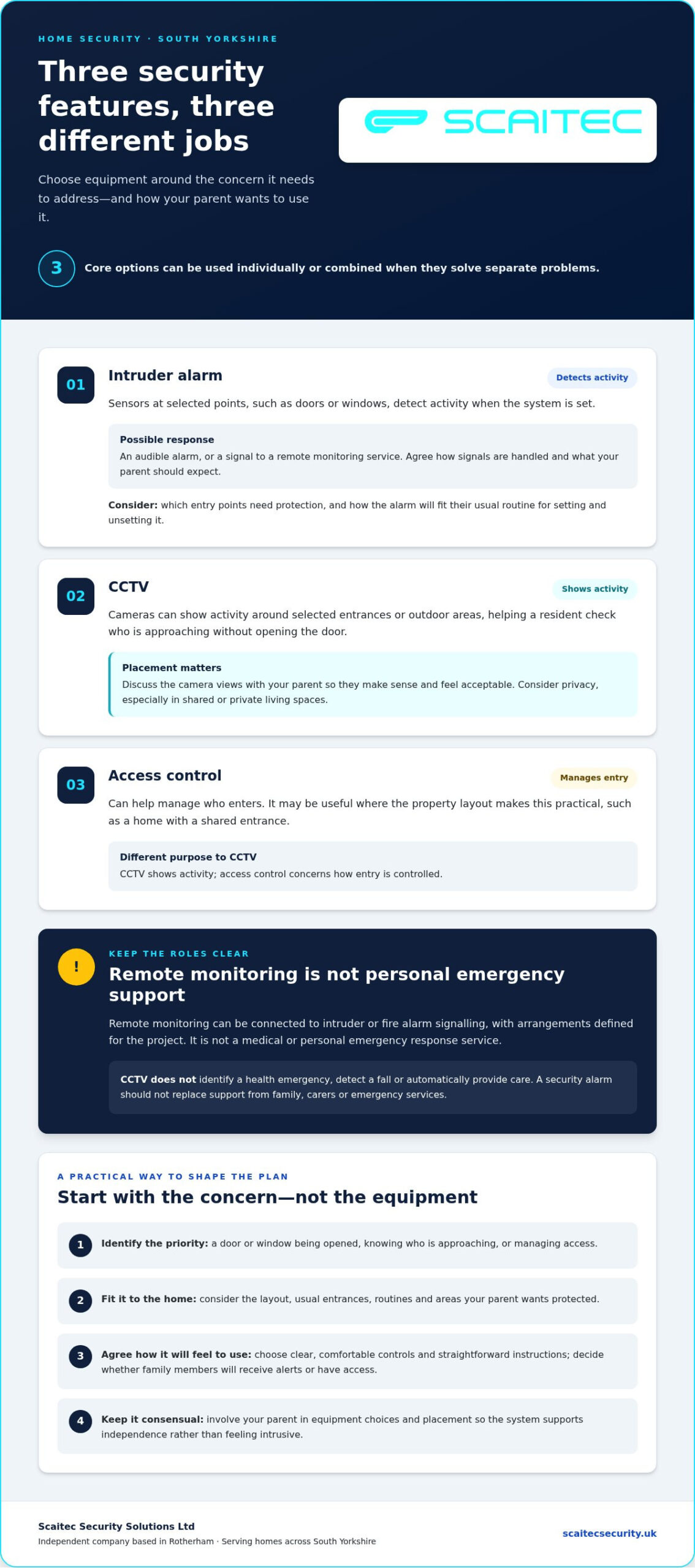
Each security feature addresses a different concern. An intruder alarm can alert people to activity at protected entry points, CCTV can provide a view of selected areas, and access control can help manage who enters. A security system for elderly parent South Yorkshire households can use one feature or a carefully planned combination. The right fit depends on the property, your parent’s routines and how they want to use the equipment.
Start with the issue you want to address. Is it knowing when a door or window is opened, seeing who approaches an entrance, or managing access to a shared building? Defining the concern first keeps the plan practical and helps avoid equipment that doesn’t support your parent’s priorities.
When an intruder alarm may be the most relevant feature
An intruder alarm uses sensors at selected points, such as doors or windows, to detect activity when the system is set. The response may be an audible alarm, or the system may also signal to a remote monitoring service. These are distinct arrangements, so the plan should establish how alarm signals are handled and what your parent can expect.
Everyday usability matters. The system should suit your parent’s routine for setting and unsetting it, whether they leave home regularly or prefer to secure particular areas at night. Clear controls and straightforward instructions can make the difference between equipment that fits naturally into daily life and a system that feels like a burden. When comparing intruder alarm options, consider which entry points need protection and how the alarm will be operated.
When CCTV or access control may add useful context
CCTV can show activity around selected entrances or outdoor areas, which may help a resident check who is approaching without opening the door. Discuss camera placement with your parent so the views make sense to them and feel acceptable. Residential CCTV can be used on its own or alongside an alarm, depending on the home’s needs.
Access control may be useful where the property layout makes it practical to manage entry, such as a home with a shared entrance. It serves a different purpose from CCTV: rather than showing activity, it concerns how entry is controlled. A tailored design can combine features where they solve separate problems, without making the system more complex than your parent is comfortable using.
Remote monitoring is an option connected to intruder or fire alarm signalling, with the arrangements defined for the project. It isn’t a medical or personal emergency response service. GOV.UK has separate information on how to apply for a community alarm, which relates to personal safety support rather than protecting property from unauthorised entry. Keeping these roles clear helps families choose the right support for each need.
Will a security system invade your parent’s privacy or independence?
A security system can feel intrusive if it’s installed around an older person without their agreement. Start with a conversation, not a list of equipment. Explain the concern you hope to address, listen to what your parent is comfortable with and make decisions together. A security system for elderly parent South Yorkshire homes should support the resident’s confidence, not make them feel monitored in their own home.
Different features have different privacy implications. An intruder alarm can protect selected entry points without recording activity. An external camera may help show who approaches a door, while a camera inside a living space can capture private moments. Use cameras only where there’s a clear purpose, and agree their location and use with your parent. If footage could include a public footpath or a neighbour’s property, consult current Information Commissioner’s Office guidance on handling recordings that reach beyond the home.
Agree camera locations and household access in advance
Begin with the least intrusive camera view that meets the agreed security need, often a relevant entrance or outdoor area rather than a private room. Discuss who can view footage, whether relatives need remote access and how they’ll use it. Your parent should know who has access and why. Writing down these preferences can prevent misunderstandings and provide a reference if routines or household arrangements change.
Camera placement should be purposeful, not simply based on where installation is easiest. Consider what the camera needs to show and whether an alarm could address the same concern. Families can explore residential CCTV as part of a discussion about suitable views and locations.
Make everyday operation reassuring rather than burdensome
A system that’s awkward to operate may create frustration rather than reassurance. Think through how your parent would set and unset an alarm as part of an ordinary day. Agree what should happen if an alert appears, who is responsible for responding and how the family will communicate about it. Explain alerts in plain language, including what they indicate and what action is expected.
These arrangements can help preserve independence: relatives have an agreed role, while the parent remains involved in decisions about their home. Avoid assuming that every alert needs a family member to check in, or that remote access means constant viewing. Set boundaries that feel proportionate to the agreed security purpose.
Keep the system’s role clear. Intruder alarms and CCTV address property security; they don’t provide care, identify medical emergencies or monitor someone’s health. Existing care and emergency arrangements should remain separate. Scaitec designs security systems around each property and its everyday use, so the plan can reflect your parent’s preferences as well as the home’s security needs.
How to plan a security system for an older parent in South Yorkshire
A clear plan connects your parent’s priorities with the practical details of the property, then accounts for installation and future upkeep. Working through these steps helps avoid choosing equipment before you know what it needs to do. It also gives your parent a chance to understand and influence decisions throughout the process.
Prepare for a tailored home security assessment
Before an assessment, make a short list together. Note which entrances or areas matter most, who needs access to the home and who, if anyone, should receive alarm alerts. Include how your parent prefers to use controls, any concerns about recording and what would make the system straightforward day to day. Their answers help shape a design around the home rather than assumptions about age.
A property review should take account of the layout and entry points, as well as practical requirements such as power and connectivity. The assessment can then consider which features fit the identified concerns and how they’ll work with household routines. Scaitec designs electronic security systems around the property and project requirements, providing a basis for selecting and positioning equipment.
For a flat or home with a shared entrance, distinguish between security inside your parent’s home and measures intended to protect common areas or the whole building. Those spaces may involve different users and access arrangements. Where a project concerns shared or commercial premises, security systems for shared and business premises provide relevant context. Keep your parent’s own system focused on the areas and access they’re responsible for.
Plan installation, monitoring and future upkeep
Once the design is agreed, professional installation and system setup form part of the project plan. Allow time to go through the controls with your parent and make sure they understand the normal routine for using the system. A clear handover can also explain what an alert means and who is responsible for responding, avoiding uncertainty later.
Remote monitoring depends on the agreed alarm and monitoring arrangement. It relates to alarm signalling, not medical monitoring or a personal emergency response. Make sure the family understands how the arrangement is intended to work and keeps it distinct from any care or health support.
Plan for upkeep as well as installation. Regular maintenance can help keep a security system working as intended, while a change in household routines may be a reason to review how it’s used. Agree who will oversee maintenance and keep basic instructions accessible to your parent. This lifecycle approach is useful when considering a security system for elderly parent South Yorkshire families can rely on as the home and its needs evolve. Scaitec provides system maintenance as part of its electronic security services.
How Scaitec supports home security for families across South Yorkshire
Scaitec Security Solutions Ltd is an independent security company based in Rotherham. It designs, installs and maintains electronic security systems for homes across South Yorkshire, including Rotherham, Sheffield, Barnsley, Doncaster, Chesterfield, Worksop, Wakefield and Huddersfield. For families considering a security system for elderly parent South Yorkshire residents can use with confidence, the starting point is the home and the person who lives there, not a standard package of equipment.
A tailored plan may involve CCTV, an intruder alarm, access control or a considered combination. Each option serves a different purpose, so the design takes account of the property, security priorities and how your parent wants the system to fit into daily life. This keeps the plan relevant rather than adding features without a clear reason.
A joined-up approach from design to aftercare
Design begins with understanding the property and the concerns the household wants to address. Entry points, layout, daily routines and household preferences all help inform where equipment may be useful and how it should be operated. If relatives are involved, their role and access preferences can also be discussed, while keeping the resident’s views central.
Professional installation puts the agreed design in place. System setup should be explained in plain language, so your parent understands the controls and what to expect during ordinary use. The handover is a chance to go over practical details, such as setting an intruder alarm and understanding its alerts, without overwhelming the person using it.
Maintenance is part of the wider security plan. Scaitec maintains electronic security systems, helping families plan for ongoing attention to equipment rather than treating installation as the final step. The scope and timing of upkeep can be considered as part of the project, since one schedule won’t suit every home.
Taking the next step with your parent
Before discussing a plan, involve your parent wherever possible. A short written summary can make the conversation with a security specialist more focused and help keep everyone’s expectations aligned. Include:
- The main security concerns and the entrances or areas that matter most.
- Who needs access to the property and whether anyone else should receive alarm alerts.
- Preferences about camera placement, privacy and family involvement.
- Any practical needs around controls, instructions and everyday use.
This gives Scaitec a clear picture of what the household wants from a system and helps guide a design around the home and its occupants. The aim is practical protection that respects your parent’s preferences and independence, with installation and maintenance considered as connected parts of the plan.
Take the next step at your parent’s pace
A useful next step doesn’t have to mean choosing equipment straight away. Agree one concern to explore first, such as feeling more confident about who is at the door or securing the home when your parent goes out. This keeps the conversation manageable and gives your parent room to explain what would genuinely help.
Before discussing a security system for elderly parent South Yorkshire homes, note any preferences your parent wants reflected in the plan. They may want time to think things over, involve another relative or keep the arrangement as simple as possible. Respecting that choice helps make security a practical support for their independence, rather than another decision made on their behalf.
A thoughtful plan can begin with a conversation and develop at a comfortable pace. Scaitec can help your family explore a suitable security system for your parent’s home. Start by discussing the concerns and preferences you’ve agreed together.
Start with what matters to your parent. A calm, shared decision can make the way forward clearer for everyone.
Frequently Asked Questions
These answers offer practical guidance for families in Rotherham, Sheffield, Barnsley, Doncaster, Chesterfield, Worksop, Wakefield and Huddersfield.
Can my elderly parent use an intruder alarm without a smartphone?
Yes. A smartphone isn’t essential for using many intruder alarms: a system can be operated through a keypad or another control method suited to the resident. Ask for the controls to be demonstrated during handover, then let your parent practise setting and unsetting the system. Families searching for a “security system for elderly parent South Yorkshire” can prioritise clear controls and simple instructions rather than app-based features.
What happens if the broadband connection goes down?
It depends on how the particular alarm is designed to communicate. A broadband outage may affect remote signalling if the system relies on the internet, but it doesn’t necessarily mean the alarm’s local functions stop working. Before installation, establish which functions depend on connectivity and what the system does if a connection is lost. Don’t assume alerts will reach relatives or a monitoring service during an outage unless the agreed setup supports this.
Can an intruder alarm be set whilst my parent is at home?
Often, yes, if the alarm has a suitable part-set or at-home setting. This can allow selected areas, such as the ground floor or external doors, to remain protected while someone is inside. The precise options depend on system design and sensor placement. During setup, walk through your parent’s usual evening routine and agree which areas should be active, so the chosen setting feels practical rather than restrictive.
Is CCTV allowed to record a pavement or a neighbour’s property in the UK?
A domestic camera may capture beyond the home’s boundary, but this brings data protection responsibilities under UK GDPR and the Data Protection Act 2018. The operator should have a clear reason to record, tell people they may be recorded, keep footage secure and delete it when it’s no longer needed. The Information Commissioner’s Office (ICO) provides guidance on domestic CCTV. Aim the camera at the relevant area and minimise unnecessary views of public or neighbouring spaces.
Does remote alarm monitoring automatically send emergency services?
No. Don’t assume an alarm signal automatically dispatches emergency services. Remote monitoring concerns signals from an intruder or fire alarm, and how an alert is handled depends on the agreed monitoring arrangements. It isn’t a personal emergency, care or medical response service. Make sure your family understands what the alarm is connected to and who is expected to act if an alert is received, rather than relying on it as a substitute for health or care support.
Can a security system be installed in a rented home?
It may be possible, but first check the tenancy agreement and get the landlord’s agreement before arranging equipment that involves drilling, wiring or fixing cameras to the property. Explain what is proposed, where equipment would be fitted and whether anything would need to be removed at the end of the tenancy. For a flat, also distinguish equipment serving the rented home from cameras or controls intended to cover shared entrances or communal areas.
Are home safety visits available from South Yorkshire Fire and Rescue?
South Yorkshire Fire and Rescue provides home fire-safety information and a route to request a home safety visit. This is separate from an electronic intruder alarm or CCTV system and focuses on fire safety rather than preventing unauthorised entry. Families can find current visit information through the service’s official channels. If your concern is both fire safety and property security, treat them as separate needs when planning support.
Protect Your Business
Protect Your People
Book Your FREE Site Protection Survey

Since pioneering Scaitec Security Solutions in 2005, Paul Scaife, with his roots in the industry dating back to 1994, has distinguished the firm as a leading provider of bespoke fire and security solutions, servicing clients across Sheffield, Rotherham, and surrounding areas.
His leadership, underpinned by accreditation from the Security Systems and Alarms Inspection Board, ensures that Scaitec surpasses client expectations by blending advanced technology with a deep understanding of their unique needs.
Paul's ethos champions innovation and efficiency, driving Scaitec to deliver tailored, cutting-edge solutions that enhance safety and operational ease.
Discover more about Paul’s commitment to excellence on LinkedIn.