
Table of Contents
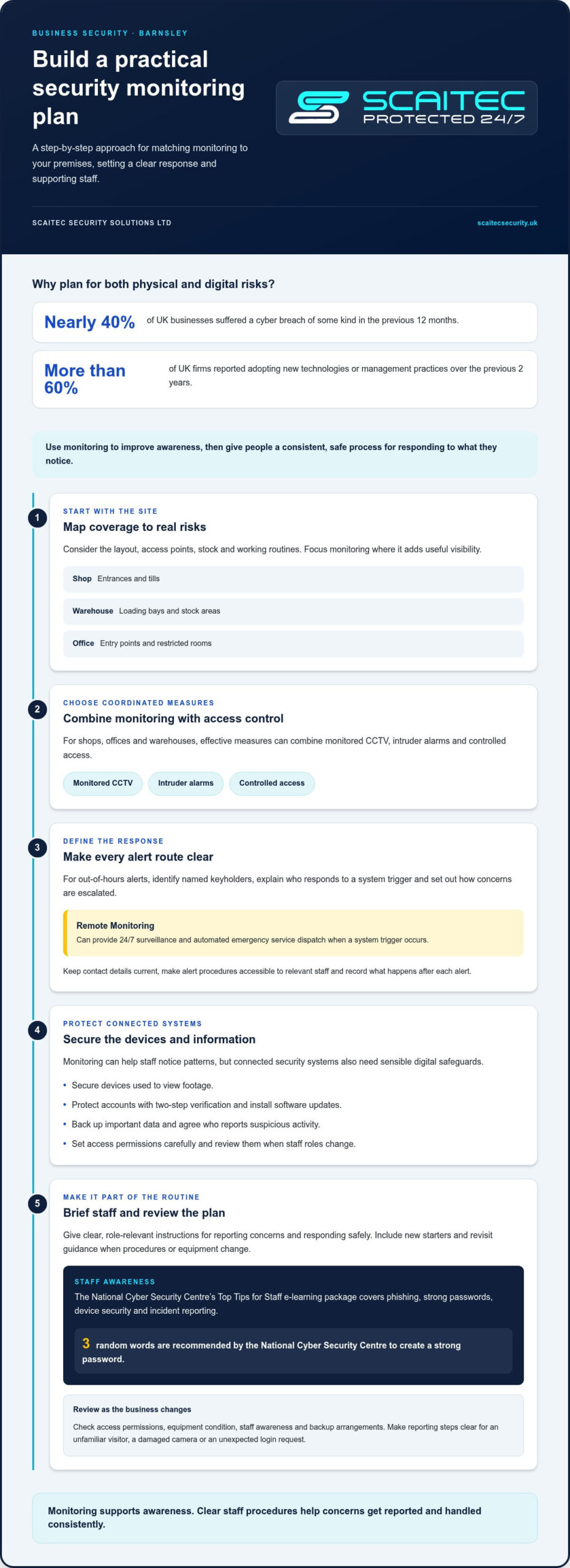
Nearly 40% of UK businesses suffered a cyber breach of some kind in the previous 12 months. A practical way to improve business security in Barnsley is to combine active premises monitoring with clear staff guidance, so concerns can be recognised and handled consistently. A plan for how to improve business security Barnsley businesses need should reflect their premises, working routines and risks.
It’s understandable to focus first on doors, equipment and alarms, but staff behaviour also shapes how well a business is protected. This guide explains how to improve business security Barnsley firms rely on through monitoring and practical procedures, and what to consider when choosing an approach. You’ll learn how to match security measures to your premises, support staff awareness and plan a clear next step.
Key Takeaways
- Use monitoring to help identify activity around your premises and support a timely, considered response.
- Give staff clear guidance on reporting concerns and following consistent security procedures.
- Assess risks such as burglary, vandalism and cyber threats to decide which protections your business needs.
- Plan workplace CCTV with employee privacy in mind, including clear signage and responsible handling of footage.
- Match security measures to your premises, access points and working patterns, then review them as the business changes.
Advanced security monitoring
For shops, offices and warehouses, effective measures combine monitored CCTV, intruder alarms and controlled access. Choose coverage around actual risks: a shop may need visibility at entrances and tills, while a warehouse may prioritise loading bays and stock areas. Offices can focus on entry points and restricted rooms. Monitoring supports awareness, but staff still need clear procedures for reporting incidents and responding safely. A practical starting point for how to improve business security in Barnsley is to match coverage to each site’s layout.
Out of hours, set a clear process for alerts, named keyholders and escalation. Keep contact details current, explain who responds to a system trigger, and record what happens after each alert. Remote Monitoring can provide 24/7 surveillance and automated emergency service dispatch when a system trigger occurs. This gives the response a defined route, rather than leaving staff to interpret an alert without guidance.
Advanced monitoring also means reviewing how security information supports daily operations. More than 60% of UK firms reported adopting new technologies or management practices over the previous 2 years. For a business across Barnsley, connected systems can help staff notice patterns, such as repeated activity near a delivery entrance. Set access permissions carefully and review them when staff roles change. A trusted security partner can help align monitoring with the layout and working routines of a site.
Consider physical protection and cyber security together. Secure devices used to view footage, protect accounts with two-step verification and install software updates. Back up important data and agree who reports suspicious activity. These steps help Barnsley businesses address digital risks alongside security at their premises.
Staff guidance turns systems into a practical routine. The National Cyber Security Centre’s Top Tips for Staff e-learning package covers phishing, strong passwords, device security and incident reporting. The National Cyber Security Centre recommends using 3 random words to create a strong password. Explain how staff should report an unfamiliar visitor, a damaged camera or an unexpected login request. Keep instructions brief, accessible and relevant to each role, then revisit them when procedures or equipment change.
- Map coverage: mark entrances, stock areas and restricted spaces, then identify where monitoring adds useful visibility.
- Set response steps: name keyholders, define escalation and keep alert procedures accessible to relevant staff.
- Review regularly: check access permissions, equipment condition, staff awareness and backup arrangements as operations change.
For businesses across South Yorkshire, the business security systems overview can help frame practical options for protecting commercial premises. Consider how monitoring fits alongside staff guidance, access control and existing response arrangements.
What are the main security risks for businesses in Barnsley?
Nearly 40% of UK businesses suffered a cyber breach of some kind in the previous 12 months. Barnsley businesses also face ransomware attacks and supply-chain risks. These threats can disrupt operations, expose sensitive information or interrupt access to essential systems. A small retailer, for example, may rely on a supplier’s ordering platform to replenish stock. If that platform is compromised, the impact can reach the retailer even when its own premises remain secure.
Physical risks vary by premises and working patterns. A shop may be vulnerable around its entrance, till or stockroom; an office may need to protect reception areas and confidential records. Warehouses can face risks around loading bays, stored goods and vehicle access. Check every route into the building, including staff entrances and delivery points. A propped-open side entrance, misplaced access card or unattended delivery can create an avoidable opportunity.
People and procedures can also affect security. For example, an employee might let an unfamiliar visitor follow them through a controlled entrance, or leave sensitive paperwork visible at a reception desk. Clear staff guidance helps make expected behaviour practical: explain how to challenge or report an unknown visitor, secure rooms after use, and raise concerns promptly. Give new starters the same instructions as established staff, then review them when roles or site arrangements change.
Cyber threats can stem from everyday decisions. A convincing phishing message could prompt a staff member to reveal account details, while ransomware can block access to files or disrupt business systems. Barnsley businesses should also consider supply-chain risks, such as shared accounts or information exchanged with a supplier. Identify the systems and records your operations depend on, restrict access to those who need it, and maintain backups of important data. A written incident process can clarify who reports suspicious messages or system interruptions.
- Premises: inspect entrances, delivery areas, stockrooms and spaces containing sensitive records.
- People: set clear procedures for visitor access, reporting concerns and protecting work areas.
- Digital and supplier links: review account access, shared information, backups and response steps.
Start with a simple risk review: list valuable assets, identify how each could be exposed, and assign someone to address each gap. Then prioritise weaknesses that could stop trading, such as an insecure delivery entrance or loss of access to essential files. For practical measures suited to commercial premises, explore business security systems as part of your wider risk plan.
How should a business choose a security company in Barnsley?
Start with the site, not a standard package. A Barnsley shop has different priorities from an office or warehouse, so map entrances, delivery points, valuable stock and restricted areas first. Note when the premises are occupied, who needs access and how staff report concerns. This gives Scaitec Security Solutions Ltd practical information to shape a solution around your operations, rather than adding equipment without a clear purpose.
Choose a provider that can explain the design in plain language. Ask how each proposed measure addresses a specific risk. For example, a camera at a delivery entrance should provide useful visibility of that access point. An access control system should reflect who needs entry and which areas require restrictions. A clear proposal connects each recommendation to your building, working patterns and response procedures.
Consider the full service journey. Design and installation matter, but ongoing maintenance and technical support also affect system performance. Ask how faults are reported, what routine maintenance covers and how changes to your premises can be accommodated. If your business expands its warehouse or changes its office layout, review the security arrangements too. Keep system records and operating instructions accessible to those responsible for site security.
Review monitoring and response arrangements separately. Establish who receives alerts, how keyholders are contacted and what staff should do if an incident occurs. A clear process can prevent confusion when an alarm activates or an unfamiliar visitor appears. Discuss how monitoring fits normal operations, including deliveries and opening routines. Make sure staff understand their responsibilities, and update instructions when roles or site procedures change.
Compare proposals by scope and suitability, not by equipment names alone. Check that the proposed coverage includes the areas you identified, that access arrangements suit staff needs, and that maintenance responsibilities are clear. The price depends on the premises, system design and installation requirements, and is given after a quote request. A written proposal should make those project elements understandable before work begins.
- Prepare: document entrances, assets, operating hours and current procedures.
- Review: match each recommendation to a specific site risk and staff need.
- Plan ahead: include monitoring, maintenance, support and future layout changes in the discussion.
For a Barnsley business, turn your site review into a practical scope of work. A useful discussion connects the premises, people and response arrangements, then explains how the selected measures will be installed and maintained.
Evaluate monitoring and support needs alongside physical measures, so responsibilities remain clear as the business changes. Digital protection is also part of a rounded security plan. Businesses should turn on two-step verification to add an extra layer of protection. Businesses should back up important data and know how to deal with evolving cyber threats. Make sure the people responsible for security know where backups are held, how to restore essential information and whom to contact when suspicious activity is noticed. Review these arrangements as systems, staff responsibilities and working practices change, and ensure the chosen provider explains the limits of its service.
What UK laws apply to workplace CCTV, signage and employee privacy?
Workplace CCTV planning in Barnsley should begin with a defined security purpose, such as recording entrances or monitoring a stockroom. Map the areas cameras would cover, then identify who could appear in the footage. A camera aimed at a till, for example, may also capture staff conversations or customer payment activity. Consider whether a narrower camera view could meet the same security need with less intrusion.
Before installation, write down why each camera is needed and what it should capture. A shop might record its public entrance to review reported incidents while avoiding unnecessary coverage of staff break areas. Review camera positions during installation and after changes to the premises. If shelving blocks the view, adjust the camera to retain useful coverage without extending it into unrelated areas.
Use clear signs to tell people that CCTV operates in the area. Place them where visitors can see them before entering the monitored space, such as near a shop entrance or warehouse access point. Keep the wording straightforward and explain the purpose in plain English. Provide a way for people to find further information about the recording arrangements and who is responsible for them.
Plan footage handling as carefully as camera placement. Decide which named roles can view recordings, how staff request access internally, and how incidents are documented. For example, a manager reviewing a reported break-in can record the reason, date and footage examined. Keep recordings secure, avoid informal sharing, and set a retention period that reflects the stated purpose. Review that period when business needs or procedures change.
Pay particular attention to employee privacy where cameras cover work areas. Explain the purpose and locations to staff before introducing or changing monitoring. A camera intended to protect a stockroom should not be used casually to assess unrelated staff behaviour. Restrict viewing access to people with a defined role, and record the reason for each review. These steps make the organisation’s approach clearer and more consistent.
- Define purpose: record the security reason for each camera and the area it covers.
- Inform people: position visible signs and give staff clear information about monitoring.
- Control footage: limit access, document reviews and organise retention around the stated purpose.
Review the arrangement when a camera moves, a work area changes or a new use is proposed. For instance, a camera added at a new staff entrance may change who is recorded. Keep a written record of camera locations, purposes, access roles and review decisions. A consistent process helps Barnsley businesses manage CCTV thoughtfully while keeping security objectives clear.
For wider workforce planning, Enterprising Barnsley offers free support to private sector investors moving to Barnsley. Enterprising Barnsley can provide recruitment advice and guidance on employee training.
How can businesses protect premises from burglary, theft and vandalism
Walk around your Barnsley premises before opening and after closing. Check entrances, delivery doors, boundary areas and windows for damage or signs of interference. A loose gate latch beside a warehouse, for example, may create an easier route than the main entrance. Record defects, assign someone to address them and review the list after building work or layout changes.
Make access routines consistent. Keep a current record of who holds keys or entry credentials, and remove access when someone changes role or leaves. Staff should secure doors behind them rather than allowing unknown visitors to follow. For deliveries, agree a receiving point and procedure so drivers aren’t directed into storage areas without permission. These habits reduce opportunities for theft and help staff notice unusual activity.
Protect valuable stock by considering its location and visibility. Move portable, high-value items away from windows and store them in a controlled area when the premises close. Keep stock records organised so missing items can be identified promptly. In a shop, this might mean securing small, valuable products near staffed areas. In a warehouse, keep loading zones clear enough to notice unauthorised movement.
Reduce opportunities for vandalism by maintaining the exterior. Replace failed lighting, remove obstructions that conceal entrances, and arrange prompt repairs to broken fences or damaged doors. A neglected wall or repeatedly unsecured side entrance can make a site appear unattended. Secure waste, tools and equipment rather than leaving them near an accessible boundary. Include these checks in the closing routine, not just occasional inspections.
Plan what staff should do if they find damage, a missing item or an attempted entry. Give them a reporting route and explain who records the incident, preserves relevant details and follows up. Staff shouldn’t confront a suspected intruder; their priority is to move to safety and alert the appropriate person. Record the time, location and observed damage as soon as practical, without disturbing possible evidence.
Review security as the business changes. A new stock area, revised delivery schedule or altered staff entrance can create different vulnerabilities. Ask a colleague to walk the site from a visitor’s perspective, then note overlooked access points. Prioritise practical changes that address specific weaknesses and assign responsibility for completing them. A documented review helps owners and staff keep protective routines consistent.
- Inspect: check boundaries, doors and windows during opening and closing routines.
- Control: update access records and establish clear visitor and delivery procedures.
- Respond: give staff a safe, straightforward way to report incidents and damage.
Review business security options
Scaitec Security Solutions: CCTV Systems
Scaitec Security Solutions Ltd can help Barnsley businesses plan CCTV systems around their premises, security priorities and daily operations. If you need clearer coverage of entrances, stock areas or delivery points, a tailored system design can address those needs. CCTV can also work alongside intruder alarms or access control systems where the site needs a broader electronic security approach.
Scaitec Security Solutions Ltd provides system installation and maintenance to help businesses keep security arrangements suited to their premises as they change. Fire alarm installation is also available, and installations meet current British Standards. The appropriate combination depends on the building, its use and the risks identified in your security review.
To discuss CCTV systems for your business in Barnsley, contact Scaitec Security Solutions Ltd.
Make your next security decision count
If you’re deciding how to improve business security in Barnsley, turn your site review into a practical plan. Identify the concern that matters most to your operations, then choose a measure and staff procedure to address it. This gives your next conversation a clear starting point and keeps decisions focused on your premises.
Scaitec Security Solutions can help shape that approach with CCTV Systems, Intruder Alarms and Access Control systems. Consider how these measures could support your priorities, whether you’re planning a new system or reviewing existing arrangements. A discussion about your site and working routines can help identify a practical next step.
A considered plan makes security easier to manage as your business develops. Start with the needs you’ve identified and build your next steps with confidence.
Frequently Asked Questions
What can I do next?
Turn your security review into a short, prioritised action plan. Choose an issue to address first, such as unclear access permissions or a gap in staff reporting procedures, then assign responsibility for resolving it. For a Barnsley premises, Scaitec Security Solutions can discuss how electronic security systems may fit your needs. Bring a simple site plan and note changes to your building or working routines to make that discussion focused and practical.
What equipment will I need?
The right equipment depends on the risks and routines at your premises. A small shop may consider CCTV Systems for visibility, an Intruder Alarm for alerts, or Access Control systems to manage entry. You may need one measure or a combination. Scaitec Security Solutions also offers system maintenance to support the ongoing upkeep of installed equipment. Start by identifying the areas and access points that matter most, rather than selecting equipment before defining the need.
What are the best access control and alarm systems for small businesses in the UK?
Choose systems that suit your entrances, staff access needs and closing routine, rather than relying on a single “best” option. Access control systems can help manage entry, while intruder alarms can alert you to potential security issues. Scaitec Security Solutions’ alarm systems are Insurance Approved. Consider who needs access, how permissions should change when roles change, and how the alarm fits your daily opening and closing procedures.
Protect Your Business
Protect Your People
Book Your FREE Site Protection Survey

Since pioneering Scaitec Security Solutions in 2005, Paul Scaife, with his roots in the industry dating back to 1994, has distinguished the firm as a leading provider of bespoke fire and security solutions, servicing clients across Sheffield, Rotherham, and surrounding areas.
His leadership, underpinned by accreditation from the Security Systems and Alarms Inspection Board, ensures that Scaitec surpasses client expectations by blending advanced technology with a deep understanding of their unique needs.
Paul's ethos champions innovation and efficiency, driving Scaitec to deliver tailored, cutting-edge solutions that enhance safety and operational ease.
Discover more about Paul’s commitment to excellence on LinkedIn.