
Table of Contents
A failed camera doesn’t always mean the whole CCTV system needs replacing. A CCTV repair service in Sheffield can assess faults affecting cameras, cabling, power supplies or recording equipment and identify the repair needed. The service-call charge and repair price depend on the fault, equipment and work required, and are given after a quote request.
If footage has disappeared, a camera shows a blank image or the system keeps losing connection, you’ll want a clear explanation before deciding what to do. The right repair depends on the camera type and where the fault lies in the wider system.
This guide explains which camera types may be repaired, how service-call charges work and what to expect from testing and maintenance in Sheffield. You’ll also learn what can affect the repair and how a systematic assessment can help restore dependable CCTV coverage.
Key Takeaways
- Learn how camera type, cabling and the source of a fault help determine whether a repair is practical.
- Understand what can affect a service-call charge and the repair quote, so you know what to expect from the pricing process.
- See how systematic testing can help distinguish a camera fault from an issue elsewhere in the recording or connection setup.
- Find out which maintenance checks can help identify problems early and keep CCTV coverage working reliably.
- Discover what to consider when a fault needs urgent attention, without assuming that every issue requires a full system replacement.
Repairing different camera brands and types
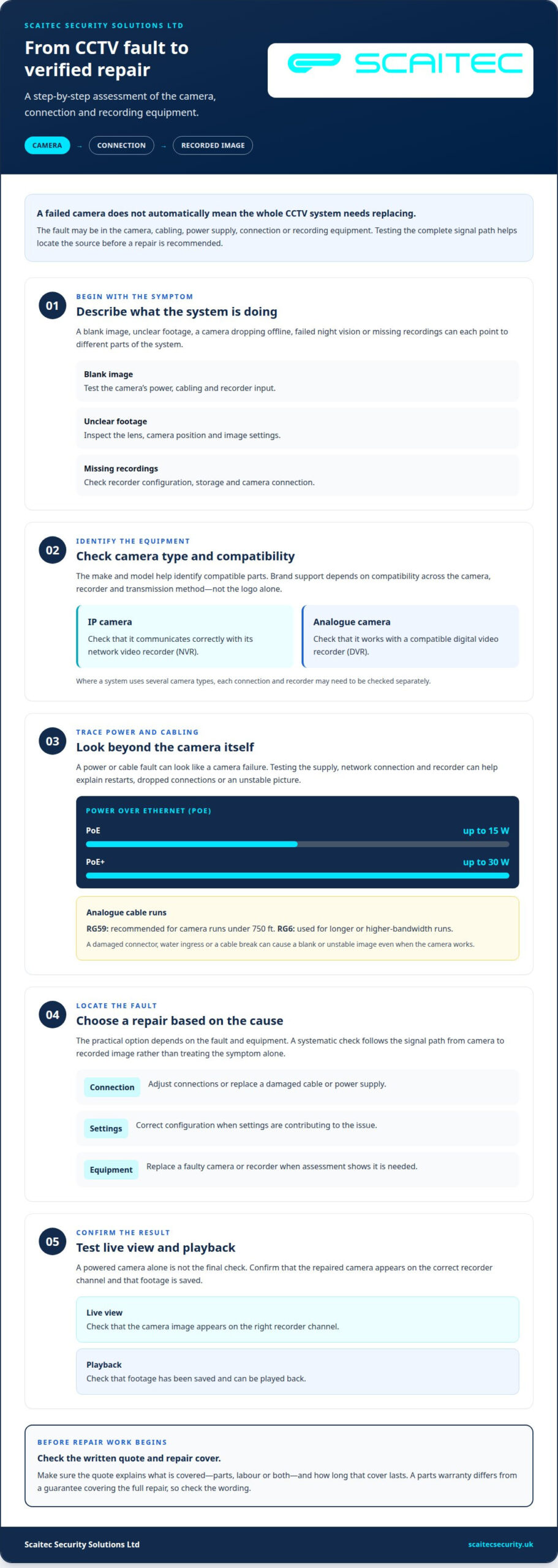
Scaitec Security Solutions Ltd assesses analogue and IP CCTV cameras, along with their cabling, power supplies and recording equipment. The make and model help identify compatible parts, while the fault determines whether repair or replacement is practical. If a system uses several camera types, each connection and recorder may need to be checked separately.
Brand support depends on compatibility across the camera, recorder and transmission method, rather than the logo alone. For example, an IP camera must communicate correctly with its network video recorder (NVR); an analogue camera relies on a compatible digital video recorder (DVR). For business CCTV systems, a repair assessment also considers how the existing equipment works together.
Power and cabling can cause faults that appear to come from the camera. Power over Ethernet (PoE) delivers up to 15 W, while PoE+ delivers up to 30 W. If an IP camera restarts or drops offline, a technician can test its power supply, network connection and recorder before recommending a replacement.
Coaxial cable type also matters for analogue systems. RG59 is recommended for camera runs under 750 ft, while RG6 is used for longer or higher-bandwidth runs. A damaged connector, water ingress or a break in the cable can produce a blank or unstable image, even when the camera itself works.
Common faults include a blank picture, blurred or discoloured footage, intermittent connection, failed night vision and a recorder that stops saving video. Repair options include adjusting connections, replacing a damaged cable or power supply, correcting configuration, or replacing a faulty camera or recorder. A CCTV repair service in Sheffield should test the complete signal path, from the camera to the recorded image, to locate the source rather than treat symptoms.
- Blank image: test the camera’s power, cabling and recorder input.
- Unclear footage: inspect the lens, camera position and image settings.
- Missing recordings: check recorder configuration, storage and camera connection.
Repair terms depend on the work and any replacement parts. Before work begins, make sure the written quote explains what is covered, such as parts, labour or both, and how long that cover lasts. A parts warranty differs from a guarantee covering the full repair, so check the wording.
Testing should finish with a live-view and playback check, not simply a powered camera. For example, an engineer can confirm that the repaired camera appears on the right recorder channel and that footage is saved. This verifies that the camera, connection and recording equipment are working together.
During an assessment, the cable route and the stated run requirements can be considered alongside the camera and recorder, rather than treating the image fault as proof that a camera has failed. RG6 coaxial cable is used for longer or higher-bandwidth camera runs. This gives the technician a relevant point to check when reviewing an analogue system’s signal path and deciding whether attention should focus on the cable, its connections or another component. Keeping the assessment tied to the actual installation also helps ensure that a proposed cable change addresses the observed problem and remains compatible with the equipment already in place.
Security camera repair pricing and service-call charges
The cost of CCTV repair depends on the fault, equipment, parts and labour involved. Scaitec provides a quote for the specific work, rather than a general figure that may not reflect what’s needed. Reconnecting a loose camera cable, for example, differs from replacing a failed recorder or tracing an intermittent power fault.
A service-call charge may cover the visit and initial assessment, with repair work priced separately. Ask for the quote to explain what the call includes and whether diagnostic work is part of the repair. If a camera shows no image, the engineer may need to test its power supply, cable route and recorder connection to identify the faulty component.
Several factors shape the quote. The equipment’s make and model affect which replacement parts are compatible, while the fault’s location can affect how much testing is needed. Access matters too: a camera mounted high above a shop entrance may require different work from an accessible unit inside a hallway. The quote should clearly set out parts, labour and any additional work.
Ask for the proposed scope before authorising a repair. A clear quote distinguishes the diagnostic visit from repair labour and replacement components. It should also explain the limits of the work, such as whether testing covers one camera or the connected recorder. If the engineer finds a separate issue, the revised work and cost should be explained before proceeding.
- Visit: establish what the service-call charge covers.
- Diagnosis: identify the equipment and fault being assessed.
- Repair: separate labour, parts and any additional work in the quote.
- Approval: agree the scope and cost before repair work begins.
For example, a camera with a damaged connector may need a small component replaced and then retesting. A recorder that fails to save footage could require checks of its settings, connections and storage. These are different tasks, so the quote should describe the actual fault rather than assume every repair follows the same process.
Keep the written quote and repair record together. They clarify what was assessed, which parts were changed and what testing followed. If the same camera develops a problem later, these details offer a useful starting point for diagnosing whether the fault has returned or another component is involved.
For a CCTV repair service in Sheffield, a useful quote connects the reported symptom with the assessment and proposed work. If a fault calls for a wider system assessment, corrective security system servicing can be considered as the next step.
This clarifies how the initial visit relates to the repair charge: the service-call amount is credited in full, rather than remaining a separate charge. Confirm that the credit appears in the written quote before approving the work.
CCTV repair and testing facilities
A CCTV fault can be tested on site or, if equipment needs closer inspection, away from its installed position. The right setting depends on the component and fault. An engineer can trace a camera’s signal at the property, for example, while a removed recorder can be examined separately. Testing should identify the cause before parts are replaced.
On-site checks start with the affected camera and follow its connection through the system. An engineer can compare its image with another camera, inspect the cable route and test the recorder input. If one camera fails while others work, the comparison helps narrow down the cause. If several feeds fail together, the shared power supply or recording equipment may be responsible.
Networked CCTV needs a different diagnostic sequence from an analogue setup. For an IP camera, testing can trace the network connection from camera to recorder, including relevant ports and settings. On an analogue system, the engineer can follow the video signal through its coaxial cable and DVR channel. These checks help distinguish a camera fault from a transmission problem.
- Camera: inspect the image, lens and physical connections.
- Power: test the supply and connection serving the affected equipment.
- Network or cable: trace the route between camera and recorder.
- Recorder: review the input, settings and saved footage.
A removed component can be assessed separately from the installed system. A recorder that restarts repeatedly, for example, may need its connections, configuration and storage inspected. Testing it independently can help establish whether the fault follows the recorder or remains with the site installation. The findings guide whether repair, replacement or further system checks are appropriate.
Testing should also account for the conditions around the camera. A view that becomes unclear in rain may point to moisture or a poorly sealed connection; a picture that changes at night may involve infrared illumination or reflected light. An engineer can compare the image under the conditions linked to the fault, rather than relying only on a daytime view.
After repairs, final checks should cover the affected function and its effect on the wider system. A replacement camera needs to be aligned with its intended view, for example, while a recorder adjustment calls for checking the relevant channel and recording schedule. A service record can note the fault, work completed, components changed and tests performed.
For a clear handover, the engineer should explain which camera or system component failed and what the tests established. If the findings point to wider deterioration, planned CCTV system maintenance can help identify related issues before they interrupt another camera feed.
CCTV repairs and maintenance in Sheffield
Repair and maintenance checks can restore coverage and identify faults before they disrupt more cameras. The right response depends on the symptoms, the equipment affected and whether the system is still recording useful footage.
Choosing a reputable repair service
A sound repair process starts with a clear description of the fault, followed by a structured assessment and an explanation of the proposed work. Look for a written record identifying the affected equipment, diagnosis, parts and tests completed. Reviews and ratings can add context: detailed comments about communication and completed repairs are more useful than a score alone.
For a major repair, clarify how replacement parts are covered. A 1-year parts warranty applies to major system repairs, but parts cover is distinct from labour or a guarantee of the entire system’s performance. The written terms should identify exactly what the warranty covers.
Emergency and same-day callouts
An urgent fault may affect one camera, several views or the recording system itself. A repair assessment should establish which coverage remains active, then prioritise the fault affecting the greatest security need. Same-day callouts are a scheduling matter, not a repair outcome: the work still depends on diagnosis, access and compatible parts.
If cameras go offline, a reboot can resolve about 30% of such calls. During a service visit, an engineer can power off the DVR or NVR for 60 seconds, restart it and check whether camera feeds return. If the fault persists, the next step is to trace the connection or equipment causing the interruption.
Sheffield service coverage areas
The property address matters as much as the equipment brand. A repair visit in Sheffield may involve a home, shop, office or other site, each with different camera positions and access requirements. The address and affected areas help define the visit’s scope and what the engineer needs to assess.
Within a property, a fault may affect an entrance camera while other views remain available. A useful service report records the camera locations checked and any remaining gaps. This helps plan follow-up work around the site’s actual layout.
Maintenance can reveal developing issues, such as loose connections, obstructed views or recording settings that no longer suit operational needs. An engineer can review the camera image, recorder operation and playback, then document any adjustments. This gives the property owner a clearer account of what was checked and which issues need attention.
A camera that repeatedly disconnects may need more than a restart. The engineer can assess its power and network path, then check whether the fault returns during normal operation. Recurring issues should be recorded alongside the steps taken, so future visits can build on the earlier diagnosis.
After a repair, the final assessment should confirm that affected cameras show the intended views and that the recorder captures footage. A maintenance review can also identify whether other cameras share the same vulnerable connection or setting. These checks help distinguish a resolved fault from a wider maintenance need at your Sheffield property.
Emergency CCTV repair Sheffield same-day callout
A CCTV outage can leave a property with missing views or no usable recordings. An urgent repair starts by identifying which cameras are still live, whether the recorder is saving footage and where coverage has been lost. This helps prioritise the work, whether one entrance camera has failed or the whole system is offline.
For a same-day callout, clear fault information helps the engineer prepare. Report the symptoms, affected camera locations, recorder type and any recent changes to narrow down the initial checks. A feed that failed after building work may point to a disturbed cable, for example, while several missing feeds may indicate a shared power or recorder issue.
During an urgent assessment, the engineer can map the fault across the system. They can check live images, camera connections and recorder status, then establish whether the issue affects one device or multiple channels. This avoids treating a single camera fault as a complete system failure, or overlooking a wider interruption behind several blank screens.
- Single camera offline: trace that camera’s power and connection.
- Several feeds missing: assess shared equipment and recorder inputs.
- Live images but no playback: inspect recording settings and storage operation.
- Intermittent footage: identify whether the interruption follows a camera, cable or recorder.
An urgent repair may restore operation through a settings correction, connection repair or replacement component. The remedy depends on the diagnosed fault and compatible equipment. If a required part is unavailable during the visit, the engineer can explain the findings and remaining work rather than presenting a temporary fix as a completed repair.
If some cameras are still working, the assessment can focus first on the failed coverage area. A shop with functioning internal cameras but a failed rear entrance view, for example, has a different priority from a site whose recorder has stopped saving all footage. The engineer’s findings help set the repair sequence according to the security impact.
After emergency work, testing should confirm the repaired view and any affected recording function. The engineer can check the live image, playback and relevant recorder channel, then record anything still outstanding. This gives the person responsible for the premises a practical handover and distinguishes restored coverage from follow-up work.
For Sheffield properties, an urgent callout is most useful when it leads to a clear diagnosis, prioritised repair and recorded test results. These steps give the site manager a concise account of what failed, what was restored and whether further work remains.
Arrange corrective CCTV servicing
Scaitec Security Solutions: CCTV Systems
Scaitec Security Solutions can assess, repair and maintain CCTV systems. We consider how the affected cameras, recorder and connections work together, helping identify whether an issue is isolated or part of a wider system problem.
If a repair highlights the need to review your wider security arrangements, CCTV can work alongside Intruder Alarms, Access Control or Fire Services. The right combination depends on your property and the areas you need to protect. We can discuss a practical next step based on your system and its fault.
Contact Scaitec Security Solutions to discuss your CCTV repair or maintenance needs.
Plan the next step for your security system
A repair can also prompt a review of whether your CCTV still suits how the property is used. A home extension, changed entrance or revised business layout may affect which views matter most. If an assessment identifies a coverage gap, consider whether repair, repositioning or an equipment update best suits the site.
For a CCTV repair service in Sheffield, Scaitec Security Solutions can help you choose a practical next step. CCTV can be planned alongside Intruder Alarms and Access Control where a property needs a joined-up security approach. The decision should reflect your site and its requirements, rather than replacing equipment without understanding the cause.
Keep repair findings available when considering future changes. A clear record helps you prioritise outstanding work and explain how the system is used. It gives the next discussion a practical starting point, whether you need to address an immediate fault or plan a wider review.
A considered next step can help you move forward with greater clarity and confidence.
Frequently Asked Questions
What CCTV repair services are available in Sheffield?
Scaitec Security Solutions repairs and maintains existing security systems for new and existing customers. Our CCTV repair service in Sheffield assesses faults in installed systems at homes and business premises. When describing a problem, note whether live viewing, recorded playback or both are affected. This helps distinguish a camera issue from a problem with recording or system operation.
How much do CCTV repairs cost in Sheffield?
CCTV repair costs depend on the fault and work required; Scaitec provides a quote after a request. The quote can account for the equipment, diagnostic work, replacement parts, labour and access to the affected area. A fault in an easily reached camera may involve different work from an investigation across several connected components. A clear quote defines the scope before repairs proceed.
Protect Your Business
Protect Your People
Book Your FREE Site Protection Survey

Since pioneering Scaitec Security Solutions in 2005, Paul Scaife, with his roots in the industry dating back to 1994, has distinguished the firm as a leading provider of bespoke fire and security solutions, servicing clients across Sheffield, Rotherham, and surrounding areas.
His leadership, underpinned by accreditation from the Security Systems and Alarms Inspection Board, ensures that Scaitec surpasses client expectations by blending advanced technology with a deep understanding of their unique needs.
Paul's ethos champions innovation and efficiency, driving Scaitec to deliver tailored, cutting-edge solutions that enhance safety and operational ease.
Discover more about Paul’s commitment to excellence on LinkedIn.