
Table of Contents
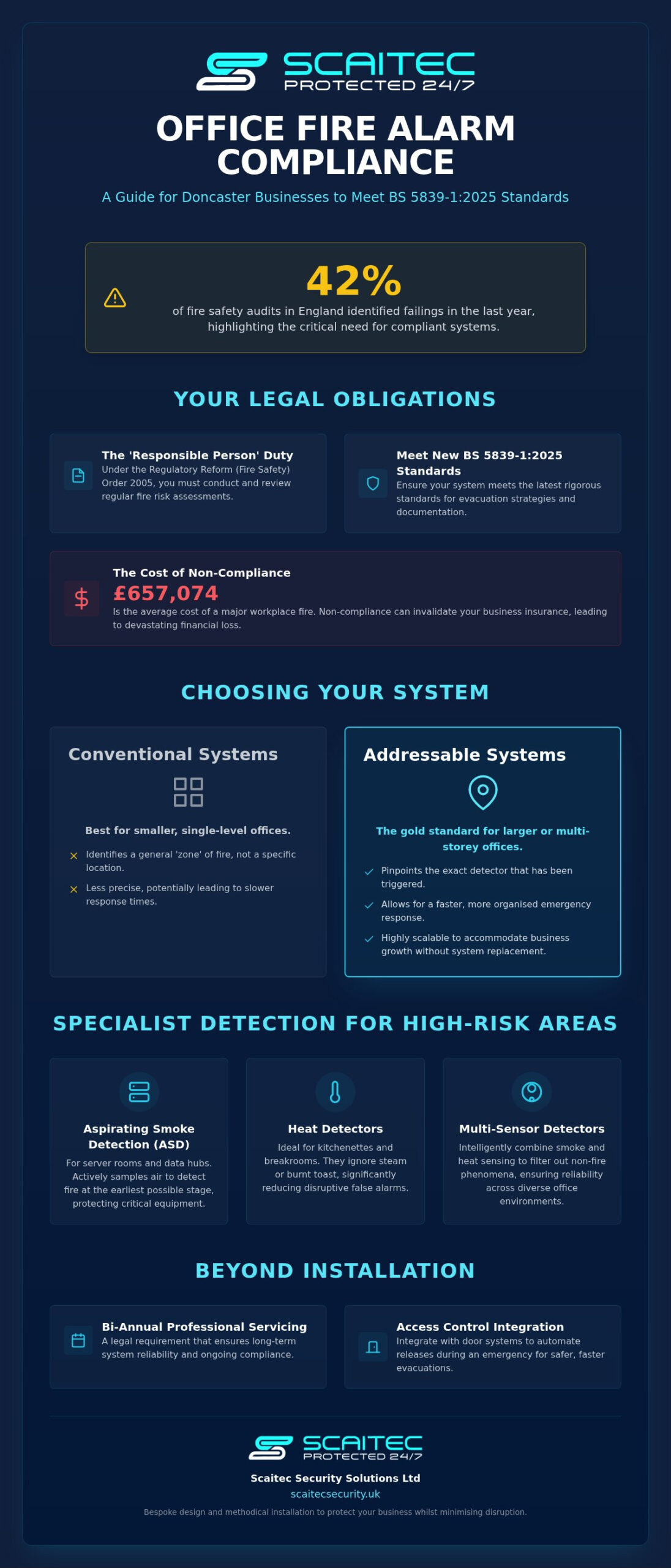
If a fire safety inspector walked into your business premises tomorrow, would your current office fire alarm systems Doncaster stand up to the rigorous new BS 5839-1:2025 standards? With 42% of fire safety audits in England identifying failings in the last year, the pressure to maintain a compliant workplace has never been higher. It’s a daunting task for any business owner, especially when you’re trying to balance the safety of your team with the practicalities of a busy office environment and a strict budget.
We understand that navigating complex UK fire regulations can feel overwhelming, and the worry about system reliability or false alarms is a burden you don’t need. This guide is designed to help you protect your Doncaster workplace with the latest fire detection technology whilst ensuring total legal compliance. We’ll walk you through the essential updates to British Standards, the benefits of integrated security, and how a professional maintenance plan can provide lasting peace of mind without disrupting your daily operations.
Key Takeaways
- Understand your legal duties as a ‘Responsible Person’ under the Regulatory Reform (Fire Safety) Order 2005 to ensure your workplace remains compliant.
- Learn how to choose the most effective office fire alarm systems Doncaster for your premises, comparing the benefits of conventional and addressable technology.
- Discover why bi-annual professional servicing is a legal requirement and how a structured maintenance plan ensures long-term system reliability.
- Explore the safety advantages of integrating fire detection with access control to automate door releases during an emergency evacuation.
- Find out how a bespoke design and methodical installation process can protect your business whilst minimising disruption to your daily operations.
Fire Safety Obligations for Doncaster Office Managers
The Regulatory Reform (Fire Safety) Order 2005 remains the cornerstone of workplace safety in the UK. For those managing office fire alarm systems Doncaster, this legislation places a heavy legal burden on the “Responsible Person.” This individual, typically the employer or building owner, must ensure that a thorough fire risk assessment is conducted and regularly reviewed. In 2026, this responsibility has become even more critical following the introduction of BS 5839-1:2025. This updated standard, which superseded previous versions on 30 April 2025, demands a more rigorous focus on evacuation strategies and handover documentation.
If your system doesn’t meet these current standards, your business insurance could be at risk. With the average cost of a major workplace fire reaching £657,074, the financial consequences of a rejected claim are devastating. Ensuring your detection technology is up to date isn’t just about avoiding fines; it’s about protecting your livelihood and your team. Professional systems provide the necessary evidence of compliance that insurers require during their own risk assessments.
What Constitutes a Compliant Office Fire Alarm?
A professional fire alarm system is far more complex than the battery-operated smoke alarms found in homes. In high-density office environments, the law requires a system that can provide early detection and clear communication to all occupants. This includes addressable detectors that pinpoint the exact location of a fire, audible sounders that reach every corner of the workspace, and Visual Alarm Devices (VADs). VADs are essential for ensuring safety for hearing-impaired staff or those working in areas with high ambient noise. These components work together to provide a robust shield, ensuring that everyone can evacuate safely before conditions become life-threatening.
Local Fire Safety Standards in South Yorkshire
Designing office fire alarm systems Doncaster requires a deep understanding of South Yorkshire Fire and Rescue guidelines. Local building control and insurance providers often have specific expectations that go beyond national minimums. Working with a specialist who understands the South Yorkshire landscape ensures that your system is tailored to local commercial requirements. We find that a methodical approach to design helps businesses pass fire safety audits, which is vital considering that 42% of audits in England identified failings in 2024/25. By aligning with local standards, you ensure your office is both safe and fully compliant with the latest 2026 regulations.
Choosing the Right Fire Detection Technology for Your Workplace
Selecting the appropriate technology for office fire alarm systems Doncaster is a balance between regulatory compliance and operational efficiency. Every workspace has a unique footprint, from compact start-up hubs to sprawling multi-storey complexes. Choosing the wrong system can lead to either inadequate protection or a frustrating cycle of false alarms that disrupt your team’s productivity. We focus on matching the specific needs of your building with technology that offers both reliability and ease of use.
Addressable vs Conventional Systems: A Comparison
Conventional systems are often suitable for smaller, single-level offices where a fire can be quickly located by sight. However, for larger Doncaster businesses, addressable systems are the gold standard. Unlike conventional setups that only identify a general ‘zone’, addressable technology pinpoints the exact detector that has been triggered. This precision allows for a faster, more organised response during an emergency. These systems are also highly scalable; as your business expands, we can easily integrate additional devices into the existing network without a full system overhaul. This prevents the need for costly replacements in the future.
Specialist Detection for High-Risk Office Areas
Standard smoke detectors aren’t always the best fit for every room. In server rooms or data hubs, where even a small amount of smoke can signal a catastrophic equipment failure, we recommend Aspirating Smoke Detection (ASD). These systems actively pull air samples through a network of pipes, detecting fire at the earliest possible stage. Conversely, in office kitchenettes or breakrooms, heat detectors are preferable as they ignore steam or burnt toast that would otherwise trigger a nuisance alarm. By intelligently combining smoke and heat sensing, multi-sensor detectors effectively filter out non-fire phenomena to keep your office running without unnecessary interruptions.
Remote Monitoring and Cloud Connectivity
With the rise of hybrid working, many Doncaster offices are frequently left unoccupied. Connecting your system to an Alarm Receiving Centre (ARC) ensures 24/7 vigilance. If a trigger occurs, the ARC is notified instantly, allowing for a rapid response even if nobody is on-site. This provides a layer of security that traditional ‘bells-only’ systems simply cannot match. For those operating in historic or rented buildings where invasive cabling is restricted, wireless fire alarms offer a sophisticated, non-destructive alternative. We specialise in managing these tailored fire safety solutions, providing the stability and protective vigilance your business deserves.
The Critical Role of Regular Servicing and Maintenance
Installing a high-specification system is only the first step in protecting your workplace. To remain compliant with British Standard BS 5839-1:2025, office fire alarm systems Doncaster must undergo professional servicing at least twice a year. This isn’t merely a recommendation; it’s a legal obligation that ensures your detection network remains reliable and ready to act in an emergency. Beyond the legalities, regular maintenance provides a vital safety net for your business, preventing the gradual degradation of components that often leads to system failure or disruptive false alarms.
A central part of this process is the fire alarm logbook. This document serves as your primary evidence of compliance during a fire safety audit or an insurance inspection. We ensure that every test, service visit, and system event is meticulously recorded. Keeping this documentation up to date is essential, as failing to provide proof of maintenance is one of the most common breaches identified by fire and rescue services during their inspections.
What Happens During a Professional Maintenance Visit?
Our maintenance visits are thorough and methodical, designed to identify potential issues before they escalate. We don’t just check the main control panel; we test the sensitivity of every sensor to ensure they aren’t contaminated by dust or debris. This is a critical step, as false alarms accounted for approximately 42% of all incidents attended by fire services in the year ending June 2025. We also verify the integrity of battery backups, ensuring the system remains operational during a power cut. Sounder volumes and visual alarm devices are tested in every zone to confirm they provide adequate coverage for your specific office layout.
Corrective vs Preventative Maintenance
Many businesses fall into the trap of corrective maintenance, only calling for assistance when a fault light appears or a siren won’t stop. This reactive approach is often more expensive and causes significant business downtime. In contrast, a preventative maintenance strategy identifies and rectifies faults before they trigger a system shutdown. This proactive approach ensures that your office fire alarm systems Doncaster evolve alongside your business, accounting for changes in office partitioning or staff density. For our contract holders, we provide the peace of mind that comes with dedicated emergency corrective support, ensuring your office remains a safe environment for your team at all times.
Integrating Fire Alarms with Access Control for Safer Evacuations
Modern office fire alarm systems Doncaster shouldn’t operate in isolation. When a fire is detected, every second spent fumbling with a security fob or waiting for a restricted door to unlock is a second wasted. By linking your fire detection with your access control, we create a unified safety response that automatically releases electronic locks the moment an alarm is triggered. This ensures that escape routes are clear and unobstructed, which is a fundamental requirement for meeting current UK safety standards. It’s about removing friction during a crisis, allowing your team to move toward safety without hesitation.
Technical Synergy: How the Systems Talk
The technical link between these systems is usually managed through a fire alarm interface relay. This small but vital component sends an immediate signal to the access control panel to drop power to electromagnetic locks. We carefully configure these settings to ensure that whilst safety is the priority, your building’s security isn’t compromised during routine fire drills. It’s essential to choose the correct hardware for this task. We recommend “fail-safe” locks for all designated fire exits, which are designed to unlock automatically when power is cut. In contrast, “fail-secure” locks remain locked without power and are generally unsuitable for primary evacuation routes. This distinction is critical for maintaining compliance with BS EN standards regarding electronic door hardware.
Improving Evacuation Efficiency
Beyond just opening doors, an integrated approach helps manage the “human element” of an emergency. Access logs provide a real-time digital record of exactly who is in the building, which is an invaluable tool for fire wardens during roll-call at assembly points. This data replaces the need for manual sign-in sheets that are often left behind in the rush to exit. We also incorporate visual alarm devices, such as high-intensity strobes, into the integrated fire and security design. These devices ensure the evacuation signal is inclusive, reaching staff members who may have hearing impairments or those working in noise-heavy areas like server rooms.
Choosing a single partner to handle both your fire and security needs simplifies the entire lifecycle of your system. It ensures that the design is cohesive, the installation is streamlined, and the ongoing maintenance is handled by a team that understands how every component interacts. This holistic mentality doesn’t just save time during the setup; it provides a more robust and reliable safety net for your Doncaster business in the long term.
Explore our integrated access control solutions
Professional Fire Alarm Installation in Doncaster with Scaitec
Choosing the right partner for your installation is just as critical as the hardware itself. We’ve spent over two decades refining our approach to office fire alarm systems Doncaster, ensuring every project we undertake is rooted in technical proficiency and genuine care for our clients’ safety. As an independent South Yorkshire firm established in 2005, Scaitec Security Solutions Ltd doesn’t just provide a service; we act as a vigilant protector for your business throughout the entire lifecycle of your security system. Our team-based approach ensures that from the initial consultation to long-term aftercare, you have a dedicated expert guide by your side.
We understand that a major installation can feel like a disruption to your daily operations. To mitigate this, we meticulously organise our installation schedules to suit your business hours. Whether it’s working in stages or during quieter periods, our goal is to provide a seamless transition to your new safety system with minimal impact on your team’s productivity. This methodical pace reflects our commitment to high standards; we never cut corners because your safety is our priority.
Our Design and Installation Process
Our process begins with a comprehensive site survey to identify the specific fire risks unique to your office environment. We don’t believe in one-size-fits-all solutions. Instead, Scaitec Security Solutions Ltd creates a bespoke system design that meets all current British Standards, specifically the latest BS 5839-1:2025 requirements. Once the design is finalised, our qualified engineers handle the installation with precision. The final stage involves professional commissioning and thorough staff training. We ensure your team feels confident operating the system and understands the protocols for both drills and genuine emergencies.
Why Doncaster Businesses Trust Scaitec
With a heritage dating back to 2005, our reputation in South Yorkshire is built on steadfast reliability and authoritative expertise. We offer more than just installation; we provide a holistic security partnership. This includes 24/7 remote monitoring via our Alarm Receiving Centre (ARC), giving you peace of mind that your premises are protected even when the office is empty. Our clients value our clear, descriptive communication and our ability to simplify complex safety regulations into actionable steps. We take pride in being a local partner that understands the specific commercial landscape of Doncaster.
If you’re ready to upgrade your workplace safety or need to ensure your current system is fully compliant with 2026 standards, the next step is a professional evaluation. Contact Scaitec Security Solutions Ltd today to book your comprehensive site survey and discover how we can protect your Doncaster office with a tailored fire safety strategy.
Securing Your Workplace Future in South Yorkshire
Achieving total compliance for your office fire alarm systems Doncaster involves more than just selecting the right sensors. It requires a methodical synergy between smart detection technology, regular bi-annual maintenance, and integrated security measures like automatic door releases. By staying ahead of the latest British Standards, you protect your staff whilst safeguarding your business against insurance risks and costly operational downtime.
Since 2005, we’ve provided South Yorkshire businesses with expert technical support and 2026-ready safety solutions. Our 24/7 ARC remote monitoring ensures constant vigilance, providing the stability and protective reassurance your company deserves. We take pride in being a dedicated partner that simplifies the complex landscape of fire safety regulations, allowing you to focus on running your business with complete peace of mind.
Secure your Doncaster office with a professional fire alarm consultation
We look forward to helping you create a safer and more resilient workspace for your team.
Frequently Asked Questions
What are the legal requirements for fire alarms in a Doncaster office?
Legal requirements are dictated by the Regulatory Reform (Fire Safety) Order 2005. This mandates that a ‘Responsible Person’ must ensure a suitable fire detection system is in place and maintained. In 2026, systems should align with the updated BS 5839-1:2025 standards. Failure to comply can lead to prosecution or invalidated insurance. We help you navigate these rules by designing systems that meet all current British Standards for commercial premises.
How often should my office fire alarm system be professionally tested?
Professional testing must occur at least every six months to comply with BS 5839-1. Whilst your staff should perform weekly bell tests, these bi-annual professional inspections are essential for checking sensor sensitivity and battery integrity. Our maintenance contracts ensure you never miss a deadline. This proactive approach identifies potential faults early, reducing the risk of system failure and ensuring your fire logbook remains fully up to date for safety audits.
Does my small office really need an addressable fire alarm system?
Whilst conventional systems are often sufficient for very small, single-room offices, addressable systems are recommended for most growing businesses. Addressable technology pinpoints the exact location of a fire trigger, which is vital for faster evacuations in multi-room premises. If your office fire alarm systems Doncaster include several zones or floors, an addressable setup offers superior protection and scalability. It also helps reduce false alarms by using intelligent sensors that distinguish between smoke and steam.
Can Scaitec monitor my fire alarm 24/7 even when the office is empty?
Yes, we provide 24/7 remote monitoring through our dedicated Alarm Receiving Centre (ARC). If your system is triggered whilst the building is unoccupied, our team receives an immediate alert and can contact the emergency services or your designated keyholders. This constant vigilance is especially beneficial for hybrid offices where staff presence is inconsistent. It provides an essential layer of protective reassurance, ensuring your property is never left vulnerable to an undetected fire outbreak.
What is the difference between a fire risk assessment and a fire alarm survey?
A fire risk assessment is a comprehensive legal review of all fire hazards within your building, identifying how to minimise risks. In contrast, a fire alarm survey is a technical evaluation focused specifically on the design and placement of your detection hardware. Both are necessary for total compliance. We conduct detailed surveys to ensure your system provides adequate coverage based on the findings of your risk assessment, ensuring no high-risk areas are overlooked.
Will installing a new fire alarm system disrupt my office’s daily work?
We take a methodical approach to installation to ensure minimal disruption to your daily operations. Our engineers can organise work around your specific office hours, often completing invasive tasks during quieter periods. For businesses in rented or historic buildings, we frequently recommend wireless systems. These require far less cabling and drilling, allowing for a swift and clean installation process that keeps your team productive whilst we enhance your building’s safety and regulatory compliance.
Are wireless fire alarm systems as reliable as wired ones for businesses?
Modern wireless fire alarms are exceptionally reliable and fully compliant with British Standards. They use secure, multi-frequency radio links to communicate with the control panel, ensuring a robust connection that rivals traditional wired setups. These systems are an ideal solution for Doncaster offices where aesthetics or structural restrictions make cabling difficult. We ensure every wireless device is carefully positioned to maintain signal integrity, providing a stable and effective safety net for your business premises.
How does my fire alarm integrate with my office’s electronic door locks?
Integration occurs through a fire alarm interface relay that connects to your access control system. When the fire alarm is triggered, it sends an immediate signal to automatically drop power to electromagnetic locks on your evacuation routes. This ensures that doors fail-safe to an unlocked position, allowing your team to exit the building without needing security fobs. We specialise in designing these integrated office fire alarm systems Doncaster to streamline evacuations whilst maintaining your building’s security.
Protect Your Business
Protect Your People
Book Your FREE Site Protection Survey

Since pioneering Scaitec Security Solutions in 2005, Paul Scaife, with his roots in the industry dating back to 1994, has distinguished the firm as a leading provider of bespoke fire and security solutions, servicing clients across Sheffield, Rotherham, and surrounding areas.
His leadership, underpinned by accreditation from the Security Systems and Alarms Inspection Board, ensures that Scaitec surpasses client expectations by blending advanced technology with a deep understanding of their unique needs.
Paul's ethos champions innovation and efficiency, driving Scaitec to deliver tailored, cutting-edge solutions that enhance safety and operational ease.
Discover more about Paul’s commitment to excellence on LinkedIn.