
Table of Contents
You’ve armed the system, left the building, and then the alarm sounds. It unsettles everyone nearby and leaves you wondering what set it off. Repeated activations can disrupt home life or business operations, but many have preventable causes. Useful false alarm prevention tips start with identifying what may have triggered the system, rather than simply silencing it.
An unexpected activation can leave you unsure what to do next: reset the system, check the premises or call for help? The right response depends on whether it’s an intruder or fire alarm, and whether there are signs of immediate danger. This guide covers common causes in homes and businesses, including user errors, unsecured doors and environmental conditions that can affect detection. It also explains how to respond calmly and safely.
You’ll find practical habits to reduce avoidable activations, reasons to review system design and maintenance, and signs that an intruder or fire alarm needs professional attention. Clear procedures and a well-maintained system help protect people and property while reducing unnecessary disruption.
Key Takeaways
- Learn how to distinguish an intruder alarm activation from a fire alarm activation, and why each calls for an appropriate response.
- Use these false alarm prevention tips to spot possible triggers linked to user operation, property activity, the environment or equipment.
- Put safety first when an alarm sounds: follow your site’s emergency procedure and don’t dismiss signs of a genuine threat.
- Build a consistent set-and-unset routine, and make sure household members, staff and regular users know how to operate the controls they’re authorised to use.
- Know when repeated or unexplained activations call for professional assessment of the system, its event history and the premises.
False alarm prevention tips: what counts as a false alarm?
An alarm is designed to draw attention to a specific risk. A false alarm occurs when it activates even though the event it is designed to detect has not happened. A mistake, a harmless condition or a fault may be responsible, but the sound alone does not establish the cause. Treat every activation seriously until you have followed the appropriate safety procedure and established that there is no danger.
This distinction is the starting point for useful false alarm prevention tips. Intruder and fire alarm systems protect against different risks, so each signal needs an appropriate response. Some prevention measures may overlap, but a routine for an intruder alert must never replace the response required for a possible fire.
False intruder alarms and unwanted fire signals are not interchangeable
An intruder alarm alerts you to possible unauthorised entry. A fire alarm warns of possible fire or smoke and needs prompt attention, even if you suspect a detector has reacted to a harmless condition. In either case, don’t assume an activation is false simply because you can’t immediately see a cause.
For an intruder alarm, follow your established security procedure and check for signs of danger only if you can do so safely. If a fire alarm sounds, follow the premises’ fire procedure. If there may be a fire or immediate danger, leave safely and contact emergency services as appropriate. Information about the broader meaning and effects of a False alarm can provide useful context, but it doesn’t replace the instructions for your specific system.
Suitable system design and clear user guidance help people understand what an alert means and how to respond. For example, home intruder alarm systems should suit the property and the way its occupants use it. In workplaces, staff also need to know the site’s procedures.
Why repeated false alarms deserve attention
A repeated activation is more than an inconvenience. At home, it can interrupt routines and disturb neighbours. At work, it may distract staff, disrupt customer visits or interrupt operations. When alerts repeatedly turn out not to signal danger, people may become less attentive and delay responding to the next one. This is sometimes described as alarm fatigue.
A false alarm is an alert that sounds when the event the system is designed to detect hasn’t occurred. The definition is straightforward, but the cause may not be. Record when an activation happens and what was going on, rather than dismissing it. A pattern can help show whether user behaviour, activity in the building or a system issue may be involved.
Figures should be kept in context. In its local business fire-alarm context, Lancashire Fire and Rescue Service reports around 2,000 calls a year, with more than 99.5% classed as false alarms. These are Lancashire figures, not a UK-wide rate. They illustrate why repeated unwanted fire signals deserve attention, while also underlining the need to take every potential emergency seriously.
What causes false alarms in intruder and fire alarm systems?
There is no single cause of a false activation. It may follow an everyday action, a change in the surroundings or a system issue. Likely triggers depend on the detector type and how it is intended to operate. The examples below are possibilities, not a diagnosis: the same condition may affect one installation but not another.
Everyday activity and environmental conditions
In an intruder system, opening an entry door before disarming the alarm can trigger an alert, particularly if the user is unfamiliar with the entry routine. An unsecured window may let a curtain shift in a draught and affect a motion detector. Pets, recently moved furniture or objects placed close to detection equipment may also be relevant, depending on the detector’s design and position.
Fire detection has different sensitivities. Cooking smoke or steam may affect some smoke detectors if they’re close to a kitchen or bathroom. Dust from building work or insects entering a detector may also be relevant in some circumstances. These are not universal explanations: a fire alarm’s response depends on its detector type and location. Don’t cover, move or disable a detector to stop unwanted activations.
Detector placement should suit both the room and its normal use. A detector needs to monitor the intended area without being unnecessarily exposed to routine activity or environmental conditions. Professional system design takes account of how a space is used, while user guidance helps occupants understand the equipment and its limits.
User errors, faults and changes to the property
Unfamiliar controls can lead to an incorrect code or a delayed disarming routine. A household member, employee or contractor may also set the system without knowing which doors or areas are protected. Keep instructions accessible and make sure regular users know the correct procedure for their role.
Changes to a room can affect how detection equipment works in practice. A new partition, furnishing, relocated appliance or renovation may alter airflow, movement patterns or a detector’s view of the space. Don’t assume the original setup remains suitable after a significant change. Arrange an assessment if coverage may have been affected.
User mistakes and equipment problems are different possibilities, and repeated alerts need more than guesswork to tell them apart. A fault, damaged component or maintenance issue may produce an alert or fault indication, but system-specific checks are needed to establish the cause. Note the time, displayed message and recent activity, then arrange professional assessment if activations recur or remain unexplained. Research such as the US Office of Justice Programs’ False Alarms: Cause for Alarm discusses the wider burden of false calls; its context should not be treated as UK data.
For practical false alarm prevention tips, keep the installation aligned with how the premises are used and investigate persistent issues instead of repeatedly resetting the system. Planned alarm system maintenance can help identify concerns and support reliable operation.
How to investigate a false alarm without dismissing a real threat
An unexpected alarm can be unsettling, but a steady response helps you make safer decisions. First, consider whether anyone may be in immediate danger. Look and listen for signs of smoke, fire, forced entry or another hazard only if you can do so without putting yourself at risk. Follow the emergency procedure for your home or site rather than guessing what caused the signal.
Don’t silence, reset or disable the system before you’ve assessed the situation safely. Doing so may remove useful information or leave the premises less protected. If there may be a fire or immediate danger, leave by a safe route and contact emergency services as appropriate. Don’t delay an evacuation to inspect a detector or look for a cause.
A calm sequence for an unexpected intruder alarm
If there are no immediate signs of danger and it’s safe to use the controls, check the display for zone or event information. Only do this if you’re familiar with the system. A zone indication can help focus your next step, but it doesn’t prove there’s no intruder or identify the cause.
Follow the agreed verification and monitoring process for the premises. If the alarm is connected to an Alarm Receiving Centre, use the established contact procedure. Don’t assume the centre has confirmed the cause unless you receive that information. Avoid entering an area where you suspect someone may be present. Once safe, record the time, indicated zone and relevant circumstances, such as who was on site or whether a door had just been opened. These notes can help reveal patterns.
When a fire alarm sounds, prioritise safety
Treat a fire alarm as a warning of possible fire or smoke. Follow the premises’ evacuation and fire-safety arrangements, alert others as directed by the procedure and move to safety. If you see smoke, flames or another sign of danger, leave immediately and contact emergency services as appropriate. Don’t investigate if doing so could expose you or anyone else to harm.
Consider whether an activation may have been unwanted only once people are safe and the site procedure allows it. The absence of visible smoke doesn’t prove there’s no danger, and resetting the system simply to stop the sound is not a safe response. Follow the designated procedure for reporting and recording the event so its cause can be assessed.
For either alarm type, write down what happened while the details are clear: the time, display message or zone, activity in the building and actions taken. Share the information through the agreed site process. If activations recur, professional assessment can help determine whether the event history or system condition needs attention. These false alarm prevention tips support a safe response, but they don’t replace emergency procedures. Any fire-service statistics from Lancashire should be understood as local figures, not evidence of a UK-wide rate.
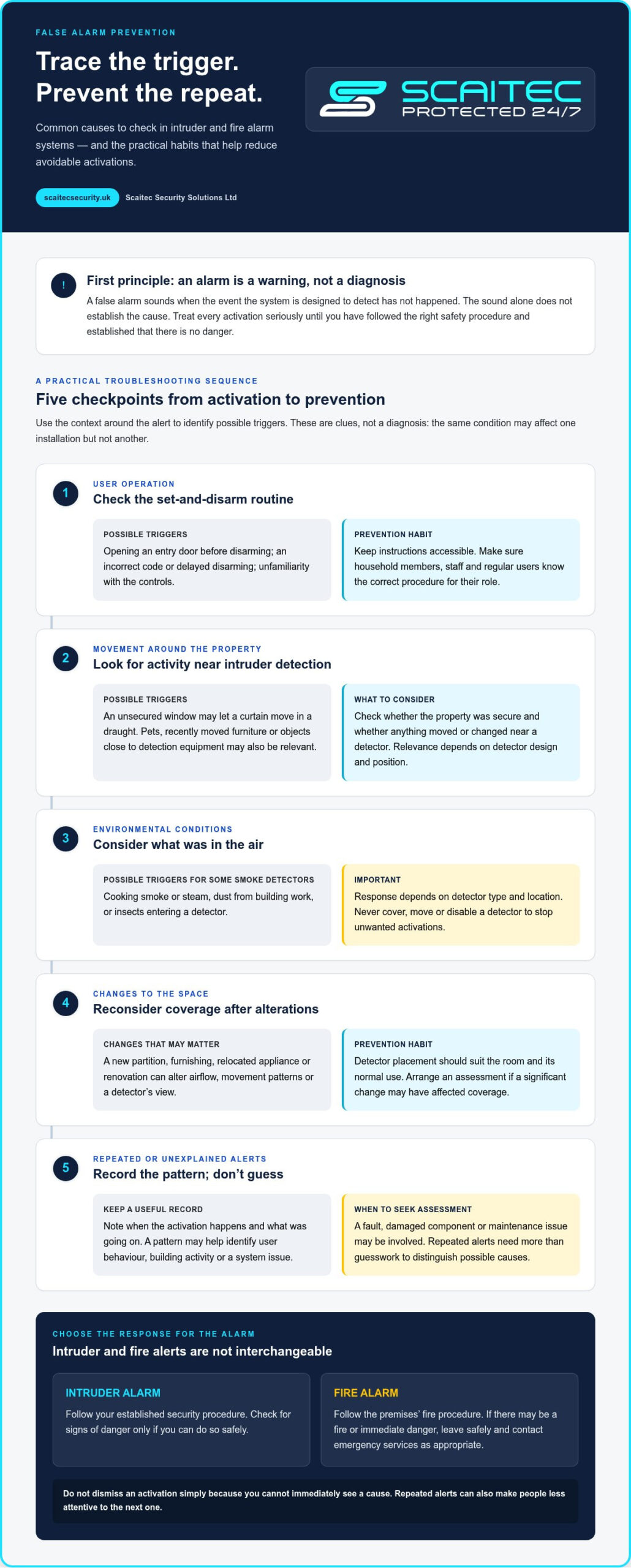
False alarm prevention tips for homes, workplaces and shared premises
Good routines make alarm systems easier to use consistently. Keep the process short and clear: follow the system instructions, check the relevant access points and make sure everyone knows what they’re responsible for. Adapt these false alarm prevention tips to the home, shop, office or shared building. Each property has different routines and risks.
A practical routine for homes and small businesses
Before setting an intruder alarm, check that the doors and windows covered by the system are secured. Account for pets and movable objects, and consider whether ordinary activity near detection equipment could affect the system. Don’t move, cover or adjust detectors to solve a problem. Seek advice if a room’s use or layout has changed.
Give household members and regular users clear instructions for setting and unsetting the alarm. Explain the entry and exit routine, which controls they’re authorised to use and what to do if the system activates unexpectedly. If a cleaner, delivery worker or contractor needs access, make the agreed arrangements clear before they enter. Keep instructions where users can find them instead of relying on one person to remember every detail.
Prevention routines for workplaces and shared buildings
In a workplace, make clear who is responsible for setting and unsetting the intruder alarm outside normal operating hours. Keep handovers clear, especially when responsibilities change, and brief new staff and regular contractors on the procedures relevant to them. In shared premises, agree how authorised users will communicate about access so one person’s arrival doesn’t catch another user off guard.
Changes to the building need attention too. A new partition, relocated equipment or a room being used differently may affect detector coverage or bring normal activity closer to detection equipment. Keep a record of changes and arrange an assessment if they could alter how the system operates. Planned security system maintenance can help identify issues and support reliability.
Fire alarms need a separate routine. Make sure staff understand the premises’ fire procedure and their assigned roles, including how to raise the alarm and where to go. An informal check of the building is not a substitute for established evacuation arrangements. Update briefings when staff roles or the layout change, and ensure temporary users know how to respond.
A simple incident log helps turn isolated events into useful information. Record the date and time, displayed zone or message, who was present, recent activity and any relevant building changes. Review the entries for repeated times, locations or circumstances, then share any pattern through the agreed maintenance or support process. This can help distinguish a one-off user mistake from a recurring condition that needs closer assessment.
Include preventative security system maintenance in your approach, particularly if the system’s performance changes or the premises are altered.
When recurring false alarms need professional support in South Yorkshire
An activation may be traced to a user error or a temporary change in the property. If alerts keep happening, have no clear explanation or start after building work or a change in room use, arrange a professional assessment rather than relying on repeated resets. An engineer can review the event history, detector suitability, system settings and equipment condition to help identify possible contributing factors.
Signs that an alarm needs a system review
Look for patterns: the same zone activating, alerts occurring under similar conditions, or a problem starting after a room has changed. Persistent alerts, visible damage or controls that regular users can’t operate confidently are further reasons to seek help. Record each event, including the displayed zone or message, the time and relevant activity. A clear incident log gives an engineer useful context and helps focus the investigation.
How planned maintenance and expert support help
System maintenance provides an opportunity to check equipment condition and assess whether detection remains appropriate for the space and its use. It can support dependable operation, but it can’t guarantee that alarms will never activate. If a system or detector needs closer investigation, an engineer can consider its configuration and history before recommending an appropriate response. Scaitec designs, installs and maintains intruder alarm and fire alarm systems, and provides remote monitoring.
Homeowners can explore intruder alarm systems for homes. Scaitec also provides commercial intruder alarm systems. Planned servicing can support false alarm prevention, particularly when activations recur or the premises have changed. Reliable operation depends on a system that suits the site, is used correctly and receives appropriate attention over time.
Scaitec supports properties in Rotherham and Sheffield, as well as Barnsley, Doncaster, Chesterfield, Worksop, Wakefield and Huddersfield. Whether you manage a home or business, note the alarm type, event details and any repeated pattern before seeking support. This information helps clarify next steps and gives an engineer a practical starting point for reviewing the system.
Make your next step a more dependable alarm routine
Use the next alarm event as an opportunity to improve how your property responds. A brief record of what happened, where it happened and what had changed can help turn uncertainty into a useful system review. Keep the notes with your alarm instructions, and update them if the layout, users or daily routines change. These false alarm prevention tips are most effective when they become part of how the property is managed, not just a checklist used after an activation.
If alerts continue without a clear explanation, professional support can help identify what needs attention. Scaitec is an independent security and fire systems company established in 2005, providing intruder alarm installation, maintenance and remote monitoring. A considered review can help you move forward with greater confidence in how your system is set up and used.
Clear routines and appropriate attention to system performance can make everyday security feel more assured.
Frequently Asked Questions
Can pets trigger a false intruder alarm?
Yes. A pet can activate some motion detectors, depending on the sensor type, its position and how the system is configured. A cat jumping onto furniture or a dog moving through a detection area may be relevant even if ordinary movement at floor level isn’t. Note which zone activates and when. If the pattern suggests the system isn’t suited to your pet’s behaviour, arrange a professional review rather than masking the detector.
Can wind or a draught set off a home alarm?
A draught usually won’t trigger an alarm by itself, but it may move a curtain, blind or plant within a motion detector’s coverage. Wind can also make a poorly secured door or window shift, which may affect a contact sensor. These are possibilities, not certain explanations. Secure loose objects near detectors and note whether activations coincide with windy conditions before arranging an assessment.
Can spiders or insects trigger a motion detector?
They can be a possible cause, depending on the detector and where the insect moves. A spider crossing close to a sensor may create movement within its detection area, while a web or insect near the unit may interfere with its operation. Don’t open or adjust the detector to investigate. If you notice insects around a sensor or the same zone keeps activating, record the details and arrange a system check.
Can a low battery cause an alarm to activate?
A low battery often produces a warning, fault message or regular alert rather than a full intruder activation, though behaviour depends on the system and the battery involved. Check the display and user instructions to identify the signal, and don’t assume it means there’s no security risk. Use only the replacement method specified for your system. If warnings persist or the display is unclear, have the equipment assessed.
What should I do if my alarm goes off and there are no signs of an intruder?
Stay somewhere safe and follow your agreed response procedure. A lack of visible signs doesn’t confirm that the property is secure. If you’re away, don’t enter if you suspect someone may still be inside. Check the system’s event information only if you can do so safely, then use the established monitoring or contact process. Note the time and any zone message so the event can be investigated accurately.
Will resetting an alarm stop it from triggering again?
Resetting may clear the current alert, but it won’t necessarily resolve what caused it. If the same zone activates again, repeated resets can hide a useful pattern without correcting an underlying issue. Follow the system instructions and reset only once it’s safe and appropriate to do so. Record the alert and seek an assessment if it returns or the controls show a fault.
Can a false fire alarm affect a business?
Yes. An unwanted fire alarm can interrupt work, prompt staff and visitors to leave areas or the building, and disrupt customers or scheduled operations. Repeated activations may also make people less responsive to future alerts, so investigate them rather than dismissing them. Businesses in Rotherham, Sheffield and nearby South Yorkshire areas can use a system review to examine recurring signals and support dependable fire alarm operation.
Protect Your Business
Protect Your People
Book Your FREE Site Protection Survey

Since pioneering Scaitec Security Solutions in 2005, Paul Scaife, with his roots in the industry dating back to 1994, has distinguished the firm as a leading provider of bespoke fire and security solutions, servicing clients across Sheffield, Rotherham, and surrounding areas.
His leadership, underpinned by accreditation from the Security Systems and Alarms Inspection Board, ensures that Scaitec surpasses client expectations by blending advanced technology with a deep understanding of their unique needs.
Paul's ethos champions innovation and efficiency, driving Scaitec to deliver tailored, cutting-edge solutions that enhance safety and operational ease.
Discover more about Paul’s commitment to excellence on LinkedIn.