
Table of Contents
Replacing the panel alone doesn’t always define the job. The cost of replacing an old fire alarm panel in Sheffield depends on the existing system, panel compatibility and whether connected equipment or wiring needs attention. The price depends on the case and is given after a quote request, with the scope of work and system requirements shaping the cost.
It’s understandable to want a clear budget before deciding whether to retrofit, repair or replace an ageing fire alarm panel. This guide explains what affects the work and its cost, what to consider when comparing those options, and how panel choices relate to fire safety requirements.
You’ll also learn what replacement involves, when a fault may call for repair rather than a new panel, and how ongoing maintenance supports a dependable system. The aim is to help you make a considered decision for your premises, with safety and practical fit at the centre.
Key Takeaways
- Replacement costs depend on the existing system, the panel’s compatibility and whether wiring or connected equipment also needs work.
- Compare conventional and addressable panel options against your building’s layout and how precisely staff need to identify a fire alarm activation.
- For non-domestic premises, the Regulatory Reform (Fire Safety) Order 2005 requires appropriate fire detection and warning, according to the UK legislation register.
- Fault complexity, parts and time on site all influence whether repair or replacement is the more practical route.
- Learn how a structured assessment of the system can help shape a suitable next step for your premises.
Factors affecting retrofit installation costs
A retrofit can involve more than replacing the control panel. Existing wiring, connected devices, commissioning and future maintenance all shape the project scope and cost.
Retrofit installation considerations
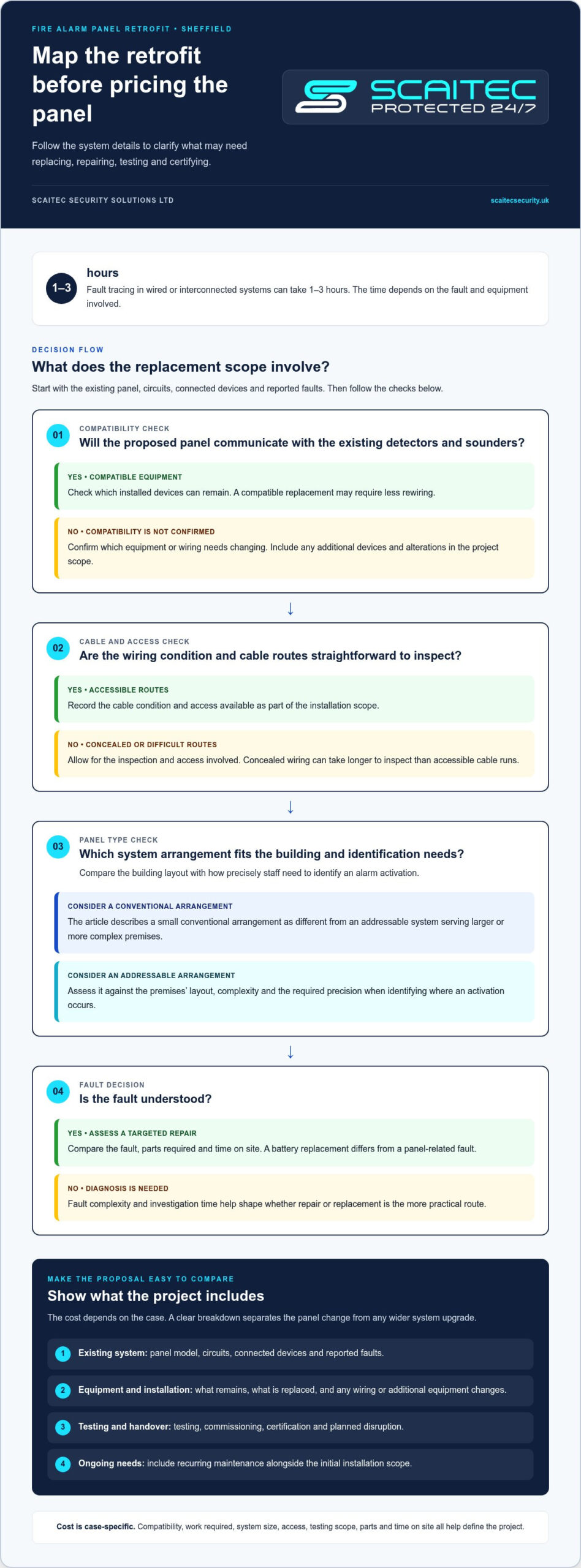
Start by recording the existing panel model, circuit layout and connected devices. A replacement compatible with installed detectors and sounders may require less rewiring than one that calls for new equipment. Cable condition, access to routes and occupied areas also affect the work. For example, concealed wiring can take longer to inspect than accessible cable runs.
Open-protocol systems can give greater flexibility when selecting compatible equipment for future changes. Check that the proposed panel communicates with the existing devices, rather than assuming every component will work together. This can influence lifecycle costs by affecting later replacement choices. Fault complexity matters too: tracing faults in wired or interconnected systems can take 1-3 hours.
Where a premises also uses commercial intruder alarm systems, keep that equipment’s scope distinct from the fire alarm installation. Separating system requirements helps clarify which work relates to fire detection and which relates to other site security.
Commissioning and certification costs
After installation, the panel and connected devices are tested to confirm they operate correctly, including alarm signals and fault indications. The work involved depends on the number of circuits and devices, and on changes made during the retrofit. Replacing a panel while retaining existing equipment has a different testing scope from installing new detectors and wiring.
Certification documents the completed work and test results. Include commissioning and certification in the project scope, alongside equipment and installation, so the handover reflects the system actually fitted. The price depends on the case and is given after a quote request; the work required, system compatibility and testing scope shape the cost.
Recent panel replacement costs
A recent panel replacement is an example of a project, not a fixed price for every Sheffield business. Buildings differ in panel type, system size, device compatibility and access. Those details determine whether the work remains a panel replacement or expands into a wider fire alarm installation.
For a meaningful estimate, define the site scope before comparing proposals. Record the existing panel and known faults, identify equipment to retain, and note access constraints or operational requirements. Then separate panel supply, installation, additional work, commissioning and certification in the project breakdown. This makes differences in scope easier to understand.
Service costs also reflect the fault being investigated, parts required and time on site. A battery replacement differs from a panel-related fault, while diagnosing an interconnected system can take 1-3 hours. For retrofit planning, list recurring maintenance needs alongside the initial installation scope. This gives a clearer view of the work involved over the system’s lifecycle, without treating an initial panel price as the full cost of ownership.
How Much Does a Commercial Fire Alarm System Cost?
Commercial installation requirements depend on the building, system design and work needed around the panel. A proposal should distinguish a panel replacement from a wider fire alarm system upgrade.
A Sheffield replacement proposal should set out the panel, installation work, compatibility checks, any additional equipment, testing, commissioning and certification. Keeping these items separate helps you understand what the work covers and compare the scope accurately.
An obsolete or faulty panel may not operate reliably, may leave system faults unresolved or may prevent alarms from sounding as intended. This can affect how quickly people receive an emergency warning and how effectively the premises’ fire precautions work.
Panel replacement quote inclusions
A useful proposal starts with details of the existing fire alarm system: the panel model, connected devices, circuits and reported faults. It should explain which equipment will remain, what will be replaced, and whether wiring or other components need alteration. These details show whether the job is a straightforward panel change or a broader fire alarm installation.
Look for a clear description of testing, commissioning and certification, plus any planned disruption to the building. The price depends on the case and is given after a quote request; the panel, compatibility, installation scope and testing requirements shape the cost.
Replacement and maintenance providers
For Sheffield businesses, a suitable service includes commercial fire alarm panel replacement and system maintenance. Scaitec Security Solutions Ltd provides fire alarm installation and maintenance, connecting replacement work with testing and ongoing servicing so the system’s condition is considered beyond installation day.
Ask for the proposed work to distinguish panel replacement, repairs and maintenance. This makes it easier to understand whether a fault calls for a targeted repair or a wider upgrade. In a wired or interconnected system, fault diagnosis can take 1-3 hours, depending on the issue and equipment involved.
System type and building size also shape the installation plan. A small conventional arrangement differs from an addressable system serving larger or more complex premises. The number and placement of devices, cable routes, access conditions and panel compatibility affect the work required. A site with clear access and reusable equipment has a different scope from one needing new routes or additional devices.
In an occupied building, the work plan should identify affected areas, access needs and how testing will be managed around normal activity. Agreeing the sequence in advance helps staff understand when alarm circuits may be tested and where temporary disruption could occur. Keep the system’s emergency-warning role in view throughout the work.
To assess proposals, compare the same scope across each one: panel and equipment, installation, testing, commissioning, certification and maintenance. This breakdown helps Sheffield businesses understand what is included without treating a panel-only figure as the cost of a complete system replacement.
Compliance with fire safety regulations
For Sheffield businesses, panel replacement is part of keeping fire detection suitable for the premises. Compliance depends on the complete system, not simply whether the control panel powers up. Consider the building’s use, layout, warning arrangements and how the panel communicates faults. A panel change should leave detectors, call points and sounders working together as intended.
The Regulatory Reform (Fire Safety) Order 2005 requires non-domestic premises in the UK to have appropriate fire detection and warning, according to the UK legislation register. This requirement makes the system’s suitability important when replacing an ageing panel. A like-for-like swap may not address changes to the building or its use. The fire precautions should be considered as a whole.
The British Standards Institution identifies BS 5839-1:2025 as the standard for design, installation, commissioning and maintenance of non-domestic fire detection systems. Use it as a reference point when planning panel work and reviewing the system’s documentation. The design should reflect the premises, while commissioning should record that the installed equipment has been tested. Keep those records with the building’s fire safety information.
In England, the Regulatory Reform (Fire Safety) Order 2005 governs fire alarm maintenance in non-domestic premises. It requires the Responsible Person to keep fire detection and warning systems in efficient working order, according to the UK legislation register. This makes maintenance part of the compliance process, rather than an optional extra after installation. The Responsible Person should retain service findings and address identified faults.
Use a practical review before approving a replacement:
- Record the panel’s faults, indicators and existing system layout.
- Identify changes to rooms, partitions, occupancy or building use.
- Confirm which detectors, call points and sounders remain compatible.
- Arrange testing of alarm signals, fault indications and connected devices.
- File commissioning and maintenance records alongside fire safety documents.
Commercial fire alarm systems in Sheffield are generally professionally serviced at least every six months. Weekly user testing is normally required for non-domestic premises. These checks serve different purposes: user testing can reveal an obvious failure, while planned servicing assesses system condition and operation. Record test outcomes and report faults for timely attention.
After replacement, review the handover against the building’s fire safety arrangements. Confirm that staff understand any changes to indicators, zones or alarm responses. Check that the Responsible Person has the commissioning records and maintenance schedule. If the work reveals incompatible equipment or unresolved faults, include those items in the remedial plan. Clear records help demonstrate how the system is being managed.
Conventional and addressable panel options
Choosing a panel type affects how staff identify alarms and how the system can adapt. Compare conventional and addressable designs against the building layout, existing detection devices and the level of detail needed during an alert.
A conventional panel groups devices into zones. If a detector activates in a particular zone, staff can narrow the alarm to that area, such as a floor or wing. They may then need to check devices in that zone to find the precise source. This arrangement can suit a simpler layout where zone-level information provides a practical guide.
An addressable panel identifies individual devices, so its display can show which detector or call point has activated. For example, staff may see a device location rather than only a zone. This can help direct investigation in a building with several rooms or areas. Consider whether that added location detail supports how people respond to alarms on site.
Existing equipment is central to the choice. Before selecting a replacement, list the installed detectors, call points, sounders and circuits, then establish which can communicate with the proposed panel. A panel that cannot work with retained devices may require further replacement work. The building’s layout and planned changes also matter, since a reconfigured space may need a different zoning or identification approach.
Wireless describes how devices communicate, rather than offering a direct alternative to conventional or addressable panel operation. Some designs use wired connections, wireless connections or a combination. For a retrofit, identify whether wireless devices suit the site and whether the existing system remains usable. Walls, building structure, device locations and selected equipment all influence design and installation requirements.
Monitoring needs should also inform the decision. Map how an alarm travels from detection to the panel, then consider how staff receive and interpret its information. A conventional zone display and an addressable device location provide different levels of detail. Write down who responds to each type of alert, including how they locate the affected area and report a fault.
Use these checks when comparing panel options:
- Match the panel type to the premises’ layout and the location detail staff need.
- Check compatibility with existing devices before planning what remains in place.
- Include wiring, wireless equipment and any system changes in the installation scope.
For example, a compact premises with clear zones may benefit from straightforward area identification, while a multi-room building may benefit from device-level information. Compare operational needs, equipment compatibility and future layout changes together, rather than selecting a panel by type alone.
Factors affecting repair prices
Repair scope depends on the fault, the equipment affected and the time needed to restore operation. A false alarm may point to a detector issue, while a panel warning light can indicate a wider system fault. Engineers begin by identifying the affected circuit or device, then test components to locate the cause. The repair price depends on the case and is given after a quote request.
Diagnosis time is one cost factor. Investigating faults in wired or interconnected fire alarm systems can take 1-3 hours. A fault affecting several devices may need more tracing than a single, clearly identified sensor problem. Access also matters: engineers need to reach the panel, detectors and cable routes safely across the premises. Difficult access can extend the work required.
Parts and repair complexity influence the next step. A single faulty sensor may be replaced without changing the panel, but a panel fault can involve control equipment and connected circuits. A battery issue differs from a fault requiring parts, retesting or wider investigation. The engineer’s findings help establish whether repair addresses the cause or replacement work is appropriate.
Time on site can increase where repairs cover several areas. Large-scale repairs or partial system upgrades may require 4-8 hours on site. For example, engineers may need to test multiple zones after replacing a component, rather than checking only one device. The number of affected circuits, system layout and need to restore monitoring all shape the work plan.
Describe the fault using the system’s behaviour. Record when a warning appears, which indicator is lit and whether alarms sound during tests. Note false activations and any affected areas, then share those details with the engineer. These observations can help narrow the diagnosis, although testing is needed to identify the actual cause.
After a repair, test the affected equipment and relevant alarm functions. If a detector has been replaced, check that the panel registers it correctly and that the warning reaches the intended devices. If a panel component has been repaired, test the functions affected by that work. A clear record of the fault, repair and test outcome supports future maintenance.
To understand a repair proposal, look for the diagnosed fault, proposed work, parts, testing and recommended follow-up. Compare the scope rather than treating a short visit as equivalent to a multi-circuit repair. If warnings or failed tests persist after a repair, the system needs further assessment to identify any remaining fault.
Arrange fire alarm fault correction
Scaitec Security Solutions: CCTV Systems
Scaitec Security Solutions Ltd helps Sheffield businesses with fire alarm panel replacement and system maintenance. Its fire alarm services support premises needing a new system, attention to existing equipment or ongoing maintenance. If recurring faults, warning indicators or an ageing panel have raised concerns, a system review can help clarify the practical next step.
For a replacement discussion, bring together the panel details, known faults and recent service records. This gives the conversation a clear starting point and helps relate the proposed work to the building’s fire detection needs. Scaitec also provides CCTV Systems, Intruder Alarms and Access Control systems for businesses with wider security requirements.
Contact Scaitec Security Solutions Ltd to discuss your fire alarm system requirements.
Plan the next step with confidence
For a Sheffield business considering the cost of replacing an old fire alarm panel, connect the decision with the premises’ longer-term plans. Changes to layouts, working patterns or security arrangements can affect how systems need to work together. A clear project brief helps keep those priorities visible as you plan.
Scaitec Security Solutions Ltd can discuss fire alarm requirements alongside related site security needs. Its services include CCTV Systems, Intruder Alarms and Access Control systems, helping businesses consider how different measures fit their premises. The right approach depends on the building and the work required, so a tailored conversation can help identify a sensible way forward.
A considered next step makes planning more straightforward and keeps safety at the centre of your decisions.
Frequently Asked Questions
What have recent jobs actually cost?
Recent panel replacement jobs vary according to the scope, so one project’s total isn’t a reliable price for another Sheffield premises. A panel-only change differs from work involving extra equipment, wiring alterations or repairs. For a useful comparison, look at the job breakdown: panel, installation, testing, commissioning and certification. The price depends on the case and is given after a quote request, with those requirements shaping the cost.
⏱ How long does it take?
The time needed for a panel replacement depends on the site and the work involved. Engineers need access to the control panel, must identify connected circuits, install the replacement and test affected equipment. A straightforward change with compatible devices involves a different sequence from a job requiring wiring alterations or fault diagnosis. Ask for the work stages and any planned impact on normal building operations to be set out in the project plan.
How much does it cost to replace a fire alarm control panel in Sheffield?
The cost of replacing an old fire alarm panel in Sheffield depends on the panel, system compatibility, installation scope and commissioning requirements. A panel change that retains compatible equipment differs from a project requiring additional repairs or components. The price depends on the case and is given after a quote request; the existing system, access conditions and testing scope shape the cost. Compare proposals against the same work description.
How much does a replacement fire alarm panel cost by type and size in the UK?
Panel type and building size influence the equipment and work needed, but neither alone sets a like-for-like price. A conventional system identifies an alarm by zone, whereas an addressable system can identify an individual device. The price depends on the case and is given after a quote request, with panel type, building layout, connected equipment and installation requirements shaping the cost. Ensure each estimate uses the same assumptions about retained devices.
What labour and commissioning costs apply to replacing a fire alarm panel?
Labour reflects the time needed to remove the old panel, connect the replacement and test the system. Commissioning checks that the panel and connected devices operate as intended; certification records the completed work. The price depends on the case and is given after a quote request, with labour time, system complexity, testing and certification requirements shaping the cost. Ask for each stage to be shown separately in the work scope.
Can an old fire alarm panel be replaced without replacing detectors, wiring or sounders?
Existing detectors, wiring and sounders can remain if they are compatible with the replacement panel and function correctly. For example, a panel change may retain the devices but still require circuit checks and system testing. The installation plan should identify which components remain, which need replacement and how each connection will be tested. Equipment condition and compatibility determine whether retaining existing components is suitable.
What UK fire alarm standards and regulations apply to replacing a control panel?
The Regulatory Reform (Fire Safety) Order 2005 requires appropriate fire detection and warning in non-domestic premises. BS 5839-1:2025 is the standard identified for design, installation, commissioning and maintenance of non-domestic fire detection systems. For example, a replacement should be considered alongside the system’s design and records, not just the panel model. The Responsible Person must also keep detection and warning systems in efficient working order.
Does a fire alarm panel replacement require a fire risk assessment or building control approval?
Consider a panel replacement within the premises’ fire risk assessment, particularly if the building layout, use or warning arrangements have changed. Building control approval concerns associated building work, so identify whether the project includes changes beyond replacing equipment. Record the scope and discuss approval requirements before work begins where building alterations form part of the project. Keep updated system and commissioning records with the premises’ fire safety documents.
Protect Your Business
Protect Your People
Book Your FREE Site Protection Survey

Since pioneering Scaitec Security Solutions in 2005, Paul Scaife, with his roots in the industry dating back to 1994, has distinguished the firm as a leading provider of bespoke fire and security solutions, servicing clients across Sheffield, Rotherham, and surrounding areas.
His leadership, underpinned by accreditation from the Security Systems and Alarms Inspection Board, ensures that Scaitec surpasses client expectations by blending advanced technology with a deep understanding of their unique needs.
Paul's ethos champions innovation and efficiency, driving Scaitec to deliver tailored, cutting-edge solutions that enhance safety and operational ease.
Discover more about Paul’s commitment to excellence on LinkedIn.