
Table of Contents
Hotel key cards aren’t universal: each card must match the door lock’s technology, programming or magnetic stripe. For hotel key card systems in Barnsley, compatibility with the installed lock matters more than the card’s printed design. Printing adds branding, while access permissions come from encoding or enrolling the card through the hotel’s lock software and encoder.
A card may look right and still fail if its technology doesn’t match the lock. Knowing the difference helps you choose suitable cards and avoid confusion when setting up or changing access.
This guide explains how hotel key cards work and are encoded, compares card types and compatible door locks, and outlines what to consider when planning an access control system. The aim is to help cards, locks and permissions work together as intended.
Key Takeaways
- Learn how RFID, MIFARE® and magnetic-stripe cards communicate with hotel door locks, and why their technologies aren’t interchangeable.
- Understand how encoding assigns access permissions, and why printed branding alone won’t make a card open a door.
- Use the lock’s existing technology and programming as the starting point when assessing card compatibility.
- See what to consider when planning key-card systems and installation for a hotel in the Barnsley area.
- Find out how access control systems can support a wider electronic security setup.
How do Hotel Key Cards work?
A hotel key card stores or carries a credential that a compatible door lock can read. The lock uses its programmed permissions to determine whether the card can unlock a particular door.
RFID, MIFARE® and Magstripe Technology
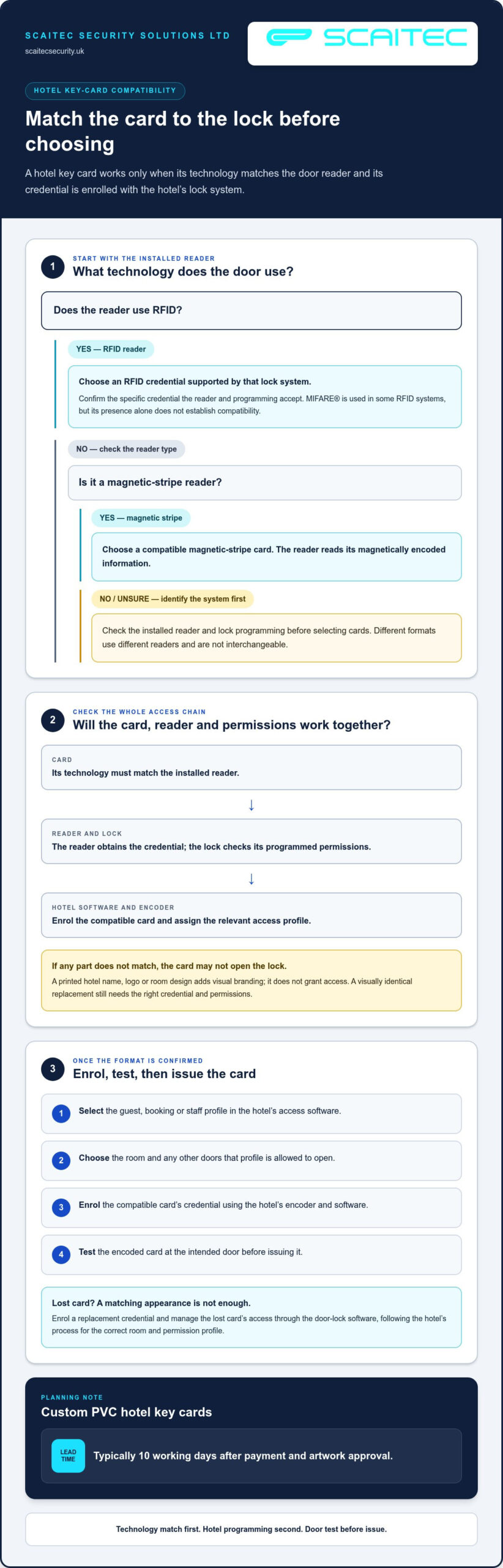
Hotel cards commonly use radio-frequency identification (RFID) or a magnetic stripe. With RFID, a reader detects a card held near the lock and reads its credential without physical contact. A magstripe card is presented to a reader, which reads its magnetically encoded information. These formats use different readers and aren’t interchangeable.
MIFARE® is a family of contactless card technologies used in some RFID systems. Its presence alone doesn’t establish compatibility: the lock’s reader and programming must support the specific credential. For example, a MIFARE® card won’t operate a magstripe-only lock simply because both are hotel key cards. First, match the card technology to the installed reader.
When comparing options, identify the lock’s reader type and confirm which card format it accepts. For an RFID reader, establish which RFID credential the system supports. For a magnetic-stripe reader, choose a compatible magstripe card. This check helps prevent ordering cards that the existing locks cannot read.
Hotel RFID Key Cards
A hotel RFID key card communicates with a compatible door reader when held close to it. The reader obtains the card’s credential and checks it against the system’s programmed access permissions. For example, a guest might have access to their room, while staff credentials allow entry through different doors. Specific permissions depend on the hotel’s lock system and configuration.
Printing a hotel name, logo or room design adds visual branding but doesn’t grant access. The card still needs to be encoded or enrolled using the hotel’s door-lock software and encoder. This matters when replacing a lost card: a visually identical spare won’t work unless it has the appropriate credential and permissions.
Franchise-standard RFID cards can help properties follow a consistent credential approach across their brand, but consistency doesn’t make every card universal. Each property’s readers and programming must support the credential being issued. Before choosing cards, identify the existing RFID technology and how the hotel encodes credentials.
A practical selection sequence is straightforward:
- Identify whether the door reader uses RFID or a magnetic stripe.
- For RFID, match the credential to the system’s supported card technology, including MIFARE® where applicable.
- Use the hotel’s encoder and software to enrol cards and assign access permissions.
- Test an encoded card at the intended door before issuing it to a guest.
The physical card, reader and programmed access rules must all work together. If any element uses a different technology, the card may not open the lock.
Custom PVC hotel key cards typically take 10 working days after payment and artwork approval.
Hotel key-card encoding and programming
Hotel key-card programming links a credential to the hotel’s lock software and encoder. PMS integration, audit trails and access control serve different purposes: linking guest records, reviewing recorded activity and determining which doors a card can open.
Encoding starts with the card technology supported by the door system. The encoder writes or enrols a credential, while the software links it to an access profile. For example, a receptionist might issue a guest a room credential at check-in, then update or cancel access when the stay ends. The precise steps depend on the hotel’s system and workflow.
To create a guest card, staff typically select the relevant guest or booking record, choose the permitted room or areas, and encode the card using the system’s encoder. The lock reads the credential and applies the programmed permissions. A printed room number or hotel logo cannot replace this programming: printing changes the card’s appearance, not its access rights.
Replacing a lost card takes more than issuing a visually matching spare. Staff need to enrol a replacement credential and manage the lost card’s access through the door-lock software. This keeps the active credential aligned with the guest’s current access. The hotel should follow its own process to identify the correct room and permission profile before encoding.
A practical programming sequence is:
- Select the guest, booking or staff profile in the hotel’s access software.
- Choose the room and any other doors that profile is allowed to open.
- Present the compatible card to the encoder and enrol its credential.
- Test the card at the intended door, then issue it to the guest or staff member.
Use the hotel’s own lock software and encoder throughout. A card encoded by another system may not match the property’s programming, even if its appearance and physical format seem suitable. Keep room allocation and access permissions clear, particularly when issuing replacements or changing a booking’s room details.
PMS integration can connect reservation or guest information with the key-card workflow, reducing repeated entry when the systems are configured to share relevant details. Where available, an audit trail can help authorised staff review recorded actions, such as card creation or access changes. Access control is the permissions layer, defining which doors each credential can operate.
For a hotel reviewing how card permissions fit with wider door access, access control systems provide a relevant starting point.
Hotel key-card types and door-lock compatibility
A hotel card works only when its technology matches the door reader and lock programming. For a small Barnsley property, the practical choice depends on existing hardware, access needs and escape arrangements.
Systems for Small Hotels and Guesthouses
Small hotels and guesthouses can compare magnetic-stripe locks with RFID card systems. A magnetic-stripe option suits doors with compatible readers; an RFID system needs matching cards and readers. Neither format is universal, so identify the installed lock technology before choosing replacement cards or equipment.
Consider how staff issue credentials, manage lost cards and provide access to shared areas. A guest might need room access, for example, while staff also need designated service doors. A simpler arrangement may suit a property with few controlled entrances, while multiple access zones require clearer permission management.
Reviews and supplier comparisons near Barnsley are most useful when they address compatibility, installation scope, support and experience with similar accommodation. Compare like with like: a card supplier’s product review alone may not assess door-lock installation or system integration.
Choosing and Installing a System
For a hotel key-card system in Barnsley, begin by recording each door’s current reader and lock type. Then map the rooms, shared spaces and staff-only entrances that need controlled access. This door-by-door assessment helps determine whether existing equipment can remain or needs replacing.
Next, match the card technology to the selected lock system and plan how credentials will be issued, changed and cancelled. Installation should include configuring readers and permissions, followed by tests with representative guest and staff access profiles. Clear handover instructions help staff follow a consistent process.
Reviews of installation companies can help assess communication, workmanship and aftercare. Focus on examples involving comparable doors and access arrangements. A quote should distinguish equipment, installation, programming and ongoing maintenance so the proposed scope is clear.
UK fire safety planning must account for escape routes and emergency access alongside card-controlled entry. The system design should align with the building’s fire strategy, allowing occupants to leave safely without relying on a working guest card or routine staff permissions.
Before installation, work through these practical checks:
- List each controlled door and identify its existing reader technology.
- Define guest, staff and shared-area permissions for the property.
- Plan card issuing, replacement and cancellation procedures.
- Test access at each door and review emergency egress arrangements.
These checks connect card choice to the actual doors and daily operation. A planned access control system can help organise permissions across a property’s controlled entrances.
Hotel key card system suppliers serving Barnsley, South Yorkshire
For a Barnsley hotel, the right supplier depends on whether you need replacement cards, compatible door hardware or a complete access-control project. These are different parts of the system, so define the work before specifying equipment.
A card supplier provides physical credentials, such as RFID or magnetic-stripe cards. A system installer handles readers, locks, programming and commissioning. Some projects involve both, particularly when changing card technology also means replacing door hardware. The key requirement is compatibility with the hotel’s existing system, not simply a match in appearance.
Before setting a specification, record the installed lock brand and reader type, along with how staff issue credentials. A property with magstripe readers, for example, needs cards suited to that technology. An RFID installation needs cards matching its supported credential, including the relevant MIFARE® technology where used. Hotel cards aren’t universal across different systems.
Custom printing can add a hotel logo, colours or guest information, but it doesn’t grant door access. Cards still need encoding or enrolment through the hotel’s lock software and encoder. A visually branded card may be unsuitable if its underlying technology doesn’t match the readers.
For new equipment or a system change, map the doors and intended users. A guest-room lock may need different permissions from a staff entrance or shared facility. Recording these access needs helps define the equipment and programming the project must cover. It also clarifies whether the requirement is for cards alone or an installation.
Organise the specification into practical details:
- List doors that need controlled access and identify their current readers.
- Record whether credentials use RFID or a magnetic stripe.
- Describe guest, staff and shared-area access requirements.
- Include encoding, testing and staff handover in the required project scope.
For card replacement, start with the existing lock technology. For a full upgrade, consider the readers, locks, software, encoder and operating process together. This whole-system view helps prevent mismatches between new cards and installed doors.
In South Yorkshire, a clear project brief can separate supply, installation and ongoing system maintenance. A hotel replacing cards alone, for instance, has a different requirement from one upgrading room locks and staff access. Set out the intended outcome and doors involved, then assess the proposed work against that scope.
Keep the final specification consistent across cards, encoding and readers. This gives the hotel a practical basis for planning the purchase and installation, while keeping access arrangements aligned with the equipment at each Barnsley property.
Compare providers by their scope of work, such as card supply versus installation and commissioning, and by how they verify compatibility with the hotel’s locks, readers and credential technology. This section provides no basis for comparing customer reviews or naming specific suppliers.
A hotel can use a card supplier for replacement credentials, a system installer for readers, locks and programming, or a provider covering both for a wider project. Choose according to the required scope and compatibility with the installed system.
Hotel key card lock installation companies near Barnsley
Installing hotel key-card locks involves more than fitting a reader to a door. In Barnsley, the work needs to account for existing doors, guest and staff access, system programming and safe exit arrangements.
Start by defining the project. Replacing a reader differs from upgrading several room doors or adding controlled access to staff areas. An existing magnetic-stripe lock, for example, may require a different solution from an RFID installation. The card technology, lock hardware and programming must work together.
A useful installation scope identifies each door, its current hardware and who needs access. A guest-room entrance, reception door and staff-only store may each require different permissions. Recording these details helps shape the access plan and identify doors or readers that need attention before work begins.
Installation typically includes fitting or adapting door hardware, connecting compatible readers, configuring access permissions and testing credentials. A handover should explain how authorised staff issue, replace and cancel cards. Staff also need a clear process for removing access from a lost card and assigning a replacement credential.
For Barnsley hotels, electronic access also needs to fit the building’s fire strategy. Guest and staff routes should let occupants leave safely during an emergency. The design should consider how controlled doors operate during an evacuation, rather than treating routine card entry as the only requirement. Coordinate access arrangements with the property’s wider fire-safety planning.
Before installation, organise the information the project needs:
- List the doors and rooms included in the work.
- Record existing lock, reader and card technologies.
- Set out guest, staff and shared-area access needs.
- Include programming, testing and staff handover in the scope.
- Identify emergency exit routes affected by controlled doors.
These steps distinguish a card replacement from a complete access-control project and give the installer a practical basis for coordinating readers, permissions and door operation. During commissioning, test representative guest and staff credentials at every affected entrance, then confirm staff understand the agreed procedures.
For a hotel considering electronic access across several doors, an access control system can provide the wider framework for managing permissions. This is particularly relevant when guest rooms, staff entrances and shared spaces need coordinated access arrangements. Keep the project scope focused on those doors and the way the property operates.
Check card selection against the system already fitted, rather than assuming a card will work with every hotel lock. Hotel key cards are not universal; the right card technology depends on the hotel’s door-lock system. If the property is keeping its existing locks, confirm the card type before ordering replacements or specifying an installation.
Compatibility with an existing hotel door-lock system depends on matching its RFID chip, programming or magnetic stripe. The installed lock system is therefore essential to the specification: identify its technology and match the proposed cards and programming accordingly. If the project changes the lock system, assess card choice against the intended system rather than assuming existing cards will remain suitable. This check aligns card selection with the access equipment being installed.
Scaitec Security Solutions: CCTV Systems
Scaitec Security Solutions Ltd can help Barnsley businesses consider how CCTV Systems, Access Control Systems and Fire Alarm Systems fit into a wider electronic security plan. This is a natural next step when reviewing guest access alongside other security needs, such as monitored entrances or shared areas. The right combination depends on the property’s layout and operational requirements.
For hotels considering access beyond room-card operation, Scaitec Security Solutions Ltd’s Access Control Systems can help manage entry across controlled areas. CCTV Systems can also form part of a site’s security provision, while System Maintenance supports the ongoing care of security equipment.
Visit Scaitec Security Solutions Ltd to explore its access control services.
Plan your next access-control step
For hotel key card systems in Barnsley, the next step is to turn your access needs into a practical plan for the property. Consider how guest entry fits alongside staff-only areas and wider site security, then decide which doors and systems need attention first.
Scaitec Security Solutions Ltd offers Access Control Systems, CCTV Systems and Intruder Alarms to support a broader electronic security plan for hotels, with each system selected around the building’s requirements. If you’re reviewing access alongside other security needs, Scaitec Security Solutions Ltd can help you explore the relevant options.
A structured approach makes it easier to discuss priorities and plan the next stage clearly.
A considered plan is a positive step towards security arrangements that suit your property and its day-to-day operation.
Frequently Asked Questions
What types of hotel key card systems are available: RFID, magnetic stripe and mobile access?
Hotel access can use RFID cards, magnetic-stripe cards or mobile credentials, but each requires compatible door hardware. RFID cards are read wirelessly, while magnetic-stripe cards are read by a swipe reader. Mobile access uses a phone as the credential and requires a lock system designed to accept it. For a Barnsley hotel, compare the existing locks, guest preferences and staff procedures before choosing a format.
Reviews and comparisons of hotel key card system suppliers near Barnsley
Compare suppliers on compatibility, installation scope, support and experience with similar accommodation. A card product review alone may not assess door-lock installation or system integration.
Protect Your Business
Protect Your People
Book Your FREE Site Protection Survey

Since pioneering Scaitec Security Solutions in 2005, Paul Scaife, with his roots in the industry dating back to 1994, has distinguished the firm as a leading provider of bespoke fire and security solutions, servicing clients across Sheffield, Rotherham, and surrounding areas.
His leadership, underpinned by accreditation from the Security Systems and Alarms Inspection Board, ensures that Scaitec surpasses client expectations by blending advanced technology with a deep understanding of their unique needs.
Paul's ethos champions innovation and efficiency, driving Scaitec to deliver tailored, cutting-edge solutions that enhance safety and operational ease.
Discover more about Paul’s commitment to excellence on LinkedIn.