
Table of Contents
A triggered monitored alarm doesn’t automatically mean the police are on their way. The answer to what happens if my monitored alarm is triggered depends on the alarm type, how the signal is verified and the response plan on the account. The monitoring station receives the signal, assesses the details and follows the agreed process, which may include contacting keyholders or emergency services.
It’s understandable to want to know who will be contacted and what you should expect, particularly if an activation turns out to be a false alarm. The response can vary, so knowing how your system and contact arrangements work can make the next steps clearer. This article explains how an alarm signal reaches a monitoring station, how contacts and emergency services may be involved, and how false alarm procedures can affect the response. It also covers what to consider when arranging professional remote monitoring, so you can make informed decisions about the protection of your home or business.
Key Takeaways
- Burglary, panic, fire and tamper activations can follow different response routes, depending on the alarm type and account instructions.
- The signal can tell the monitoring station what type of activation occurred and which zone was involved, helping the operator assess what to do next.
- A clear contact order and up-to-date keyholder details help nominated contacts understand their role if an activation needs follow-up.
- Pets, user error, loose fittings and equipment faults can contribute to false alarms, so understanding the likely cause helps inform future system maintenance.
- Professional intruder alarm design, installation and maintenance can help align detection with the property’s communication and response arrangements.
Does a monitored burglar alarm always contact the police?
No. The response depends on the alarm type, verification method and instructions recorded for the account. A monitoring station may contact a keyholder or emergency services, rather than automatically requesting police attendance.
Responses to Different Alarm Types
The alarm category helps determine the appropriate response. A burglary sensor may report activity at a door or in a zone, while a panic button signals a request for urgent assistance. If a monitored alarm is triggered, The Scottish Government says the monitoring company contacts the fire service or police as appropriate.
A tamper signal can indicate interference with equipment, rather than a confirmed break-in. The operator considers the signal type and account instructions before deciding whom to contact. Treating every activation as a burglary could prompt the wrong response, so the alarm setup should identify its sensors and the action associated with each signal.
Police Response and Unique Reference Numbers
A monitored burglar alarm does not guarantee police attendance. The response depends on the verification method and account setup, so an operator may first try to establish whether the activation is genuine. A Unique Reference Number, or URN, is relevant to police-response arrangements for an intruder alarm.
UK intruder alarms seeking a Unique Reference Number must meet EN 50131. This standard matters when an alarm is intended to qualify for that police-response route. The URN and account details help connect an alarm activation with its recorded arrangements. A monitoring provider can explain how its verification process and the system’s setup affect escalation.
Monitoring and Escalation Process
After a sensor detects activity, the alarm panel sends a signal to the monitoring station, which may receive it within seconds. The signal can identify the activation type and zone, such as a door contact or motion sensor. The operator then reviews the account’s contact order, verification details and instructions.
The operator may next contact the account holder or another authorised person. If the event cannot be verified, or the account holder confirms a real emergency, the response may escalate to emergency services. The sequence varies by alarm type: fire, panic and burglary signals can prompt different actions. Clear instructions help the operator follow the relevant response.
Keyholders and Authorised Responders
Keyholders are people nominated to receive calls and respond to an alarm activation. The monitoring provider follows the account’s contact order and may try another authorised person if the first does not answer. Keeping phone numbers and response instructions current helps the operator reach the right person without delay.
For example, a business may nominate a manager and a second authorised contact. Each person should understand whether they are expected to attend, provide a passcode or contact emergency services. Nobody should enter a property alone if the activation suggests it may be unsafe. A professionally arranged monitored intruder alarm can include the agreed contact and response arrangements in its setup.
False alarm limits, statistics and penalties
If your monitored alarm is triggered by mistake, the monitoring station can use a verbal passcode to confirm your identity. Once you confirm it’s a false alarm, the station takes no further action.
False Alarm Limits and Penalties
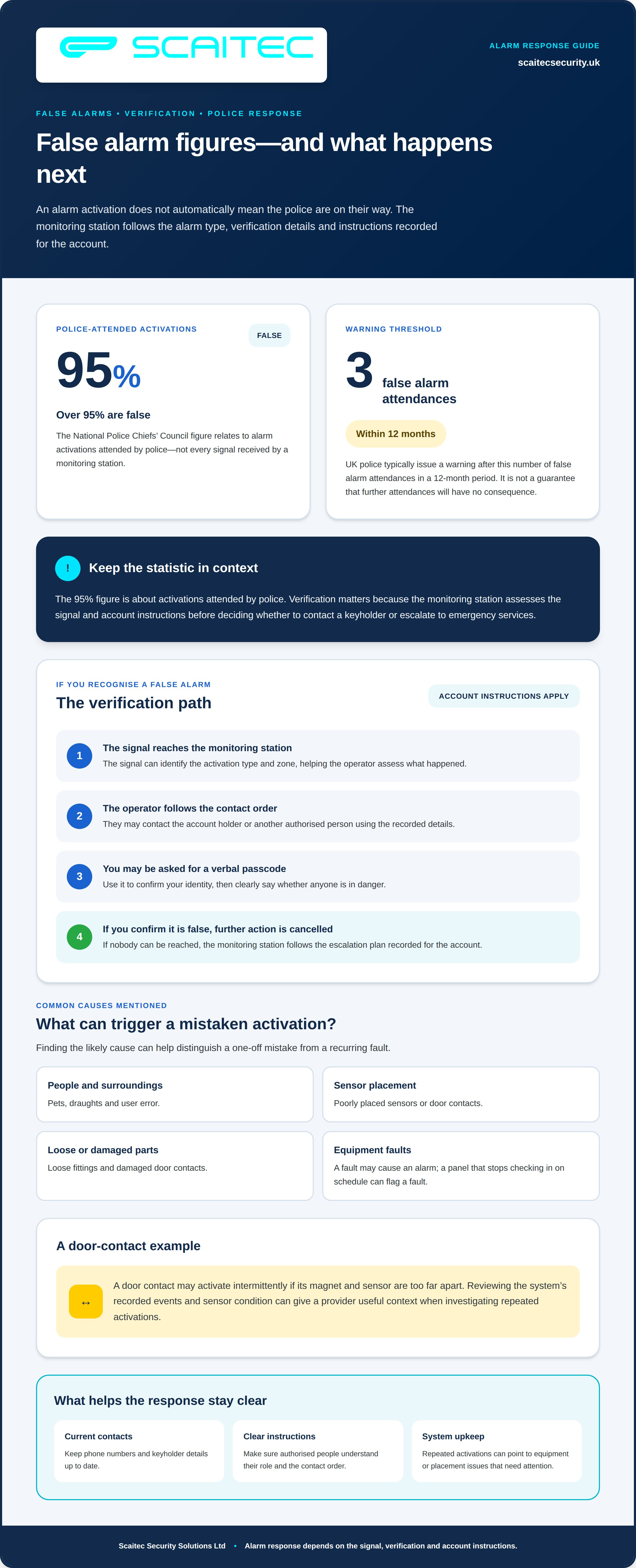
The National Police Chiefs’ Council states that over 95% of alarm activations attended by police are false. This figure concerns activations attended by police, not every signal received by a monitoring station. It shows why verification matters before emergency services are requested.
UK police typically issue a warning after 3 false alarm attendances in a 12-month period. This is not a promise that further attendances will have no consequence. The response can depend on the circumstances and the alarm’s police-response arrangements. Avoid treating the warning threshold as a target; reducing repeat activations helps keep the system’s response credible.
Mistaken Alarm Triggers
A mistaken activation still reaches the monitoring station as an alarm signal. The operator follows the account instructions, which may include contacting you or a keyholder. Give the verbal passcode when asked, then clearly confirm whether anyone is in danger. If you confirm it is false, the station cancels further action. If nobody can be reached, the response follows the recorded escalation plan.
Common causes include loose fittings, draughts, pets, poorly placed sensors, damaged door contacts and user error. Equipment that needs attention can also trigger an alarm. For example, a door contact may activate intermittently if its magnet and sensor are too far apart. Identifying the cause helps distinguish a one-off mistake from a recurring fault.
A monitoring provider can use the activation type and zone details to help identify repeated triggers. Keep contact details and response instructions current so operators can reach the right person. A panel that stops checking in on its regular schedule can flag a fault, while an untested communication path may contribute to missed alerts.
If repeated activations point to equipment or placement issues, professional alarm maintenance can help identify faults and support reliable operation. Reviewing the system’s recorded events, sensor condition and contact arrangements gives the provider useful context for corrective action.
Emergency services dispatch
Emergency services may be dispatched after a monitoring station receives an alarm, but the route depends on the alarm and account settings. Some monitored options dispatch automatically; others require verification first. A sensor alert is not always treated as a confirmed emergency.
In the UK, the monitoring station assesses the signal and follows the agreed response plan. It may contact the account holder or keyholders, seek verification, or pass the alert to emergency services. The Scottish Government says monitoring companies contact the fire service or police as appropriate when a monitored alarm is triggered. A fire signal, for example, has a different purpose from a burglary alert.
Verification can involve checking the signal type, zone and account details, then trying to contact a nominated person. If that person confirms an emergency, the station may escalate the response. If nobody answers, the account instructions guide the next step. Integrated video can also help confirm a threat or provide recordings for emergency first responders.
When an alarm goes off, dispatch does not mean emergency services have arrived or confirmed an incident. The station passes on information received from the alarm system; responders then act according to their procedures. Don’t enter a property alone if the activation suggests it may be unsafe. Following the agreed response plan helps avoid creating another risk.
In the UK, the type of activation and its verification affect whether police are contacted. A burglary signal can follow a different route from a panic alert, while fire signals require consideration of the fire service. The account’s recorded arrangements also matter. The alarm category, verification method and contact instructions should work together as one response plan.
Video surveillance integrated with an alarm can give the monitoring station further context. An operator may access recordings to assess whether activity appears suspicious or share relevant footage with emergency first responders. A camera recording can support verification, but the station still follows the agreed procedures and the information available from the activation.
For a UK property, consider which signals the system monitors, how the station verifies each alert, and which emergency service the account’s response plan identifies. A monitored fire alarm, for instance, has a fire-service route, while a burglary alarm follows its own arrangements. Understanding these distinctions clarifies how an activation may progress.
Sending an alarm signal to a monitoring station
When a sensor detects activity, the alarm panel sends a signal to the monitoring station. It can identify the activation type and zone, such as a door contact or movement sensor. This gives the operator a starting point for assessing why the alarm went off. The signal is more than the siren sounding: it carries information through the system’s communication path.
Depending on the setup, monitored systems can send signals through a dedicated connection, broadband, mobile networks or a combination. The panel may use a phone line or network connection to reach the monitoring centre. Some systems use a built-in 4G/5G SIM as cellular backup when broadband drops. The route matters because a signal needs a working path from the property to the station.
The monitoring centre receives alarm signals within seconds when communication is working. UK alarm receiving centres aim to verify and respond within 60-180 seconds of an alarm activation. These are separate stages: receipt means the centre has received the signal, while verification means an operator has assessed it. The signal’s type and zone help direct that assessment.
After receiving the signal, the operator checks the account information and any instructions linked to the activation. For example, a signal from a ground-floor door contact may be handled differently from a tamper alert. The operator uses the recorded contact order and verification details to decide what to do next. Clear zoning helps identify which part of the property generated the alert.
Some alarm systems allow a brief interval to disarm the system with a code after entry. If the correct code is entered, the alarm is disarmed and no further action is taken. This can prevent an accidental activation from progressing. The exact process depends on the system and its account settings, including the designated entry point.
The signal path may be affected if the network connection fails or the panel stops communicating. Using more than one communication method can provide an alternative route if a connection drops. Monitoring centres may also identify a fault when a panel stops checking in on its regular schedule. This is different from an alarm activation, but it can indicate that signal transmission needs attention.
Communication checks and system maintenance help keep the route between sensors, the panel and the monitoring station working. A detector may register movement correctly, for example, while a disrupted connection prevents the alert reaching the centre. Reviewing system health and testing communication paths can help identify this weakness before an emergency signal is needed.
Escalation to emergency contacts
After an alarm signal reaches the monitoring station, the operator follows the account’s contact order. This sequence helps establish whether the alert needs further action.
Contacting Emergency Contacts
Emergency contacts are nominated people the station can call if it cannot confirm what has happened. If the primary contact doesn’t answer or gives the wrong passcode, the operator moves to the next person in the recorded order. The Monitoring Center’s timeline places calls to emergency contacts 2-3 min after the signal in those circumstances.
A clear contact order matters if the first person is travelling, unavailable or unfamiliar with the property’s routines. For example, a business might list a manager before another authorised contact. Each person should know how to respond to a call and provide the required verification. Current phone numbers help the station reach the right people.
The operator can explain which sensor or zone generated the alert, such as a motion detector in an office. If the security system includes integrated video, the monitoring station may access recordings to help confirm a threat or share them with emergency first responders. Camera information adds context, but the response still follows the account instructions.
Contact arrangements work best when they reflect how the property is actually used. Changes in staff, residents or routines can make an existing contact order less practical. Review the recorded names, numbers and instructions after such changes so the station can follow the intended escalation path rather than relying on outdated details.
Calling the Primary Contact
The primary contact is usually the first person the operator tries to reach after reviewing an activation. According to The Monitoring Center’s timeline, the attempt to call this number takes place 1-2 min after the alarm signal is received. The operator may ask for the account’s passcode to verify the person’s identity and establish whether there is an emergency.
If you answer, explain what you know clearly and follow the account’s response instructions. A correct passcode can confirm your identity, but it does not by itself establish that the property is safe. If you report suspicious activity, the operator can continue escalation under the agreed plan. Don’t enter a property alone if you believe it may be unsafe.
If the call goes unanswered, the station proceeds through the listed contacts. A wrong passcode may also lead to further escalation rather than cancellation. Keep contact details and verification instructions up to date after changes to staff or household arrangements. These details form part of the response plan, alongside sensor zones and alarm types.
For support with professional remote monitoring arrangements, Discuss remote monitoring
Scaitec Security Solutions: Intruder Alarms
Scaitec Security Solutions Ltd designs, installs and maintains intruder alarm systems for homes and businesses in Rotherham, Sheffield and across South Yorkshire. Turn to the team to plan a new system, update an existing installation or arrange maintenance, helping keep detection and response arrangements aligned with your property.
Alarm needs differ between homes and businesses. A system’s design should reflect the areas being protected and how people use them. Where relevant, CCTV systems, fire alarm systems or access control systems can form part of a wider electronic security setup.
Contact Scaitec Security Solutions Ltd about intruder alarms
Make your next security decision with confidence
Understanding what happens if my monitored alarm is triggered is a useful starting point, but the response plan should also suit how your property is used. A home, workplace or changing staff pattern can affect which areas need protection and who should be contacted. Consider whether your setup still reflects those needs, especially after changes to the building or its occupants.
Scaitec Security provides Intruder Alarms and related electronic security, including CCTV Systems and Access Control Systems. Discuss your property’s needs with the team to consider how these systems fit and what support may suit your security requirements.
Speak to Scaitec Security about your property and alarm response arrangements, and plan protection that fits your needs.
Frequently Asked Questions
What Happens When Your Alarm System Triggers?
A sensor detects an event, such as movement or a door opening, and the system responds according to its setup. With a monitored system, the signal goes to a monitoring station for assessment. The operator uses details such as the signal type and affected zone to follow the account’s response plan. A door contact activation and a fire alarm, for example, require different handling.
Can I get push notifications when my alarm goes off?
You may receive push notifications if your alarm system and its app support them and notifications are enabled. These alerts can tell you about an activation, but they are separate from a monitoring station’s response. A notification on your phone does not itself confirm whether there’s an intruder or contact emergency services. The response follows the system and account arrangements.
What Happens When Your Monitored Alarm Goes Off?
The alarm panel sends an activation signal to the monitoring station, where an operator reviews the information and follows the recorded response plan. The operator may contact you or another nominated person. If you receive a call, use the account’s agreed verification method and explain what you know. For example, say whether you’re at the property or recognise the activation as accidental.
What If It Is a Real Emergency?
If you believe there’s immediate danger, move to a safe place and contact emergency services directly. Don’t enter a property if you suspect an intruder is inside. If the monitoring station calls, clearly describe the danger and answer its verification questions. For a fire alarm, the Scottish Government says the monitoring company contacts the fire service or police as appropriate.
What happens if a keyholder does not answer?
If a keyholder cannot be reached, the monitoring station proceeds to the next nominated contact in the account’s contact order. If no listed person answers, the operator follows the recorded instructions for that activation. A business, for example, may nominate a second manager after its main contact. Keeping each contact’s number and role current helps prevent calls going to someone no longer able to respond.
What happens when a monitored burglar alarm is triggered in the UK?
The system sends activation details to its monitoring station, which assesses the signal and follows the agreed response plan. The operator may try to verify the event through the account’s contacts before escalating. A door sensor, motion detector or tamper alert can each provide different information. Police attendance may depend on how the alarm is monitored and the response arrangements in place.
Does an alarm monitoring centre call the homeowner or keyholders first?
The monitoring centre follows the contact order recorded for the account, rather than using one universal order for every property. The homeowner or account holder may be listed first, followed by other authorised contacts. A business might nominate its site manager before a second manager. The operator uses the listed numbers and instructions, so update the account when occupancy or staffing changes.
When do UK alarm monitoring centres contact the police after an alarm activation?
There isn’t one fixed timing for every UK alarm activation. The monitoring centre’s actions depend on the signal, verification method and account instructions. An operator may try to verify an event with a contact before requesting police attendance, while specific response arrangements can affect escalation. A Unique Reference Number is relevant to police-response arrangements for intruder alarms seeking one, alongside the applicable standard.
Protect Your Business
Protect Your People
Book Your FREE Site Protection Survey

Since pioneering Scaitec Security Solutions in 2005, Paul Scaife, with his roots in the industry dating back to 1994, has distinguished the firm as a leading provider of bespoke fire and security solutions, servicing clients across Sheffield, Rotherham, and surrounding areas.
His leadership, underpinned by accreditation from the Security Systems and Alarms Inspection Board, ensures that Scaitec surpasses client expectations by blending advanced technology with a deep understanding of their unique needs.
Paul's ethos champions innovation and efficiency, driving Scaitec to deliver tailored, cutting-edge solutions that enhance safety and operational ease.
Discover more about Paul’s commitment to excellence on LinkedIn.