
Table of Contents
A layered home-security plan is a practical starting point for protecting your family from intruders in Sheffield. Combining alerts at doors and windows with motion detection, perimeter protection and clear camera coverage can help you spot activity and respond appropriately. If anyone is in immediate danger, call 999, according to the UK Government.
It’s understandable to want reassurance that your home is protected without making family life feel complicated. If you’re protecting your family from intruders in Sheffield, this article explains how home alarms, motion sensors, perimeter measures and CCTV can work together, what to consider when planning coverage, and how to keep a system useful over time. Your home’s layout, the areas you want monitored and the way your household uses each space all shape a suitable approach.
Key Takeaways
- Plan an intruder alarm around the ways your household uses the home, including which areas need protection while you’re inside.
- Use door and window contacts alongside motion detection to cover different potential entry points.
- Review the property’s exterior and boundaries to identify where perimeter protection could strengthen your overall approach.
- Position HD CCTV to provide useful views of key areas, then consider how footage will support your response to an alert.
- Choose a security setup that suits your home’s layout and consider how alarms and cameras can work together.
Residential intruder alarm installation in Sheffield
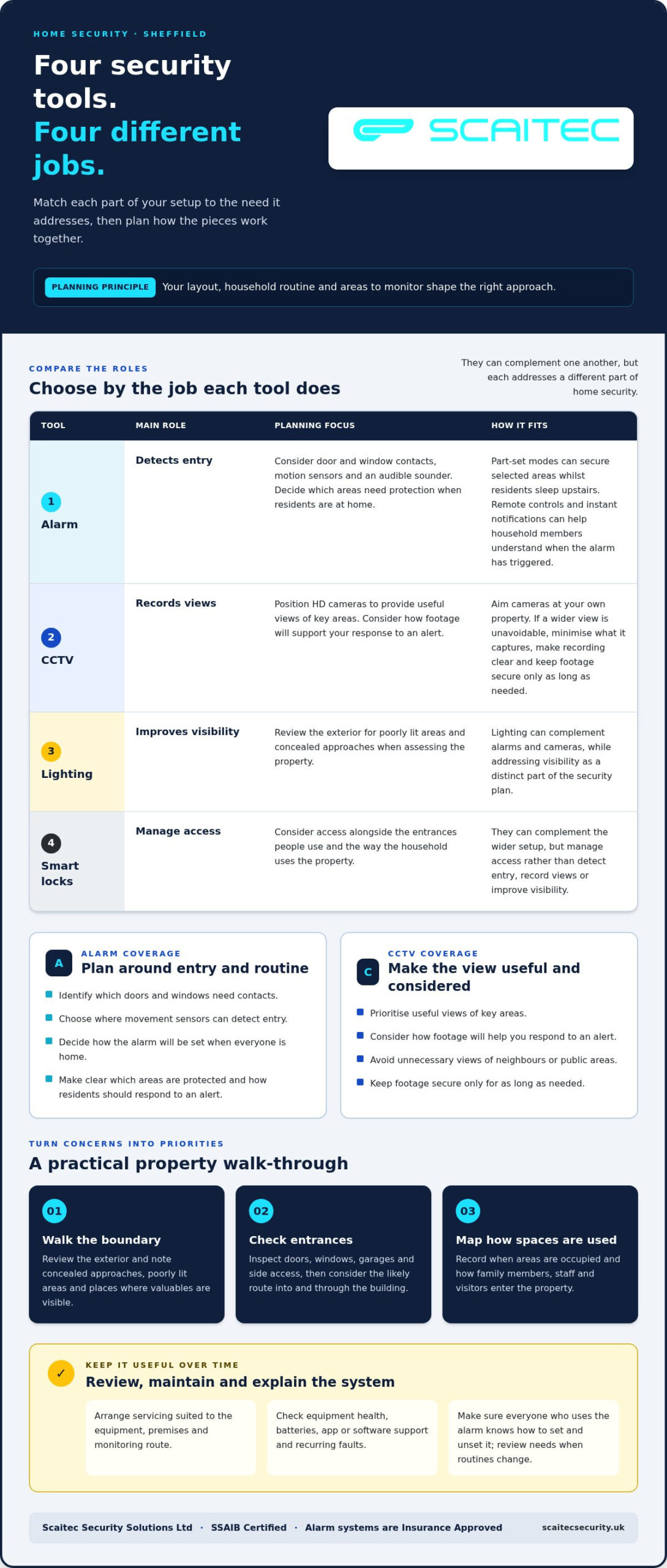
A residential alarm plan starts with the property’s entrances, layout and household routine. In Sheffield, consider which doors and windows need contacts, where movement sensors can detect entry, and how the system will be set when everyone is home. A suitable design makes clear which areas are protected and how residents should respond to an alert.
For families protecting my family from intruders Sheffield, an alarm can combine entry-point contacts, motion sensors and an audible sounder. Some systems also support part-set modes, securing selected areas whilst residents sleep upstairs. Remote controls and instant notifications can help household members understand when an alarm has triggered. A residential intruder alarm system should be planned around the home, rather than treated as a standard arrangement for every property.
Installation is only one part of keeping the system dependable. Arrange planned servicing suited to the equipment, premises and monitoring route. A service visit can include health checks, battery replacement, app or software support, and fault diagnosis. Existing-system takeovers should begin with a review of the equipment, sensors, user controls and current faults. That helps identify what works and what needs attention before the alarm is relied upon.
Maintenance matters when household routines or property use change. Make sure everyone who uses the alarm knows how to set and unset it. Keep instructions accessible, and report recurring faults rather than leaving a sensor inactive. Choose a servicing schedule suited to the system and premises, and review it if your needs change.
Choose between an alarm, CCTV, security lighting and smart locks by matching each tool to the need: alarms detect entry, cameras record views, lighting improves visibility, and smart locks manage access. They can complement one another, but each addresses a different part of home security.
For CCTV, aim cameras at your own property and avoid unnecessary views of neighbours or public areas. If a wider view is unavoidable, minimise what it captures, make recording clear, and keep footage secure only as long as needed.
In England, reasonable force may be used to protect yourself or another person during a crime inside your home. The circumstances matter. Continuing to attack after danger has passed or planning a trap could lead to prosecution.
Choose a Sheffield installer who explains the design, installation, handover and maintenance in plain terms. Ask how the proposed system suits your property, what support is available, and what credentials apply. Scaitec Security Solutions Ltd is SSAIB Certified, and its alarm systems are Insurance Approved.
If you discover an intruder, prioritise getting yourself and your family to safety; don’t confront them if you can avoid it. In England, call 999 if a crime is in progress or someone is in immediate danger, according to the UK Government.
Alarm systems can also connect with CCTV and access control, giving residents a joined-up view of security. The right integration depends on the equipment and how people enter and use the property. For homes across Yorkshire, ongoing support should include a clear route for reporting faults and keeping the system maintained.
Security coverage in Sheffield and surrounding areas
Plan security around the property, its occupants and the risks at each entrance. Sheffield homes and commercial sites need different assessments, even when they share a postcode.
Residential and commercial security
A home assessment considers doors, windows, garages, side access and household routines. A shop, office or workshop also needs attention to staff entrances, deliveries, valuable equipment and areas closed to the public. List the spaces that need protection and when they’re occupied. This helps define whether the priority is deterring access, detecting entry or viewing activity.
Business security should reflect how the site operates, not follow a generic checklist. For example, a small office may prioritise its entrance and equipment room, while a warehouse may need coverage around loading areas and internal access points.
Security assessments and site evaluations
A useful site evaluation follows the likely route into and through the building. Walk the boundary, inspect doors and windows, then note concealed approaches, poorly lit areas and places where valuables are visible. Record how staff, family members and visitors enter. These observations turn general concerns into practical priorities for a home or business.
For an existing system, include its controls, sensors and known faults in the review. A written action list can separate repairs to address now from improvements to plan for later.
Which Sheffield areas have the highest burglary rates, and what are the latest local statistics? A neighbourhood ranking can mislead if it uses different boundaries or reporting periods. Compare recorded incidents for the same offence category and time period, then consider street-level features such as access routes and visibility.
Check your home insurance wording to see which security improvements may affect cover. Look for requirements concerning locks, alarms, use of the property and evidence of installation. Keep receipts and system documents with your policy.
For Sheffield prevention guidance, distinguish general advice from a property-specific assessment. South Yorkshire Police and Sheffield City Council are relevant local bodies to look to for public safety information. A site evaluation should separately examine your entrances, boundaries and daily routines.
Security planning is also relevant across South Yorkshire, including Barnsley, Rotherham, Doncaster, Chesterfield, Worksop, Wakefield and Huddersfield. The same checklist can help compare properties, but each site has different access points, occupants and operating hours. For a business, note when deliveries arrive and which rooms contain equipment. For a home, include outbuildings and family entry routines.
Where security officers form part of a business’s wider arrangements, assess the role, site instructions, communication procedures and training relevant to that post. Electronic protection is a separate consideration: alarms, cameras and Access Control systems address detection, visibility and entry. A clear division of responsibilities helps staff know what to do when an alert signals immediate danger.
For homes and businesses alike, turn the assessment into a prioritised plan. Start with exposed entry points and areas containing important belongings or equipment. Then record who uses each entrance, when the premises are empty, and which changes would make access easier to observe. This gives each security decision a defined purpose, rather than relying on a postcode alone.
Motion detection and perimeter protection
Combine entry-point detection with movement sensors to cover different routes into a Sheffield home. The layout of each room and your household’s routine should guide sensor placement.
Door and window detection
Door and window contacts detect when a protected opening is opened. Fit them to entry points such as a front door, accessible ground-floor window or rear entrance. Check that each contact aligns properly when the door or window closes, and include less-used access points in the plan.
Contacts identify an opening, while motion sensors cover movement inside. Used together, they can help distinguish an entry alert from activity within a room. In a South Yorkshire home with a conservatory, for example, consider both its external door and the route from the conservatory into the house.
Motion detection
A motion sensor detects movement within its coverage area. Place it where someone entering must pass, such as a hallway, rather than pointing it towards routine household activity. Consider room shape, furniture and normal movement when planning coverage, so the sensor supports your household’s usual alarm settings.
Some systems offer pet-friendly technology designed to avoid false alarms triggered by pets. Sensor placement and the system’s pet settings both matter. Tell the installer about animals’ usual routes, including access to rooms when the family is away.
Perimeter protection starts by mapping the boundary and approaches to the house. Note side gates, rear doors and ground-floor windows, then decide which openings need contacts and which internal routes need motion detection. This creates a practical coverage plan instead of relying on one sensor to cover every risk.
Some alarm setups use motion-camera photo verification. When motion triggers the system, images can help a person assess what may have caused the alert. This provides visual context alongside a sensor signal. Consider camera position, the view it captures and how the household will review alerts during system design.
Use a simple room-by-room check before installation:
- List external doors, accessible windows and connecting entrances.
- Mark the routes someone might take after entering.
- Identify normal movement, such as pets crossing a hallway.
- Decide which areas need detection when residents are at home.
For example, a family may want downstairs sensors active at night while bedrooms remain accessible. Part-set modes can secure selected areas while residents sleep upstairs. During the day, the household can use a different setting when the property is empty.
Test each contact and sensor during handover, including along the usual routes through the home. Make sure household members understand which areas are active and how to respond to an alert. A clear layout, suitable settings and routine maintenance help keep motion detection relevant as furniture, pets or household patterns change.
These intruder alarm systems for Sheffield and South Yorkshire can include door and window contacts, motion sensors and a loud audible sounder, monitoring doors and windows as entry points.
External and perimeter protection
Start at the boundary and work towards the house. In Sheffield, check front paths, side passages, rear gardens, gates and outbuildings. The aim is to make approaches visible, identify vulnerable access points and make unexpected activity easier to notice. Walk the same route a visitor might take, including areas hidden from the street.
Inspect fences, walls and gates for gaps, loose panels or easy access around the side of the property. Repair defects and keep gates closed when they’re not in use. A secure boundary can guide visitors towards the main entrance, but shouldn’t block residents’ safe exit or obstruct access needed in an emergency.
- Trim shrubs that conceal doors, windows or paths.
- Keep garden tools and ladders secured, rather than beside a wall.
- Check that the front path and house number are visible.
- Look for dark corners beside the garage or rear entrance.
Lighting can make an approach easier to see after dark. Check whether the front door, side gate and route to the bins are clearly visible from the house. Choose positions that illuminate useful areas without shining directly into neighbours’ windows. Maintain fittings and replace failed lamps promptly.
Consider how external cameras support the boundary plan. A camera should show a useful view of an entrance or approach, rather than being aimed randomly at the garden. Review the image from inside the property and adjust its position if a gate, doorway or path remains out of view. Camera placement should respect neighbouring homes and shared spaces.
Use a simple walk-round after changes to the garden. New fencing, a shed or taller planting can create blind spots that weren’t there before. Check the view from the house and each main entrance. If a family member can’t see who is at the gate, consider whether lighting, a different camera angle or clearer sightlines would help.
Outbuildings need attention too. For a garden shed, keep tools out of sight and check its door and surrounding access. For a garage, consider how its entrance connects to the home and whether stored equipment is visible from outside. Include these structures in the same property plan rather than treating them as separate from home security.
Agree a household routine for checking external access. Before bed, confirm the garden gate is shut, accessible windows are closed and tools are stored. When leaving, check the rear entrance and any side access. A short, repeatable routine helps residents notice changes, such as a damaged panel or unfamiliar object near a door.
External measures support detection inside the home, but they don’t replace a response plan. If a person is in immediate danger or a crime is in progress, call 999, according to the UK Government. Keep the telephone accessible and make sure family members know how to leave safely.
HD CCTV installation and monitoring
HD CCTV can help residents review activity around a Sheffield home. A useful system starts with clear objectives: identify entrances, observe movement near the property, or retain footage after an incident. Decide which views matter most before choosing camera positions. For example, a front entrance and a rear access route may need separate coverage.
Camera placement affects what footage can show. Position cameras to capture the approach to a door, rather than only the door itself. Check the view from the intended camera position, including whether walls, plants or parked vehicles obstruct it. Consider changing daylight, darkness and external lighting, since these affect the scene recorded.
Higher-definition footage can provide more visual detail than lower-definition recording, but clarity also depends on camera position and the scene. A wide view may show the entrance and surrounding area, while a tighter view may capture more detail near a doorway. Balance the field of view with the purpose of each camera.
Plan how household members will review footage after an alert or incident. Agree who can access recordings, where they are stored and how relevant footage can be found. A simple naming system for camera locations, such as “front door” or “rear garden”, helps residents identify the right view quickly.
Remote monitoring is another consideration for a CCTV plan. Decide whether the household will review activity itself or use a monitoring arrangement. Set out what should happen when movement is detected, who receives an alert and how the household will respond. Keep the response steps accessible to everyone who may need them.
Before installation, walk around the property and record the views each camera should cover. Include the driveway, garden entrance or garage only where those areas matter to the security plan. Review each proposed angle from inside the home. A final test should confirm that the intended entrance is visible and the image can be reviewed.
- Identify the entrances and external areas that need observation.
- Check camera views for obstructions and changing light.
- Agree who can access footage and how it will be reviewed.
- Test each camera view after installation and note its location.
Recording areas beyond your property can affect neighbours and passers-by. Aim cameras at your own entrances and boundaries, and adjust views to avoid unnecessary capture of neighbouring homes or public areas. Review camera angles after garden or building changes, since a new fence or tree can alter the view.
Keep the system useful by checking its views and recording operation as part of routine maintenance. Review the front entrance and rear access camera after changes to lighting or landscaping. If a fault appears, note which camera is affected and what it shows, so the issue can be diagnosed clearly.
Plan residential CCTV coverage
For businesses with a monitored intruder alarm or CCTV system, at least two nominated keyholders should be available around the clock. Police attendance at intruder alarm and CCTV activations is limited to two allowable false alarms over a twelve-month period.
Scaitec Security Solutions: CCTV Systems
Scaitec Security Solutions Ltd can help Sheffield households plan CCTV Systems around entrances, boundaries and the views they need. If you’re weighing cameras against an alarm, a tailored design can show how CCTV Systems and Intruder Alarms may work together for detection and visual review.
Consider discussing your property layout, priority areas and how you want to use footage. This gives the design a clear purpose, whether you’re planning a new installation or reviewing existing coverage.
For a considered next step, contact Scaitec Security Solutions Ltd to discuss your home security requirements.
Make your next security decision with confidence
Your household’s needs can change as children grow, routines shift or rooms are repurposed. Treat security as an ongoing plan: note what has changed, identify any new priority, and decide what you want your system to help you do. A focused review can clarify your next decision without adding equipment that doesn’t serve a purpose.
If your priority is protecting your family from intruders in Sheffield, start with the concern that matters most to your household. Scaitec Security Solutions Ltd offers CCTV Systems, Intruder Alarms and Access Control systems, which address different aspects of home security. A useful discussion starts with your property, daily routines and the outcome you want from your setup.
A considered next step can help turn general concern into a security plan shaped around your home. Discuss your requirements with Scaitec and decide how to proceed at your own pace.
A more considered plan starts with one practical conversation.
Frequently Asked Questions
What are the best ways to secure a home against intruders in Sheffield?
An effective approach combines everyday habits with a clear household plan. Keep valuables out of sight from front windows, arrange parcel deliveries so boxes aren’t left outside, and avoid sharing travel plans publicly. Agree a family check-in routine and choose a safe place to go if someone feels unsafe at home. If you’re protecting your family from intruders in Sheffield, review these habits whenever household routines change, such as during school holidays.
Protect Your Business
Protect Your People
Book Your FREE Site Protection Survey

Since pioneering Scaitec Security Solutions in 2005, Paul Scaife, with his roots in the industry dating back to 1994, has distinguished the firm as a leading provider of bespoke fire and security solutions, servicing clients across Sheffield, Rotherham, and surrounding areas.
His leadership, underpinned by accreditation from the Security Systems and Alarms Inspection Board, ensures that Scaitec surpasses client expectations by blending advanced technology with a deep understanding of their unique needs.
Paul's ethos champions innovation and efficiency, driving Scaitec to deliver tailored, cutting-edge solutions that enhance safety and operational ease.
Discover more about Paul’s commitment to excellence on LinkedIn.