
Table of Contents
A single standard setup won’t suit every rental. The right security system for a rental property in Sheffield depends on the building’s layout, access points and occupancy. Plan protection around the property rather than choosing equipment by habit.
Landlords need to protect the building without making everyday access difficult for tenants. A considered plan can balance both needs and help identify which measures are relevant to the property.
This guide covers the factors that shape a rental property security system, how professional installation is planned and what affects the overall cost. It also explains how security needs differ between properties, helping you decide what to do next.
Key Takeaways
- Match intruder alarm coverage to the property’s layout, entrances and occupancy arrangements.
- Consider how CCTV and remote monitoring could support the security plan, rather than treating them as automatic requirements.
- A professional security survey can help identify property-specific risks and shape a tailored system design.
- Clarify which Sheffield and South Yorkshire locations the service covers when planning installation and ongoing support.
- Plan for system maintenance so installed security equipment can continue to meet the property’s needs.
Residential intruder alarm installation in Sheffield
For a Sheffield rental, alarm design should reflect the entrances, layout and occupancy. The installation plan should also explain how tenants use the system and who is responsible for reporting faults.
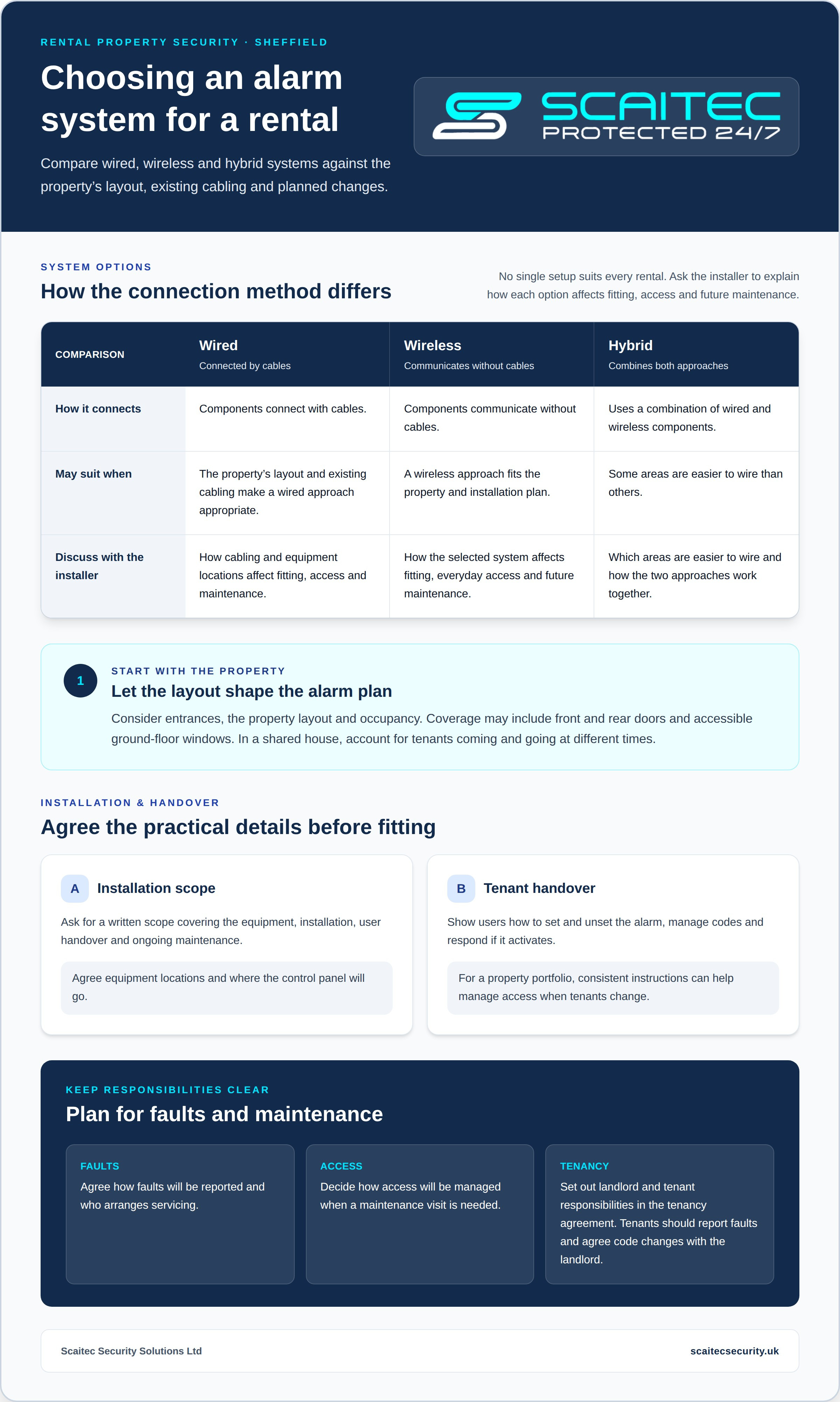
A residential intruder alarm can cover entry points such as the front and rear doors and accessible ground-floor windows. During planning, the installer considers how residents move through the property, where to place the control panel and how settings affect everyday access. In a shared house, the arrangement may need to accommodate tenants coming and going at different times.
Business premises need a different assessment. A shop, office or shared workspace may have staff access, customer areas and separate opening routines. If a commercial alarm is expected to support a police response, clarify the arrangements and any conditions during system planning. An audible alarm alone does not confirm that police will attend.
Installation involves agreeing equipment locations, fitting the selected system and showing users how to operate it. The handover should cover setting and unsetting the alarm, managing codes and what to do if it activates. For a property portfolio, consistent instructions can help landlords manage access when tenants change.
Ongoing maintenance should also be considered before installation. Agree how faults will be reported, who arranges servicing and how access will be managed during a visit. These details matter for both homes and commercial sites. Business security planning can also account for how an alarm fits alongside other site measures.
Wired, wireless and hybrid systems
Wired alarm systems connect components with cables, while wireless systems communicate without them. A hybrid system combines both approaches and may suit a property where some areas are easier to wire than others. The layout, existing cabling and planned changes can all shape the choice. Ask the installer to explain how each option affects fitting, access and future maintenance.
Installer checks and permission considerations
Before choosing an installer in Sheffield, ask for a written scope covering equipment, installation, user handover and ongoing maintenance. For a commercial site seeking a police response, discuss the intended arrangements and any conditions before selecting the alarm. Planning permission or listed-building consent depends on the property’s status and proposed work. Establish applicable requirements with Sheffield City Council before fitting external equipment to a listed property.
For a landlord-owned alarm, set out maintenance responsibilities in the tenancy agreement. The landlord can arrange servicing, while tenants report faults and follow the agreed instructions. Tenants should agree code changes with the landlord and seek permission before fitting devices that alter the property or its fixed alarm. This keeps access and responsibilities clear when occupants change.
CCTV installation, hire and remote monitoring
CCTV planning for a Sheffield rental should start with the areas that need protection, such as entrances or shared access routes. A clear installation plan also sets expectations for tenants, recording and remote viewing.
Landlords can arrange CCTV for security, but camera placement and footage handling should respect tenants’ privacy. Focus coverage on entrances and shared areas, tell tenants what is recorded and restrict footage access to appropriate people.
Home CCTV and remote viewing
For a residential property, installation planning considers the camera’s view of a front entrance, rear access or shared hallway. Remote viewing lets an authorised user view camera footage away from the property. Decide who needs access, how to manage it when tenants change and whether the camera captures neighbouring homes or public areas. An installer can position cameras to focus on relevant access points.
Digital recording and monitoring
Digital recording provides footage for later review, while remote monitoring supports viewing from another location. These are distinct functions: recording captures events, and monitoring relates to how footage is accessed. Before installation, agree who can view recordings, how footage is handled, and what happens when tenants move out. For a shop or office, include staff access and opening arrangements in the plan. A CCTV installation plan should reflect the property’s use.
CCTV for HMOs and holiday lets
In a house in multiple occupation, plan cameras for shared entrances or communal routes, not private bedrooms. Explain their purpose and placement to residents before using the system. For a holiday let, consider the arrival route and external access, then give guests clear information. Avoid recording inside the accommodation. These measures can protect the building while respecting occupants’ privacy.
Coverage and privacy considerations
For a rental in Sheffield or elsewhere in South Yorkshire, the site layout determines the installation work. The property’s location also affects travel and scheduling, so give the installer the full address and describe any access restrictions. CCTV hire is separate from installing a system in a rental property. Clarify whether equipment is owned or hired before agreeing responsibilities for upkeep and removal.
For privacy, keep camera views focused on the security purpose, inform tenants and guests, and control access to recordings. Avoid pointing cameras at private living spaces or capturing more of a neighbouring property than necessary. These steps help landlords balance privacy and protection. If remote access is needed, include authorised users and access changes in the handover.
Sheffield has 62,000 students across two universities, making clear access arrangements relevant for rentals serving student residents. A customer testimonial says technical support was provided two weeks after a system was installed. When comparing installation or hire options, ask how support is arranged and who tenants should contact if they need help with the system.
Security surveys and tailored system design
A survey connects a rental property’s layout with the security measures under consideration. For landlords planning a security system for a rental property in Sheffield, the assessment can cover entrances, shared areas, existing equipment and the property’s priorities.
Good design matters because a flat, shared house and shop have different access patterns. A site survey defines the system scope before installation and gives landlords a basis for reviewing the proposal.
Home and site security surveys
A home security survey considers how the property is used, not just its floor plan. For example, an assessment can identify a rear entrance, communal hallway or outbuilding that may need attention. A survey for business premises can also consider staff access and operating routines. Landlords can provide the address, access arrangements and known concerns to support the assessment.
For a portfolio spanning Sheffield and Chesterfield, assess each address separately. Similar-looking homes can have different entrances, layouts and existing equipment. The survey should identify these differences and record what the proposed system is intended to cover. The proposal should clearly define the scope of any home survey or site visit.
Survey quotes and tailored design
A quote should translate survey findings into a clearly defined installation scope. It can list the proposed equipment, areas covered and work needed to integrate existing systems. For example, difficult cable routes may make wireless equipment worth considering, while another layout may suit a different design. The choice should reflect the actual premises.
For CCTV installation, the design should explain camera positions and intended coverage. If remote viewing is included, clarify who will have access and how to manage that access when tenants change. A written proposal distinguishes essential coverage from optional additions, helping you make an informed decision about a security system for a rental property in Sheffield.
Insurance-related security features
An insurer may consider intruder alarms, CCTV and access control when assessing a rental property and its premium. Requirements and discounts depend on the policy, so landlords should ask which measures it recognises and whether equipment specifications apply.
If insurance conditions affect your decision, share the proposed system details with the insurer before installation. A survey can match those requirements to the property, such as an alarm covering particular entrances or CCTV focused on an access point. Don’t assume a device will automatically reduce premiums. Policy terms determine how security features are treated.
A tailored survey can also show where access control systems may fit alongside cameras or alarms. That can help landlords assess a security system for a rental property in Sheffield with a shared entrance and several authorised occupants.
Sheffield and South Yorkshire service area
For rental properties in Sheffield, plan installation, access and ongoing upkeep together. A portfolio that also includes properties in Rotherham may need separate site records and arrangements.
Service planning should distinguish installation work from maintenance and system handovers. These details help landlords manage security across properties with different layouts and occupants.
Sheffield and surrounding-area coverage
For a property in Sheffield, provide the full address, access instructions and a description of the building. These details help organise a site visit and identify practical issues, such as restricted access to a shared entrance. If your portfolio includes properties in Rotherham or elsewhere in South Yorkshire, list each address separately. This keeps the work, access arrangements and system records clear.
Ask for the agreed work and property locations to be recorded together. This makes it easier to distinguish a flat in a shared block from a house with its own entrance. It also gives landlords a useful record for arranging future maintenance or discussing monitoring. The work plan should clearly state the service area and proposed visit.
Tenant-change access and alarm handovers
When tenants change, the installer can support a structured handover by recording operating instructions, access arrangements and any agreed code changes. The landlord should coordinate access to the property and identify who is authorised to use the alarm. A clear record helps prevent confusion between former and incoming occupants.
For an existing system, the handover should identify its components, current settings and known faults. The new tenant can then receive instructions suited to the equipment rather than relying on informal directions. Keep the updated information with the property records, including who manages future maintenance and how to report faults.
Existing equipment may need attention before a new tenancy begins. A professional assessment can identify what is installed, whether it operates as intended and what work the landlord wants completed. For example, a property with an alarm and cameras may need a clear record of each system’s controls and user access. Don’t assume an older installation will suit new occupants without a review.
A maintenance plan should identify the system components covered, how to report faults and who arranges access for a visit. This is useful for landlords managing properties in Sheffield and Rotherham, as each address may have different equipment. Security system maintenance can form part of the ongoing plan.
Landlords should distinguish routine maintenance from urgent response arrangements. A written service plan can record the agreed process, property contact and system information needed when reporting a fault. Don’t assume a particular call-out arrangement or response time. Make sure the written terms explain what support is included. Clear records help keep security arrangements consistent as properties and tenants change.
Optional professional monitoring
Professional monitoring adds a response process to a security system. For a Sheffield rental, it may suit landlords who can’t regularly review alerts themselves. Consider it alongside the system’s purpose, the property’s occupancy and who can act when an alert arrives. Monitoring supports a planned response but does not replace clear tenant instructions or routine maintenance.
When a system trigger occurs, information is handled according to the agreed service arrangements. The monitoring service described for this system provides 24/7 surveillance and automated emergency service dispatch following a trigger. Landlords should understand what the dispatch involves, which events can prompt it and how contact details are kept current. These points define what happens after an alert, rather than leaving the process assumed.
Consider a rental that stands empty between tenancies. A landlord may value monitoring when nobody is on site to respond to an alarm event. A small flat with an available, authorised contact may need a different response plan. The decision depends on occupancy, the system’s capabilities and the landlord’s ability to manage notifications.
Monitoring can relate to alarms or cameras, but these systems serve different roles. An intruder alarm signals a trigger, while CCTV records or allows viewing of images. A tailored arrangement should clarify which equipment is monitored and what information prompts action. A survey can connect the property’s layout and security priorities with an appropriate monitoring plan.
Before service begins, agree who receives communications and how tenant changes affect authorised contacts. For example, a landlord managing a shared house may need to update access arrangements when an occupant leaves. Keep response instructions, system details and current contact information together. This gives everyone involved a consistent reference when an alert needs attention.
Ask how the service handles a trigger, what action follows and how faults are reported. Clarify whether the plan covers alarm events, camera access or both. The answers help landlords assess whether professional monitoring suits the property and their availability. They also prevent assumptions about response times or outcomes beyond the agreed arrangement.
Monitoring works best as part of an organised security plan. Pair it with clear tenant handovers, maintenance arrangements and access controls suited to the building. For example, a landlord can document who may receive alerts and who manages system changes between tenancies. These steps help the system work as intended when occupants change.
Scaitec Security Solutions: System Maintenance
Scaitec Security Solutions helps landlords maintain security systems as properties and tenancies change. Turn to the team when an existing installation needs attention, a fault affects system use or planned maintenance can help keep equipment in working order.
Maintenance can cover installed CCTV Systems, Intruder Alarms and Access Control Systems. Clear records of equipment, faults and previous work help guide the service and keep property arrangements organised. For example, a landlord preparing a flat for new tenants can arrange a review of the system and how it operates. Security system maintenance supports the ongoing care of installed equipment.
For a rental property in Sheffield, contact Scaitec Security Solutions to discuss system maintenance for your property.
Plan the next step for your rental property
A security system for a rental property in Sheffield should suit how the building is occupied now and allow for future changes. Before arranging work, decide which issue matters most: detecting entry, monitoring key access points or managing resident access. That priority gives your next discussion a practical starting point.
Scaitec Security Solutions offers CCTV Systems, Intruder Alarms and Access Control Systems, as well as System Maintenance. Landlords can discuss how these options fit the property and its tenancy arrangements, including occupancy changes or an existing system that needs attention. Describe the building, current equipment and main concern to help shape the next step.
A considered decision helps keep security arrangements aligned with the property as tenants and needs change. Take the next step at a pace that suits your plans.
Frequently Asked Questions
What types of security systems are suitable for rental properties in Sheffield?
Intruder alarms, CCTV and access control can each suit a rental, depending on its layout and occupancy. For example, an alarm may suit a self-contained flat, while access control can help manage entry to a shared building. Cameras may be suitable for relevant external or communal areas. Identify the property’s main security concern, then choose equipment that addresses it without adding unnecessary complexity for tenants.
What are the monthly costs of monitored alarm systems in Sheffield?
Monthly monitoring charges depend on the selected service and whether an alarm connects to an Alarm Receiving Centre (ARC). Monitoring is a recurring charge, separate from initial design, equipment and installation costs. The price depends on the system and monitoring scope and is provided after a quote request. For a rental, include the agreed monitoring arrangement in the property budget and clarify who manages the subscription when tenancies change.
Which Sheffield security companies install alarms for rental properties?
Scaitec Security Solutions installs Intruder Alarms for residential and commercial properties, including rental homes. It also offers CCTV Systems and Access Control Systems for other property security needs. Scaitec Security Solutions is Insurance Approved and SSAIB Certified. To discuss an installation, provide the property type, tenancy arrangements and main security concern. This helps shape a relevant conversation about the system required.
How do wired, wireless, smart-home and monitored security systems compare for rental properties?
Wired and wireless describe how alarm equipment connects. Smart home describes integration with connected devices, while monitoring concerns how alerts are handled. These are not interchangeable system types. For a rental, consider how the equipment fits the building and whether tenants can use it consistently. Smart home functions depend on compatible equipment, and monitoring is a separate service arrangement. A system can combine suitable elements when the design allows.
Protect Your Business
Protect Your People
Book Your FREE Site Protection Survey

Since pioneering Scaitec Security Solutions in 2005, Paul Scaife, with his roots in the industry dating back to 1994, has distinguished the firm as a leading provider of bespoke fire and security solutions, servicing clients across Sheffield, Rotherham, and surrounding areas.
His leadership, underpinned by accreditation from the Security Systems and Alarms Inspection Board, ensures that Scaitec surpasses client expectations by blending advanced technology with a deep understanding of their unique needs.
Paul's ethos champions innovation and efficiency, driving Scaitec to deliver tailored, cutting-edge solutions that enhance safety and operational ease.
Discover more about Paul’s commitment to excellence on LinkedIn.