
Table of Contents
65% of UK facility managers report confusion over the latest safety codes, and it’s easy to see why given the recent transition to the BS 5839-1:2025 standard. If you manage a complex commercial site, you’ve likely felt the frustration of a false alarm disrupting your entire operation. It’s equally stressful wondering if your current setup truly meets the latest legal requirements. Locating a potential hazard in a sprawling building shouldn’t feel like searching for a needle in a haystack. This is where addressable fire alarm systems change the conversation from reactive noise-making to intelligent, data-driven protection.
We understand that your primary goal is the safety of your people and the continuity of your business. You’ll discover how these intelligent systems provide pinpoint accuracy during emergencies and ensure your premises remain fully compliant with the 2027 PSTN switch-off and updated fire safety laws. We will explore the technical advantages of individual device monitoring, the cost-saving benefits of reduced maintenance, and the essential steps to protect your building under the new regulatory framework.
Key Takeaways
- Learn how addressable fire alarm systems provide pinpoint accuracy by giving every device a unique identity, allowing for immediate identification of fire locations.
- Understand your legal obligations under the BS 5839-1:2025 code of practice and how to prepare for the mandatory 2027 PSTN switch-off.
- Discover how smart detectors use drift compensation to reduce false alarms, protecting your business from unnecessary downtime and fire service charges.
- Compare the initial investment of addressable technology against the reduced installation and maintenance costs for complex commercial buildings.
- Gain insights into the end-to-end process of bespoke system design, from the initial site survey through to professional commissioning and aftercare.
Understanding Addressable Fire Alarm Systems: The Modern Standard
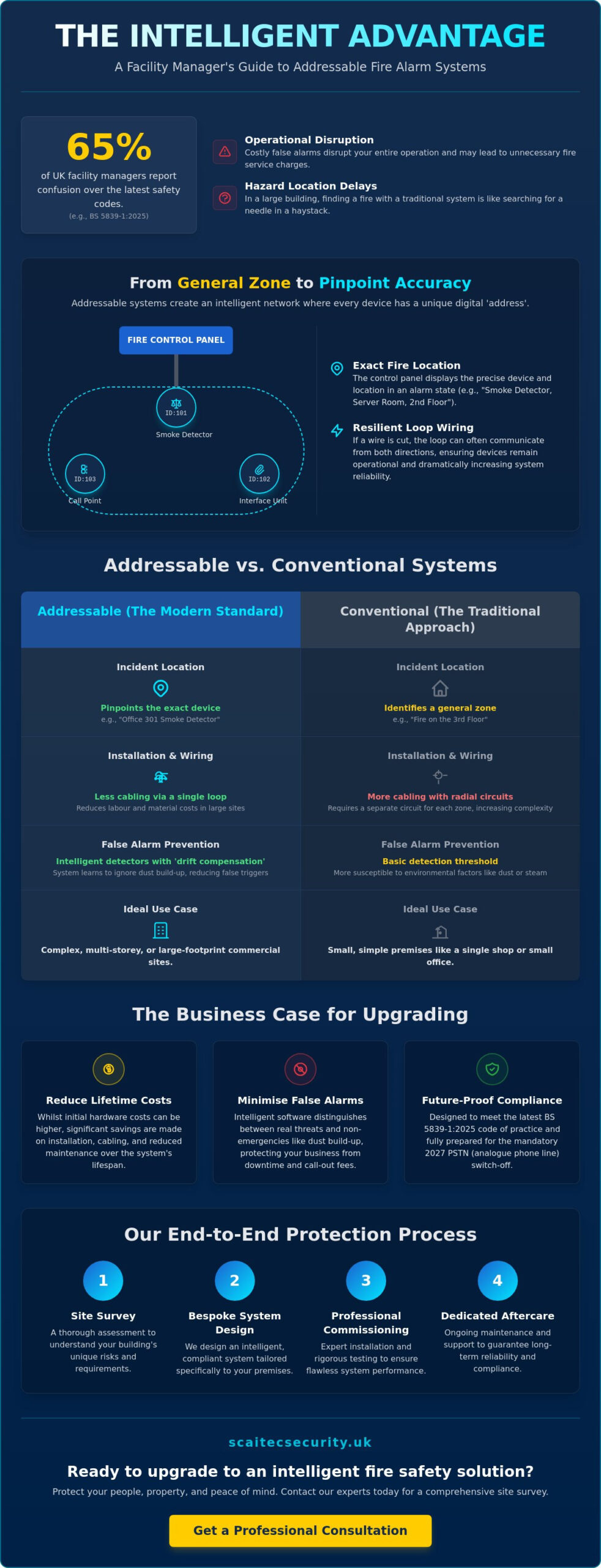
When an alarm sounds in a multi-storey office or a sprawling warehouse, every second counts. Traditional systems might tell you there’s a fire on the third floor, but addressable fire alarm systems go much further. They function as an intelligent network where every individual device, whether it’s a smoke detector in the server room or a manual call point by the rear exit, has its own unique electronic identity. This identity, or ‘address’, allows the system to communicate exactly where the trouble is, saving vital time for both your staff and the emergency services.
This communication happens through a sophisticated Fire alarm system architecture. Unlike older ‘conventional’ systems that rely on simple electrical circuits, addressable technology uses a data-rich protocol. Detectors, call points, and sounders are constantly talking back to a central control panel. This isn’t just a simple on or off signal. It’s a continuous stream of information that ensures the system knows the health and status of every single component at all times.
One of the most significant advantages of these systems is the loop wiring topology. In a standard setup, devices are connected on a circuit that starts and ends at the control panel. If a wire is cut or a fault occurs, the system can often still communicate with devices by sending signals from the other direction. This resilience makes it a far more reliable choice for high-stakes environments where system integrity is non-negotiable.
The Components of an Intelligent Network
The central control panel acts as the ‘brain’ of the operation. It monitors the entire loop, displaying specific data about which device has triggered. Sitting on this loop are the devices themselves: smoke and heat detectors, manual call points, and various interfaces. These interfaces allow us to link the fire alarm to other building services, such as shutting down ventilation or releasing access-controlled doors during an emergency. We also integrate notification devices like sounders and Visual Alarm Devices (VADs) directly into the same loop. This streamlined approach makes the system easier to manage and far more flexible if you need to add or move devices as your business grows.
Data vs. Voltage: Why Intelligence Matters
In the past, fire alarms worked by detecting a change in voltage. It was a blunt instrument. Modern addressable fire alarm systems use digital data to provide a much more nuanced picture of your environment. Devices send specific status reports, including precise smoke levels, temperature readings, and internal fault data. This allows for ‘drift compensation’, where the system can tell the difference between a build-up of dust and actual smoke. Intelligent detection is the ability to distinguish between a real fire threat and a system fault or environmental interference.
Addressable vs Conventional: Which System Suits Your Premises?
Choosing the right fire safety infrastructure often comes down to the size and complexity of your building. While conventional systems have served smaller businesses for decades, addressable fire alarm systems are now the standard for modern commercial environments. The primary difference lies in how these systems communicate. A conventional system divides a building into zones, meaning if a detector activates, the panel only tells you which general area is at risk. In a small shop, this works. In a multi-storey office block or a large warehouse, searching an entire zone for the source of smoke wastes precious minutes.
From a cost perspective, the hardware for addressable technology carries a higher initial price tag. However, this is often offset by significantly lower labour and installation costs in larger premises. Because addressable fire alarm systems use a loop configuration, we can connect a vast number of devices on a single circuit. Conventional systems require individual radial circuits for every zone, leading to a massive amount of cabling and longer installation times. If you are looking to upgrade your fire alarm systems, we can help you weigh these initial costs against long-term operational savings.
The Comparison Framework
When evaluating your options, consider these three core pillars of system performance:
- Wiring Topology: Conventional systems use radial wiring where each zone needs its own cable run. Addressable systems use a loop, starting and ending at the panel, which is far more efficient for large-scale layouts.
- Identification: Addressable systems provide device-level identification. You’ll know exactly which room triggered the alert, whereas conventional systems only identify the broad zone.
- Reliability: Addressable loops are fitted with short-circuit isolators. If a cable is damaged or a fault occurs, these isolators “section off” the problem area, allowing the rest of the loop to continue functioning from the other direction.
When to Choose Addressable Technology
We typically recommend addressable systems for premises where fire location is critical for life safety or where complex cause-and-effect programming is required. For instance, in a care home or a high-rise building, you may need a phased evacuation where only the floors immediately affected are alerted first. These systems are also essential for businesses that cannot afford the disruption of false alarms. Because the panel can monitor the health of every sensor, it can alert you to a dirty detector before it triggers a full building evacuation.
Adhering to the latest BS 5839-1 standards is much simpler with an intelligent system. The detailed event logs and automatic fault reporting make it easier for the “Responsible Person” to maintain the rigorous documentation required by UK law. If your building spans multiple floors or houses sensitive equipment, the precision of an intelligent network is a vital investment in your business’s continuity and safety.
The Business Case: Reducing False Alarms and Maintenance Costs
Every time a fire alarm sounds unnecessarily, it costs your business money. Beyond the immediate loss of productivity during an evacuation, many UK fire authorities now levy significant charges for attending persistent false call-outs. For a busy commercial site, these disruptions are more than just an inconvenience; they’re a threat to your bottom line. Whilst conventional systems can be a blunt instrument, addressable fire alarm systems provide the nuance required to manage a busy environment without constant interruption.
One of the most effective tools in this fight is drift compensation. Over time, all smoke detectors accumulate dust and age, which can lead to increased sensitivity and false triggers in older systems. Intelligent detectors within an addressable network automatically adjust their internal threshold to account for this environmental “drift.” This ensures the sensor remains accurate throughout its lifespan, only triggering when it detects a genuine threat. We can also configure pre-alarm warnings, which alert your security team to a potential issue before a full building evacuation is initiated.
For total peace of mind, these systems integrate seamlessly with remote monitoring. By connecting your panel to an Alarm Receiving Centre (ARC), you ensure 24/7 protection even when the building is empty. This constant vigilance is often a prerequisite for insurance compliance and ensures that emergency services are only summoned when a verified event occurs.
Intelligent Maintenance and Diagnostics
Maintaining a large-scale safety system shouldn’t be a guessing game. Industry data suggests that 15% of system failures are a result of poor maintenance, often because faults are difficult to locate. An addressable panel identifies exactly which sensor needs attention, whether it’s due to a technical fault or a simple need for cleaning. This level of detail significantly reduces the “search time” for engineers during preventative security maintenance, making the process faster and less disruptive for your staff. Detailed event logs also provide a clear, digital paper trail for fire safety audits and insurance records. Keeping these records current is made far easier when you follow a structured fire alarm weekly test procedure aligned with the BS 5839-1:2025 standard.
Cause and Effect Programming
The true power of an intelligent network lies in its ability to execute complex commands during an emergency. We can tailor the system’s response to your specific operational needs. This might include:
- Automatically shutting down air handling units to prevent the spread of smoke.
- Releasing access-controlled doors to ensure clear escape routes.
- Implementing phased evacuation in schools or high-occupancy buildings to prevent stairwell congestion.
Cause-and-effect programming allows a bespoke safety response for every unique building layout. By ensuring that your fire safety infrastructure works in harmony with your building’s design, you create a safer environment that is easier to manage and maintain.
Designing for Compliance: BS 5839-1 and Legal Obligations
Legal compliance in fire safety is not merely about ticking boxes; it is about ensuring that your protective measures are robust enough to save lives and preserve your business. In the UK, the definitive code of practice for non-domestic premises is BS 5839-1:2025. This standard provides the framework for the design, installation, and maintenance of fire detection systems. Under the Regulatory Reform (Fire Safety) Order 2005, every organisation must appoint a “Responsible Person” who carries the legal weight of ensuring the building is safe. Failing to meet these standards can lead to unlimited fines or even prosecution, especially with over 500 enforcement notices issued by UK fire authorities in the last year alone.
When we implement addressable fire alarm systems, we simplify the path to compliance. These systems excel at meeting the rigorous fire alarm system design requirements necessary for modern commercial buildings. A critical part of the handover process involves creating clear zone plans and ensuring every individual device is accurately labelled. Because an addressable panel can name the exact location of a trigger, your physical zone plan must match the digital data on the screen perfectly. This level of detail is a mandatory requirement that ensures emergency services aren’t left guessing during a crisis.
Fire Risk Assessments and System Categories
Your journey to compliance begins with a thorough Fire Risk Assessment. Following recent updates to Section 156 of the Building Safety Act, all businesses must now record their completed assessment and safety arrangements in full, regardless of their size. This assessment determines the category of protection you need, such as L1 (maximum life protection), L2 (additional protection for high-risk areas), or P1 (property protection). Addressable fire alarm systems make achieving these high-category ratings more manageable because they offer the flexibility to monitor every room individually without the need for excessive, complex wiring. For a deeper look at these legal requirements, you can refer to our Fire Alarm Regulations UK Business guide.
The Importance of SSAIB Accreditation
Choosing the right partner for your installation is just as important as the hardware itself. We strongly recommend using an SSAIB accredited installer to ensure your system meets the strict standards required by both UK law and your insurance provider. The certification process is thorough, covering everything from the initial design and site survey through to commissioning and long-term maintenance. Opting for uncertified or “DIY” commercial installations carries immense risk; it can void your insurance policy and leave your staff unprotected. A certified system provides a documented guarantee that your fire safety infrastructure is fit for purpose and has been tested by competent professionals.
If you are unsure whether your current setup meets the 2026 standards, we can provide a comprehensive professional site survey to help you identify any gaps in your compliance.
Professional Installation and Aftercare in South Yorkshire
Scaitec Security Solutions Ltd provides bespoke fire safety across Rotherham, Sheffield, Barnsley, and Doncaster. We don’t just supply hardware; we provide a complete safety partnership that prioritises the longevity of your investment. Our end-to-end process begins with a comprehensive site survey to understand the specific risks of your premises. This is followed by professional design and installation, culminating in a rigorous commissioning phase. This final step is crucial, as it involves verifying every loop and individual device to ensure your addressable fire alarm systems meet the exact requirements of the modern safety standards we’ve outlined.
Reliable ongoing support is just as vital as the initial installation. We provide scheduled testing and emergency call-out services to ensure your system remains in peak condition and your business stays compliant. Many of our clients find that integrating their fire safety with commercial security systems in Sheffield creates a more robust, unified protection strategy. By linking your fire detection with access control and remote monitoring, you create a holistic safety net that simplifies building management and ensures all your security protocols work in harmony during an emergency.
Tailored Solutions for Local Businesses
We’ve spent years working with local warehouses, retail centres, and office complexes amongst the diverse business community of South Yorkshire. We understand the specific challenges involved in modernising older premises. Our team specialises in complex retrofits, replacing outdated conventional setups with intelligent addressable fire alarm systems without causing excessive disruption to your daily operations. We take the time to explain the rationale behind every procedure, reflecting a thorough and detail-oriented mindset. For businesses based in the region, our dedicated guide to fire alarm systems Rotherham covers the specific compliance requirements and safety standards local business owners need to meet in 2026. The Scaitec commitment is built on reliable aftercare and technical support that local clients can depend on long after the project is finished.
Next Steps for Your Fire Safety
If your current system feels outdated or you’re concerned about the upcoming 2027 PSTN switch-off, the first step is a professional site audit. This allows us to determine your exact requirements and design a system that fits both your budget and your safety obligations. Transitioning from conventional to addressable technology is a logical step for any growing business, and we manage the entire upgrade whilst prioritising your site’s continuity. We don’t cut corners, and we value a systematic, step-by-step approach to service delivery and maintenance.
Contact Scaitec Security Solutions Ltd today for a professional fire alarm consultation to ensure your premises are protected by the very best in intelligent detection technology. Our dedicated expert guides are ready to help you navigate the complexities of modern fire safety and provide the peace of mind you deserve.
Securing Your Business for the Future
Protecting your commercial premises requires more than just meeting minimum standards; it’s about building a resilient foundation for long-term safety. We have explored how addressable fire alarm systems transform fire detection from a general warning into a precise management tool. By providing pinpoint accuracy during emergencies and significantly reducing the disruption caused by false alarms, these systems offer a level of stability that conventional alternatives simply cannot match. Staying ahead of the BS 5839-1:2025 regulations and the 2027 PSTN switch-off is essential for every responsible business owner.
With over 20 years of expertise across South Yorkshire, our team of SSAIB accredited installers is here to guide you through every stage of your safety journey. We provide bespoke design, professional installation, and 24/7 monitoring and maintenance contracts to ensure your building remains protected around the clock. Don’t leave your legal compliance or insurance standing to chance. Get a Professional Addressable Fire Alarm Quote for Your Business today. We look forward to helping you create a safer, more secure environment for your staff and assets.
Frequently Asked Questions
What is the main difference between an addressable and a conventional fire alarm?
The main difference lies in the level of detail provided during an alert. Conventional systems group devices into broad zones, meaning you only know the general area of a fire. In contrast, addressable fire alarm systems assign a unique identity to every detector, allowing the control panel to display the exact room or floor where the trigger occurred. This precision is vital for large or complex premises where every second counts.
How many devices can be on a single addressable loop?
A single intelligent loop can typically support between 126 and 250 devices, depending on the specific manufacturer and the capacity of the control panel. This count includes a combination of smoke detectors, heat sensors, manual call points, and sounders. For very large sites, multiple loops can be networked together to manage thousands of individual devices across a single integrated system.
Can I upgrade my old conventional fire alarm to an addressable system?
Yes, you can upgrade, but it usually involves replacing the control panel and all existing field devices. Conventional systems use radial wiring, whilst addressable systems require a loop configuration. We often need to install new cabling to ensure the system is resilient and fully compliant with the latest BS 5839-1 standards, as the old wiring may not support modern data protocols.
Do addressable fire alarms require more maintenance than conventional ones?
No, they actually streamline the maintenance process. Because the panel constantly monitors the health of every individual device, it can pinpoint a fault or a dirty sensor immediately. This eliminates the need for engineers to manually test every circuit to find a problem, which reduces disruption to your business and ensures your system stays operational for longer without guesswork.
How much does an addressable fire alarm system cost for a UK business?
The cost varies based on the size of your building, the number of devices required, and the category of protection your fire risk assessment dictates. Whilst the initial hardware investment is higher than conventional systems, the reduced cabling requirements and faster installation times often lower the overall labour costs for larger projects. We recommend a professional site survey to receive a bespoke quote tailored to your premises.
What happens if a cable is cut in an addressable loop system?
If a cable is cut in a loop-based system, the control panel can still communicate with all devices by sending signals from both directions. Short-circuit isolators effectively “section off” the damaged area of the wire. This ensures that a single break in the cabling doesn’t leave large parts of your building unprotected, providing a level of resilience that older radial systems simply don’t have.
Are addressable fire alarms mandatory for large warehouses in the UK?
Whilst UK law doesn’t explicitly name “addressable” as a mandatory requirement, they are often the only practical way to meet the safety standards for large warehouses. Under BS 5839-1, you must be able to locate a fire quickly. In vast spaces, conventional zones are typically too large to meet these life safety requirements, making addressable fire alarm systems the industry standard for large-scale operations.
Can addressable fire systems be monitored by an Alarm Receiving Centre (ARC)?
Yes, addressable systems are ideal for remote monitoring by an Alarm Receiving Centre. Because the system provides specific data about the exact location and type of trigger, the ARC can pass more detailed information to the emergency services. This ensures a faster, more accurate response and helps to filter out potential false alarms before they escalate into a full emergency call-out.
Protect Your Business
Protect Your People
Book Your FREE Site Protection Survey

Since pioneering Scaitec Security Solutions in 2005, Paul Scaife, with his roots in the industry dating back to 1994, has distinguished the firm as a leading provider of bespoke fire and security solutions, servicing clients across Sheffield, Rotherham, and surrounding areas.
His leadership, underpinned by accreditation from the Security Systems and Alarms Inspection Board, ensures that Scaitec surpasses client expectations by blending advanced technology with a deep understanding of their unique needs.
Paul's ethos champions innovation and efficiency, driving Scaitec to deliver tailored, cutting-edge solutions that enhance safety and operational ease.
Discover more about Paul’s commitment to excellence on LinkedIn.